There's a reason Rovinj appears on the cover of every Istria guidebook. This compact town delivers more photographic opportunities per square metre than almost anywhere on the Mediterranean. Whether you're shooting with a DSLR or just your phone, here's where to point your camera — and when.
The Harbor at Golden Hour
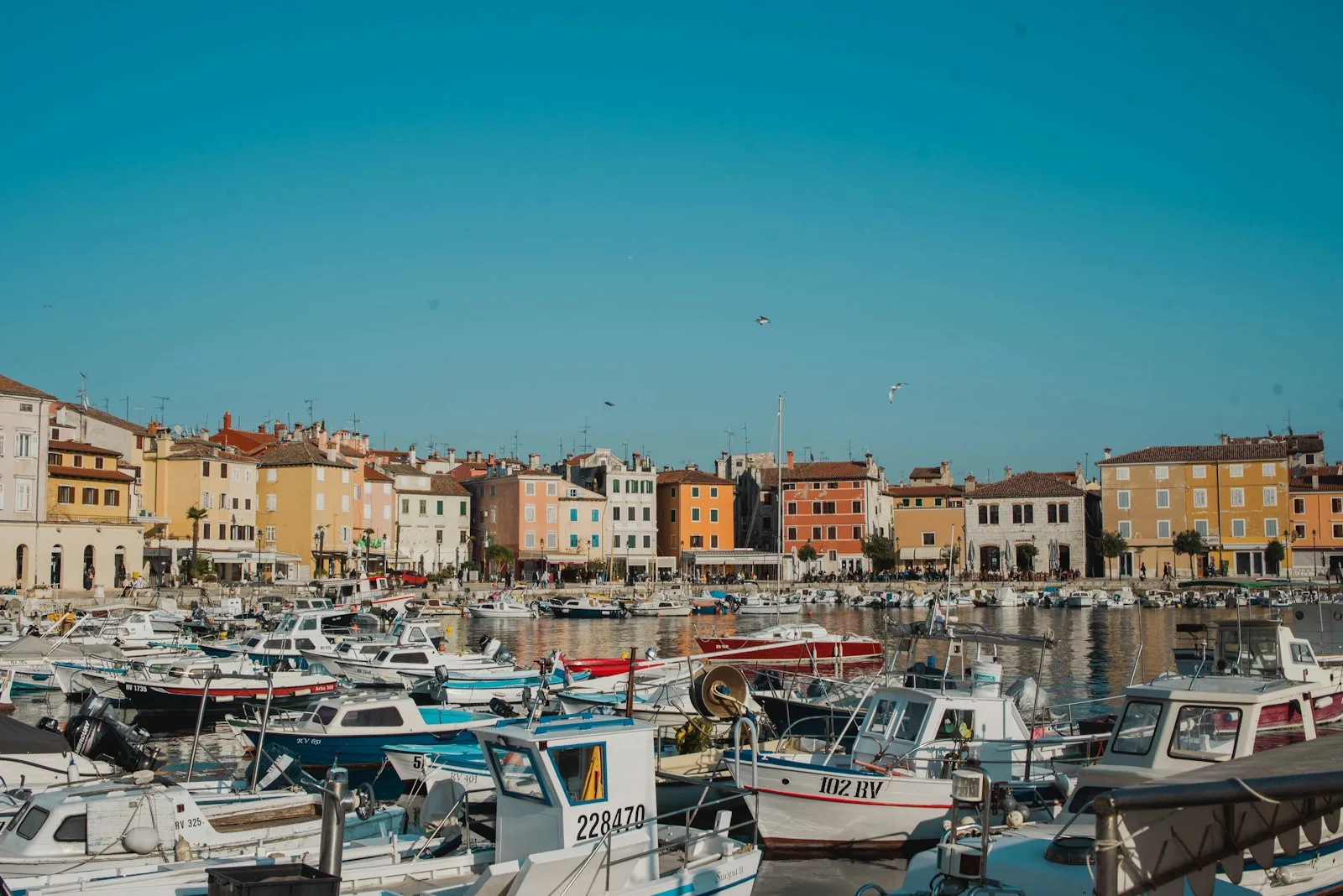
The classic Rovinj shot: colorful waterfront houses reflected in the harbor, fishing boats in the foreground, the bell tower of St. Euphemia rising above. Come at golden hour (roughly an hour before sunset) for warm light on the facades. The best angle is from the south side of the harbor promenade, looking north.
The Rooftops from Above
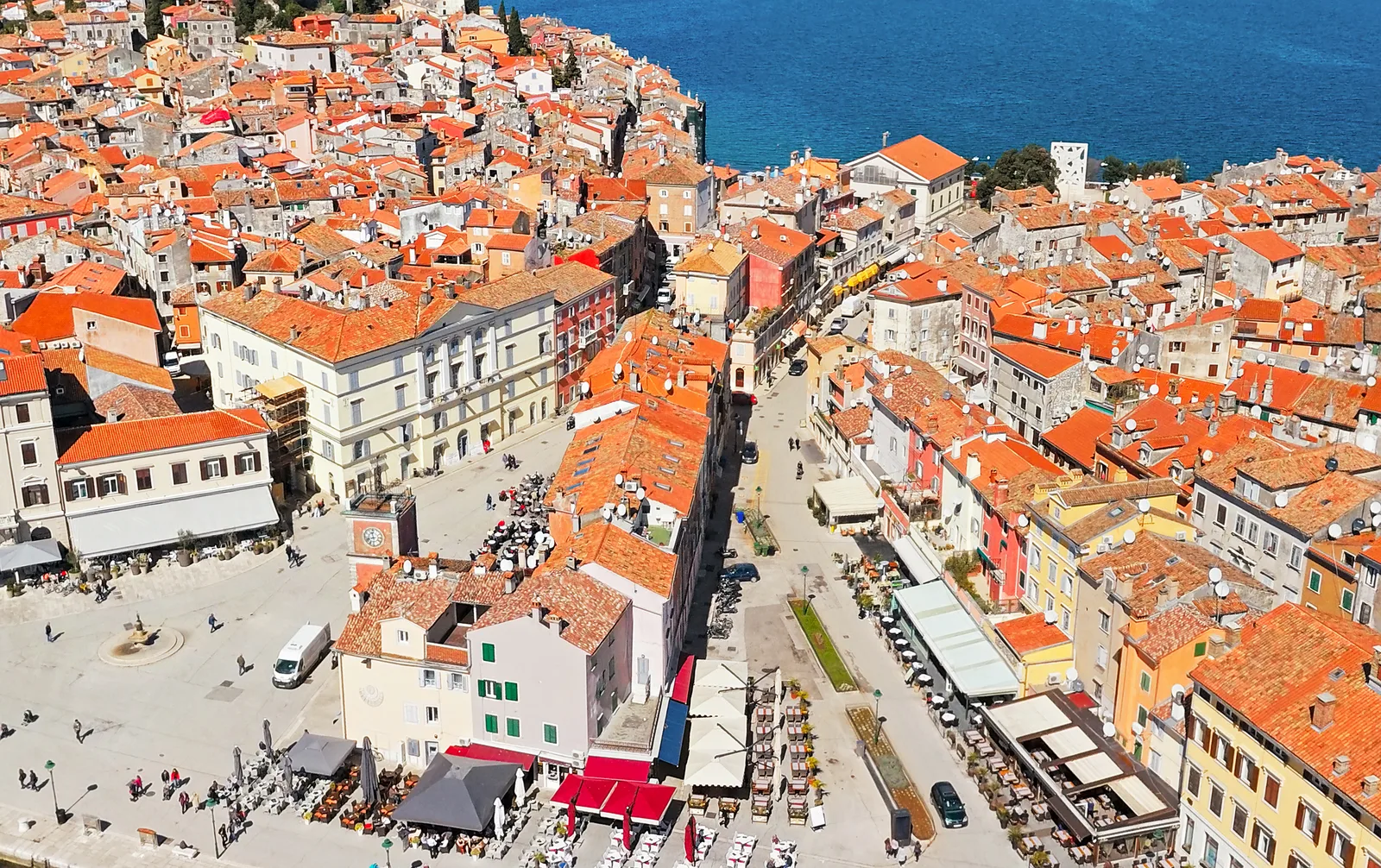
Climb the bell tower of St. Euphemia (it costs a few euros and the stairs are narrow, but it's worth every step). From the top, you get a 360-degree view of the orange rooftops cascading down to the sea, the archipelago in the distance, and on clear days, the Italian coast. This is the aerial perspective of Rovinj.
The Narrow Streets
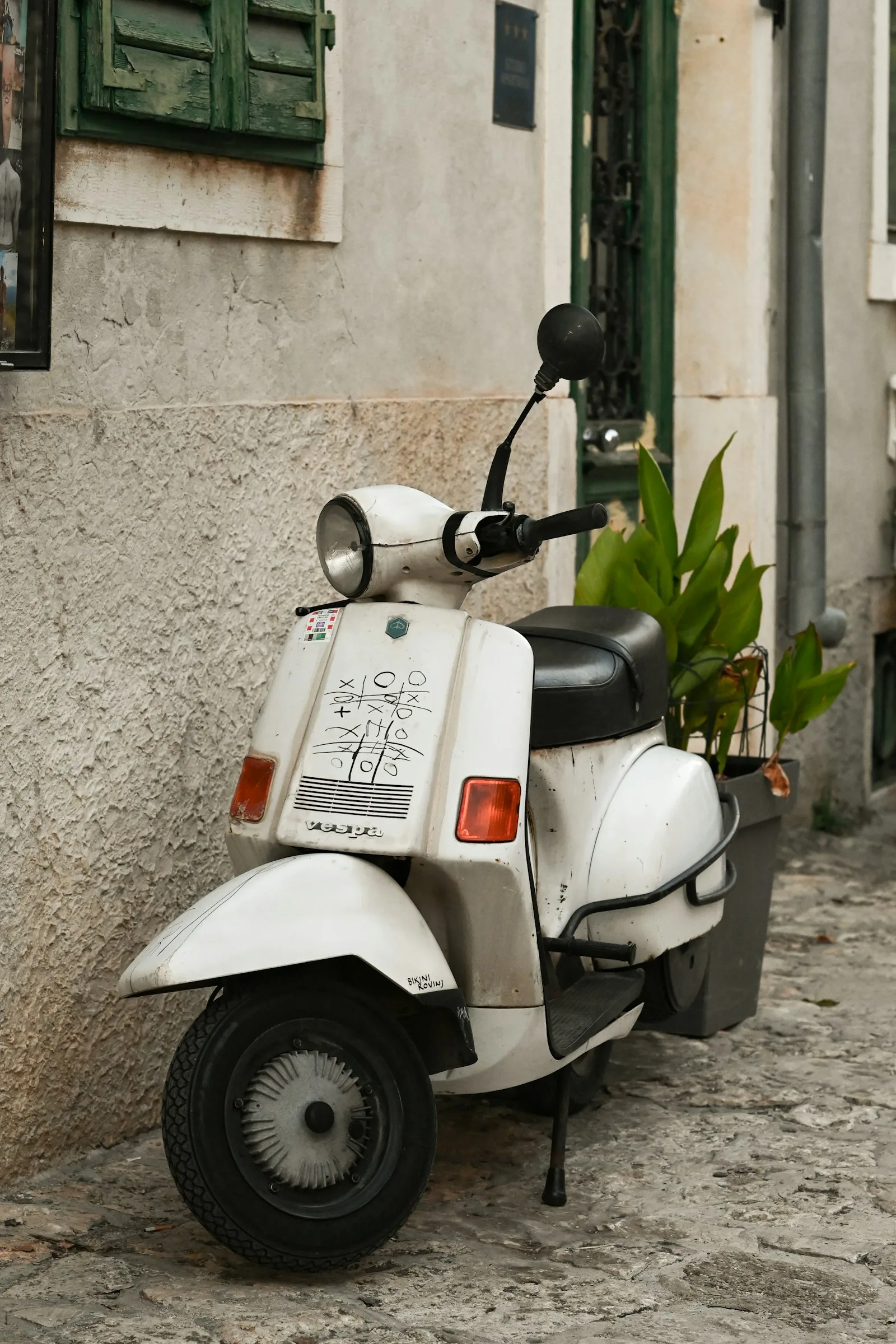
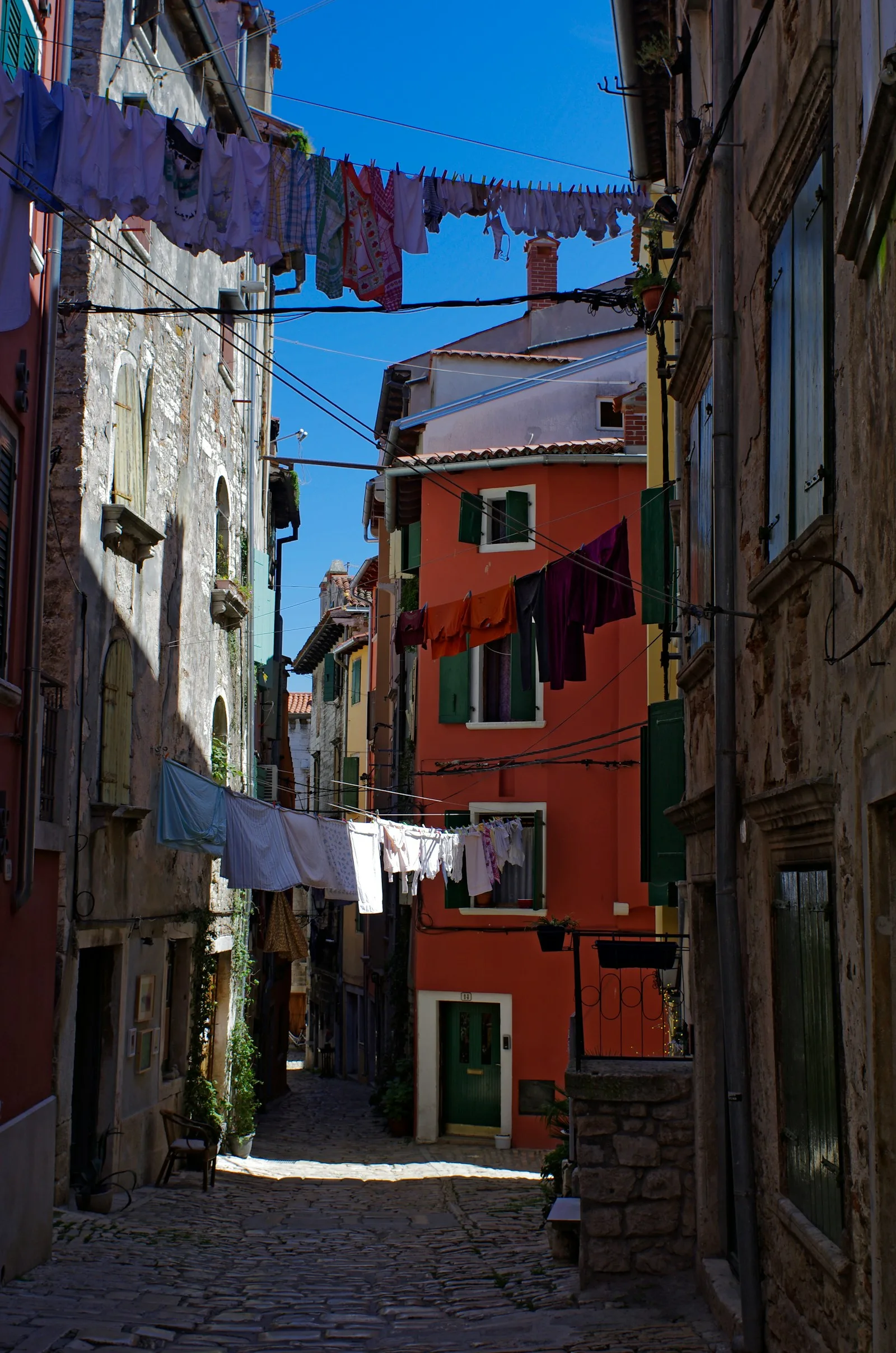
This is where the magic is. The old town's streets are impossibly narrow — some barely wider than your shoulders. Cobblestone underfoot, laundry strung between buildings overhead, cats sleeping in doorways, Vespas parked against ancient stone walls. Every corner is a composition waiting to happen.
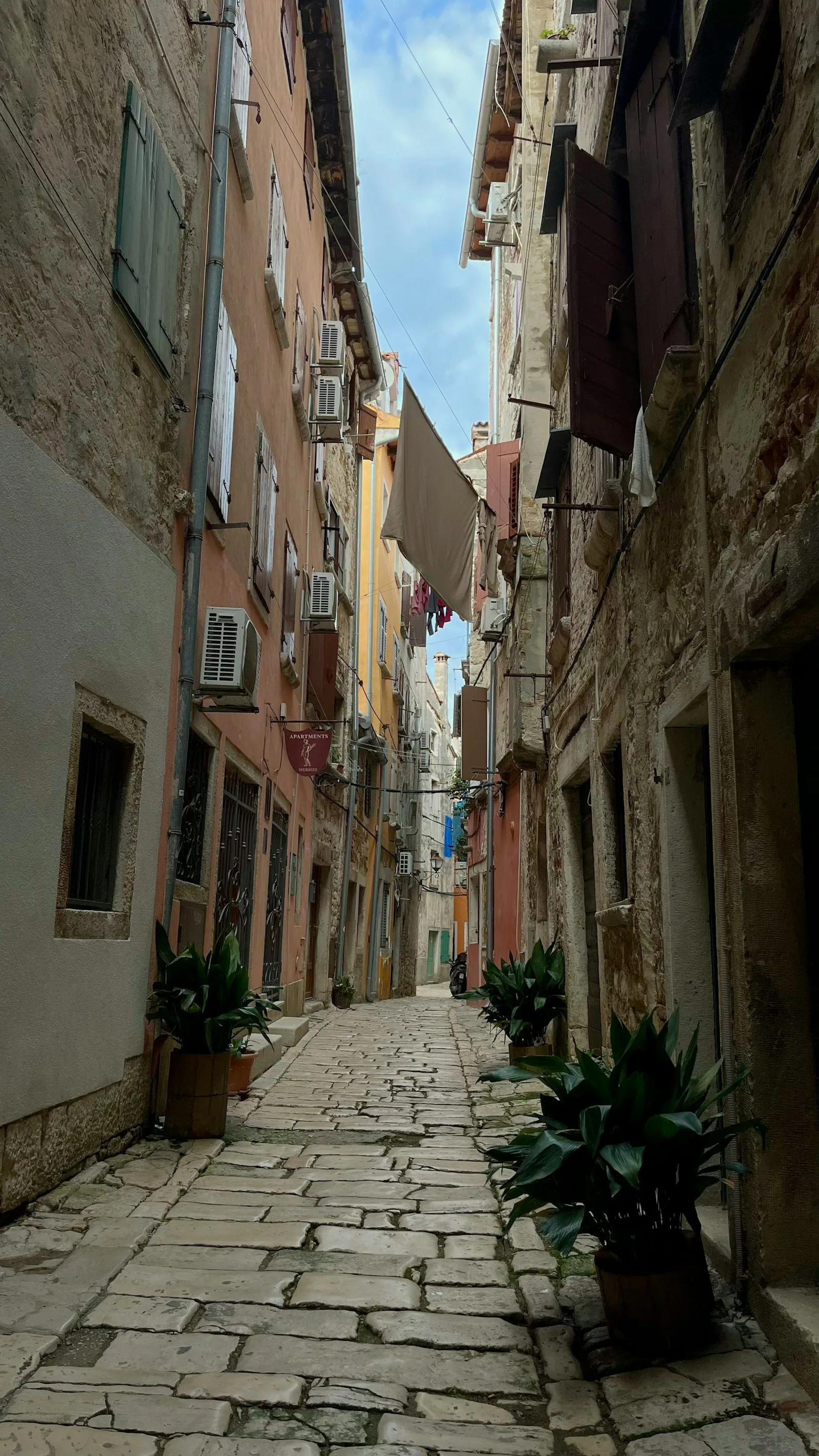
The best streets for photography: Grisia (the main street to the church, lined with galleries), Vladimira Švalbe (the narrowest), and the unnamed alleys behind the church on the south side of the peninsula — the most authentic, least touristic part of town.
The Details
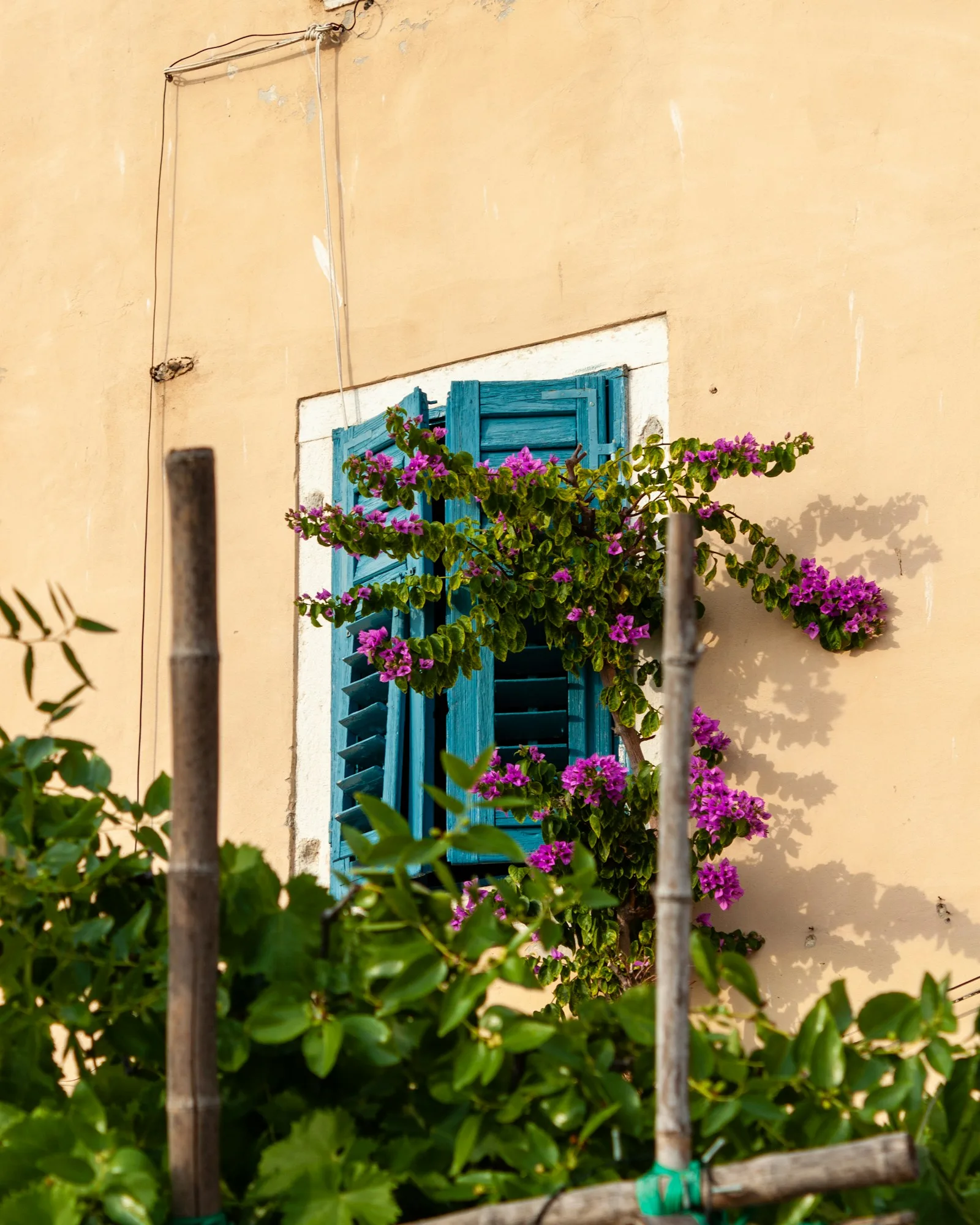
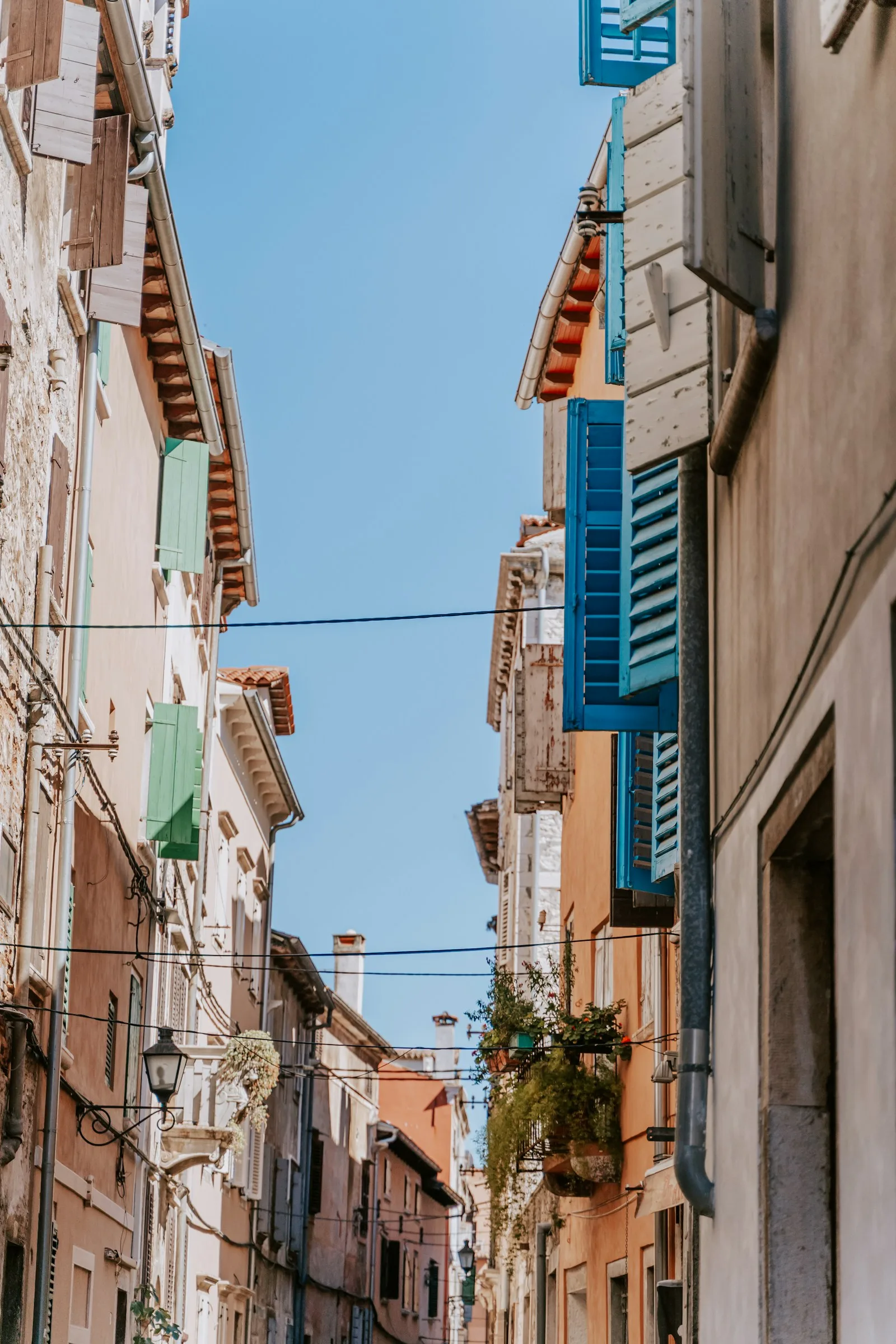
Rovinj rewards close-up photography. Look for: faded shutters in every shade of blue and green, potted plants on windowsills, hand-painted house numbers, weathered stone archways, fishing nets drying on the quay, iron door knockers shaped like dolphins. The texture of this town is extraordinary.
The Quiet Side
Most photographers never get past the harbor and Grisia street. Walk past the church, down the other side of the peninsula. Here you'll find the real Rovinj — old women hanging laundry between buildings, fishermen mending nets, cats everywhere. No tourists, no shops, just life. The afternoon light on this side is beautiful.
Sunset from Molo Grande
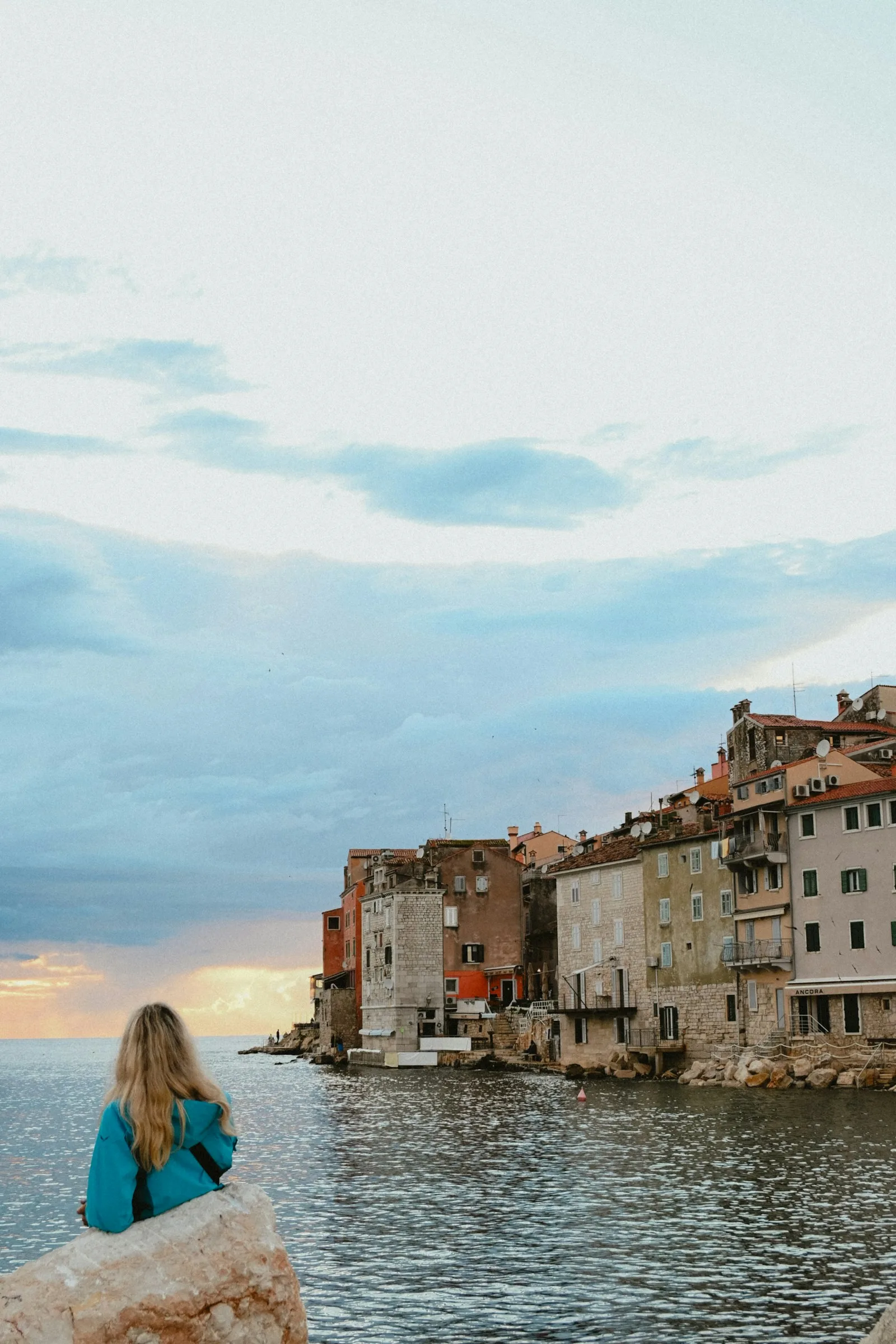
The breakwater at the south end of the harbor (Molo Grande) is where locals gather every evening to watch the sun go down. It's not a secret spot — everyone knows it — but it's genuinely one of the best sunset viewpoints on the Adriatic. The silhouette of the old town against a burning sky is the kind of photo that doesn't need a filter.
Photography Tips
- Best light: Early morning (before 9am) and golden hour (1-2 hours before sunset). Midday is harsh and the streets are crowded.
- Best season: May-June and September-October. Fewer crowds, softer light, and the town feels more authentic.
- Go vertical. The narrow streets and tall buildings lend themselves to portrait orientation.
- Look up and down. The architecture is above eye level, and the cobblestone patterns underfoot are beautiful too.
- Respect the locals. The old town is where people live. Don't shoot into windows or block doorways.
- Bring a wide lens for the narrow streets, and a telephoto for the harbor from a distance.
For a guided walk through the old town's best spots, see our Old Town Walking Guide.