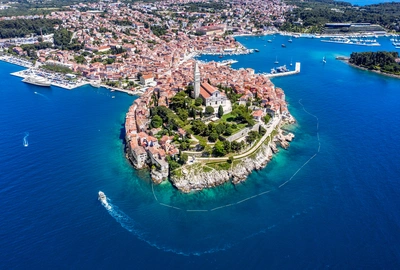
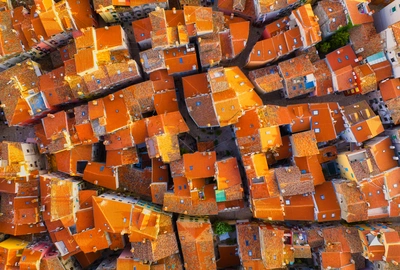
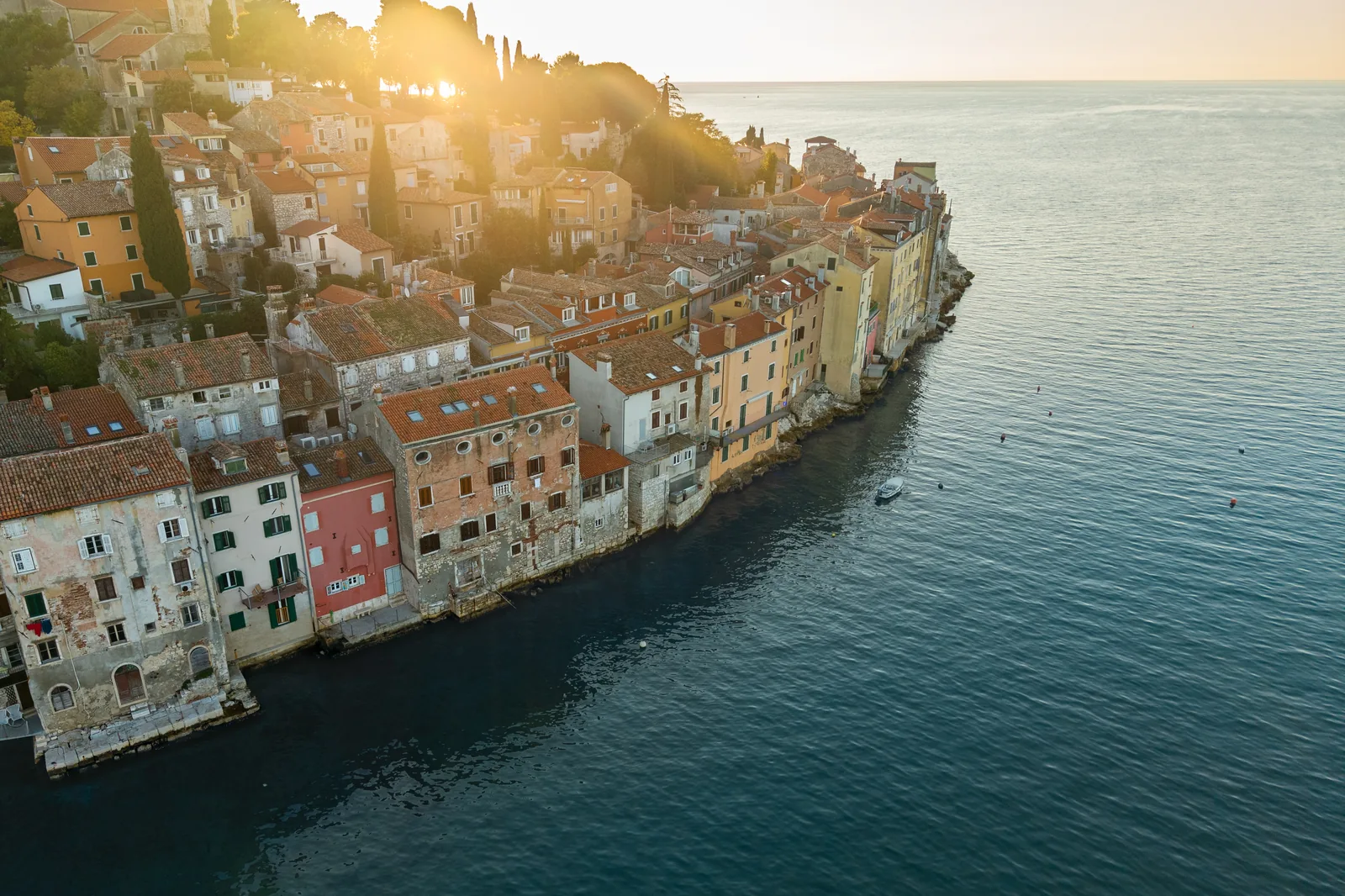
Rovinj has quietly become one of the most photographed small towns on the Adriatic, and the interest has followed. Buyers aren't coming for a bargain — prices sit firmly at the top of the Croatian coast and are on par with parts of coastal Italy. What pulls them in is the mild Mediterranean climate, the Venetian-Istrian aesthetic (stone alleys, light on the rooftops at sunset, sea at the bottom of every lane), the nature around town — Punta Corrente, the archipelago, quieter coves north and south — and the food and daily-rhythm quality of living: markets, kafići, konobas, an hour's drive to truffles and wine in the interior.
Most buyers don't actually move to Rovinj. The majority pick up a holiday house they use for two or three months a year and sometimes rent out the rest — so the question isn't usually "should we relocate" but "does a second home here make sense for us". This guide is written with that in mind.
The questions that land in our inbox are mostly the same: can I actually buy, what does it really cost, and what am I going to get wrong?
This guide walks through the Croatian property-buying process specifically as it looks from Rovinj.
General information, not legal or tax advice. Tax rates, fees, reciprocity rules and licensing requirements change, and individual circumstances vary. The numbers below are current at time of writing, not evergreen. Before signing anything, paying a deposit, or transferring money, work with a Croatian lawyer who does not also represent the seller and an independent tax adviser. See our Terms of Use for the full disclaimer.
What's in this guide:
Can you actually buy?
Short answer: almost certainly yes, but the route depends on your passport.
- EU / EEA citizens have the same buying rights as Croatian citizens for apartments, houses and building land. Agricultural land is still regulated separately under its own rules, which change over time — rarely relevant for a Rovinj flat or house, but worth flagging if you're looking at something rural.
- Non-EU citizens (UK, US, Canada, Australia, most others) buy under reciprocity: if Croatians can buy in your country, you can buy in Croatia. The Ministry of Justice publishes the reciprocity list. Britons have kept reciprocity after Brexit; Americans, Canadians and Australians all have it. You need an additional approval from the Ministry of Justice, which typically takes 3–12+ months. This can delay the land-registry transfer significantly, even after the contract is signed.
- The workaround most non-EU buyers use: set up a Croatian limited company (d.o.o.) and buy through it. The company is a Croatian legal person, so reciprocity doesn't apply. Realistic first-year cost, including setup, first-year accounting, bank opening and notary work, is €2,500–€4,000. It's not a shortcut — it's a different paperwork path with ongoing admin. Talk to an accountant before deciding.
What you need before you even look
Three things, in this order:
- An OIB (Osobni Identifikacijski Broj, personal identification number). Croatia's tax ID. You cannot sign a contract, open a bank account, or pay tax without one. Free to obtain — apply in person at the tax office (Porezna uprava) in Rovinj or Pula, or by power of attorney if you're not in the country. Takes about half an hour on a quiet day.
- A Croatian bank account. Not legally required to complete a purchase, but practically unavoidable — sellers expect a local HR IBAN transfer, utilities are billed to Croatian accounts, and ongoing tax payments and rental compliance all run through one. Opening as a non-resident is slower than you'd expect. Bring your OIB, passport and proof of address, and budget half a day.
- A lawyer, not the agent's lawyer. Agents in Croatia sit between buyer and seller and draft standard contracts, but they are not acting only for you. An independent lawyer costs roughly €800–€2,000 on a typical purchase and checks the land-registry title, any liens, the building permit, and whether anything's built that shouldn't be. Worth it.
The Rovinj market in one paragraph
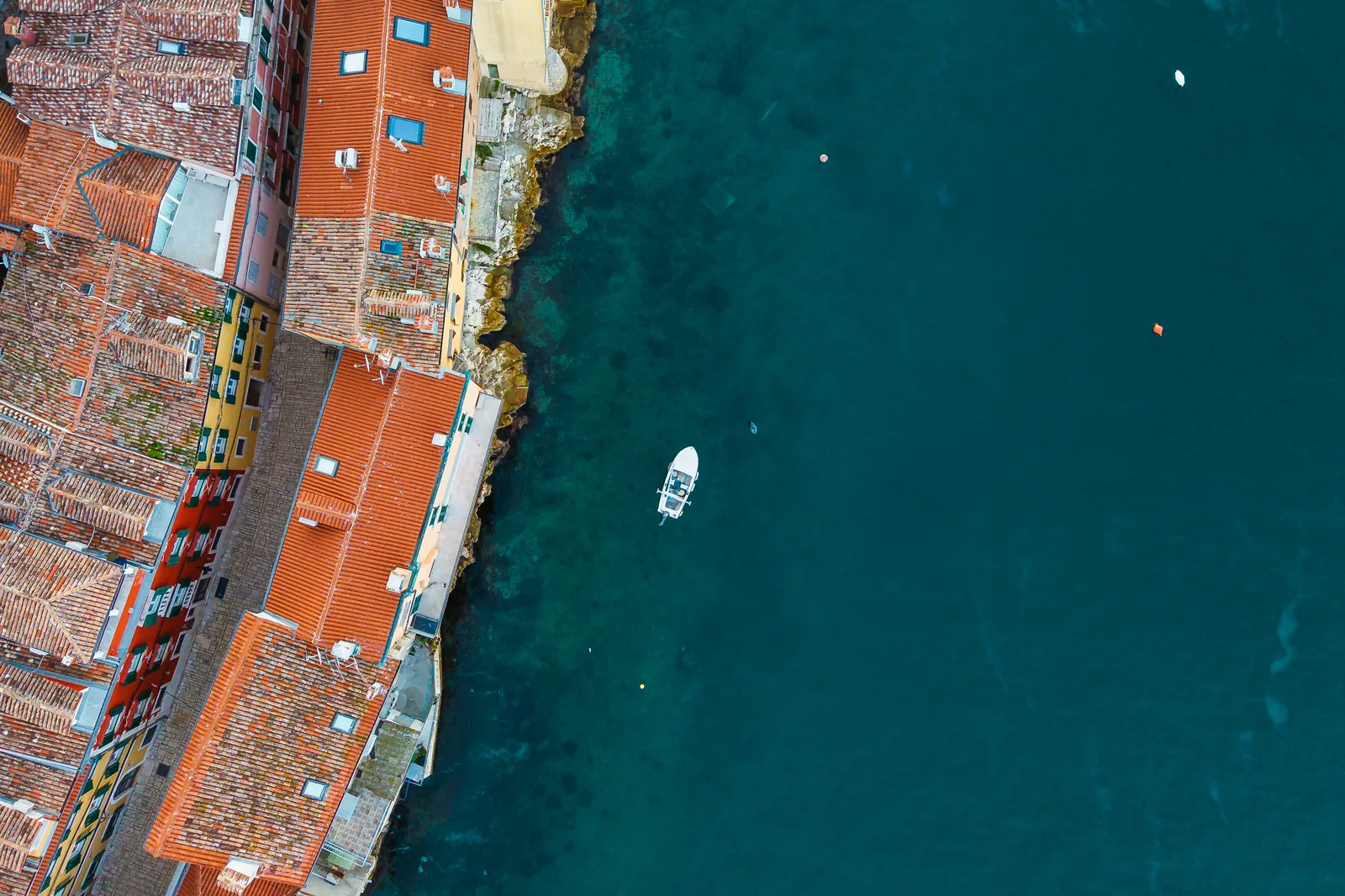
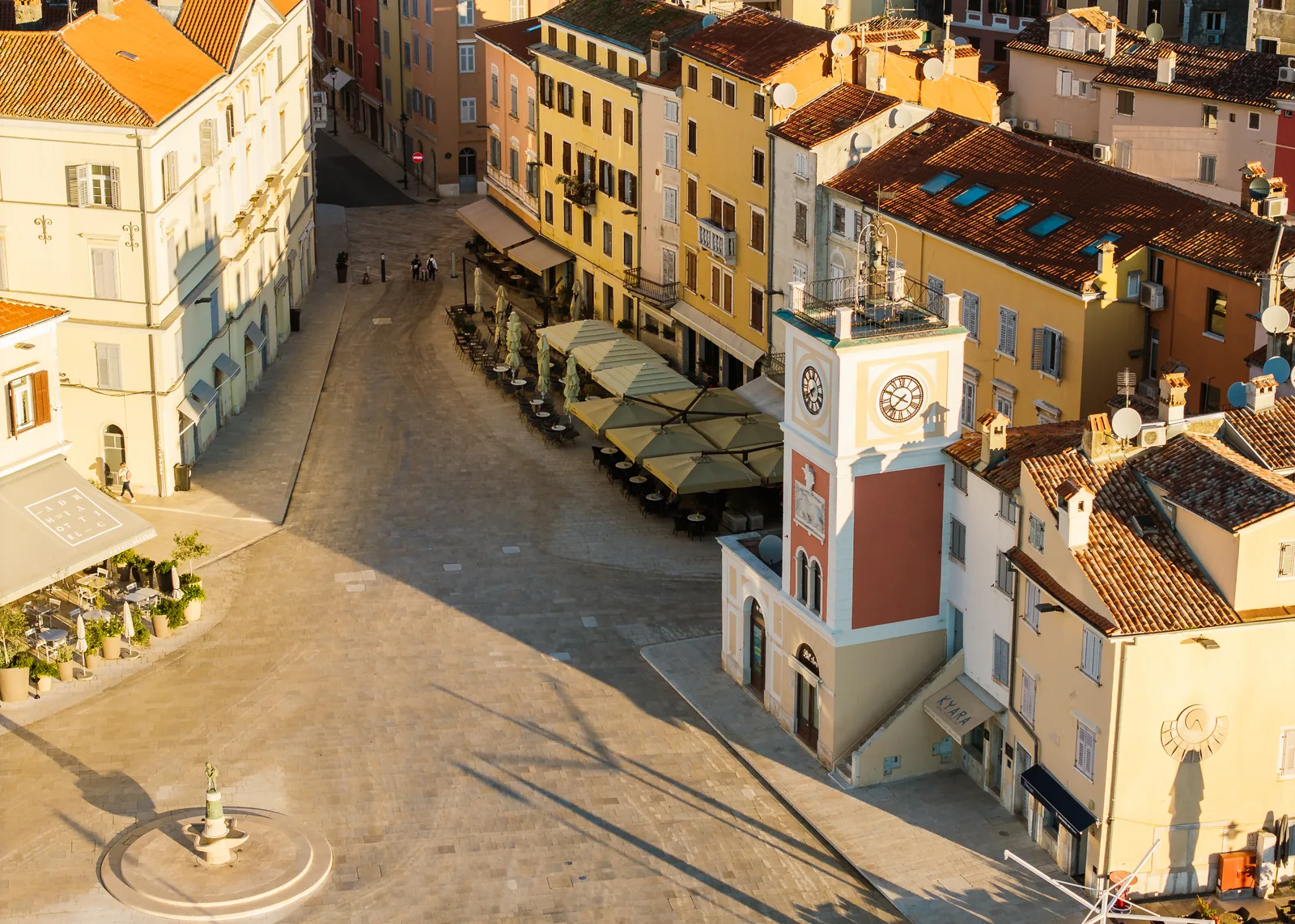
Rovinj is small — the whole town fits in a ten-minute walk — and the market reflects that. There is very little new stock inside the peninsula; Old Town properties are stone, often tiny, and protected as heritage. Around the edges — Monte, Lacosercio, Centener, Valbruna, Gripole — you find newer apartments and villas, most built since 2000. Genuine seafront with legal building rights inside the 1,000-metre coastal protected zone (ZOP) is effectively extinct for new builds; what's on the market is existing stock that has already been approved.
Prices, at the time of writing, roughly:
- Old Town stone apartments: from around €5,000/m² for something unrenovated, up to €10,000–€14,000/m² for renovated views.
- Newer apartments in the suburbs (Monte, Centener, Valbruna): €3,500–€6,000/m².
- Villas with a pool, 10–20 minutes out of town: €800,000 upwards — ceilings are soft.
- Building plots: €150–€400/m² depending on distance to the coast and what you're allowed to build.
Two warnings here. First, asking prices and achieved prices are not the same — budget 5–10% haggling room, more on properties that have been listed a long time. Second, always ask for the per-square-metre price of the usable (net) living area, not the gross constructed area, which can include walls, terraces at 50%, and parking at 25%. Confusion here is the most common way people think they're getting a deal.
The buying process, step by step
Roughly in order:
- Offer and reservation. You make an offer via the agent. If accepted, you usually pay a small reservation fee (€1,000–€5,000) that takes the property off the market for 1–2 weeks while you arrange finance and due diligence.
- Preliminary contract (predugovor). Signed once the title and paperwork check out. The buyer pays a deposit (kapara) of 10%. If the buyer walks away, the deposit is forfeit; if the seller walks away, they owe double. The preliminary contract also sets the final completion date.
- Main contract (glavni ugovor). Signed in front of a notary (javni bilježnik). The remaining balance is paid here, usually by bank transfer. If you don't speak Croatian, the contract must be bilingual and you need a court-appointed interpreter at signing.
- Tax filing. Within 30 days of signing, the purchase is reported to the tax office, which issues the transfer-tax bill.
- Land registry update. The notary submits the contract to the Land Registry (Zemljišne knjige). Once recorded, you are the legal owner. In Rovinj this usually takes 4–12 weeks, occasionally longer if the title has any historical complications.
Fees and taxes — what it really costs
On top of the purchase price, budget the following:
- Real estate transfer tax: 3% of the agreed price (or tax-office-assessed market value, whichever is higher). Paid by the buyer, once, when the title transfers. Only applies to second-hand property.
- VAT (25%) instead of transfer tax if you are buying a new-build directly from a developer. The VAT is already in the price the developer quotes — don't add it twice.
- Agent fee: 3% + VAT of the purchase price is the Rovinj standard. Sometimes charged to the buyer, sometimes to both parties, sometimes priced silently into the asking figure. Always ask upfront who's paying the commission and what's in the asking price.
- Notary fees: regulated by law, roughly €200–€700 on a standard purchase.
- Lawyer: €800–€2,000 as noted above.
- Court interpreter (if you need one at signing): €150–€300.
- Bank transfer fees: if you're sending money in from abroad, check with your bank — SEPA transfers in Euro are cheap, non-Euro transfers can cost 0.5–1% in hidden FX margin.
All-in, budget roughly 7–8% on top of the asking price for a typical resale purchase with an independent lawyer. Less if you DIY the non-legal parts, more if the purchase is complicated.
The five things people get wrong
Things to look for before you fall in love with a property:
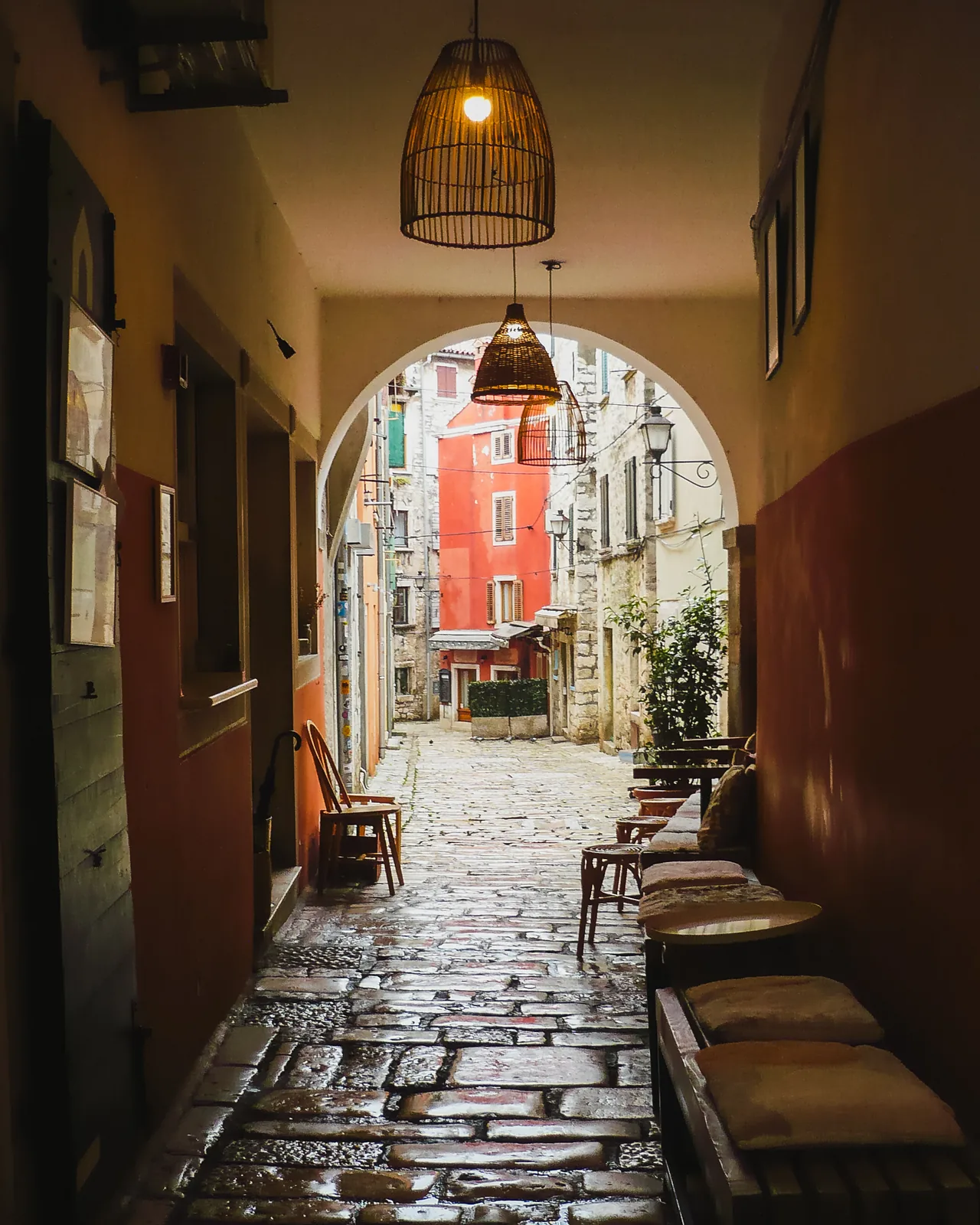
- Access paths and shared ownership. Rovinj's Old Town is a maze of inherited rights of way. A ground-floor flat might not legally have access to its own courtyard; a terrace might technically belong to the upstairs neighbour. Your lawyer pulls the land-registry extract (zemljišno-knjižni izvadak) and reads it carefully.
- Unregistered additions. A lot of properties in Istria have extensions, terraces or interior walls that were built without permits. These may have been legalised in the 2011–2018 amnesty (legalizacija), or they may be sitting there waiting to become your problem. Check the use permit (uporabna dozvola) matches what is actually standing.
- Heritage zone restrictions. Anything inside the Old Town walls is in a protected cultural-heritage zone (kulturno dobro). You cannot change the façade, the windows, the roof tiles or in many cases the interior layout without approval from the conservation office. Renovations take twice as long and cost twice as much. That's fine if you know going in; painful if you don't.
- Coastal protected zone (ZOP). Croatian spatial law divides the coast into two nested zones. The inner 100-metre strip from the sea is the strictest: new construction is essentially prohibited, with narrow exceptions for public infrastructure and state-approved tourism projects. The outer ZOP extending to 1,000 metres inland allows more, but what you can actually do depends on the local zoning and urban plan. Some stretches are effectively frozen; others allow changes only under a detailed spatial plan. Existing legal buildings are generally fine to use as-is — but any renovation, extension or change of use may trigger ZOP review. Read the local plan (prostorni plan) before you commit.
- Short-term rental licensing. If you plan to rent the property to tourists, you need a rješenje o pružanju ugostiteljskih usluga u domaćinstvu (a tourism-rental permit) from the county, and you register guests in the national eVisitor system. Income is taxed either as a flat-rate lump sum per bed or through a proper bookkeeping regime. The rules are not onerous, but they are real, and the penalties for renting without a licence are substantial. If you don't want to deal with any of this yourself, rental-management companies in Rovinj and across Istria will handle the licensing support, eVisitor registration, pricing, listings, check-ins, cleaning and tax remittance for you — you agree a revenue split or management fee and receive the net income. Tax is still assessed on the owner, so pick a manager who works transparently with your accountant.
After you buy
A few things change the moment the land registry catches up:
- Utilities. Three separate providers, all handled in Rovinj: electricity (HEP), water (Istarski Vodovod), and waste collection (Komunalni Servis Rovinj). Transfer each to your name at the relevant office with your OIB and the purchase contract.
- Property tax. A small annual municipal fee (komunalna naknada) is charged based on square metres and zone. For a 60 m² apartment in town, expect a few hundred euros a year. Broader property taxation — particularly of second homes and short-term rentals — is a politically active topic in Croatia and reform moves quickly. Check the current rules against the tax office directly; don't rely on summaries older than this year.
- Residence. Owning a property in Croatia does not automatically give you the right to live here if you are non-EU. Short-stay Schengen rules (90 days in any 180) still apply. For longer stays, look at the digital-nomad visa, temporary residence for family reasons, or — for EU retirees — the EU registration certificate.
- Selling later. If you sell within two years of buying, any profit can be taxed as capital gains — current rate is roughly 10%, plus any local surtax. Beyond two years the picture is more nuanced: exemptions depend on whether it was your primary residence and on other specific conditions, and the rules do not amount to a clean "two-year exemption". Keep every renovation receipt — they count against the gain — and talk to a Croatian tax adviser before you sell.
Should you buy at all?
Honestly? It depends on how much time you will actually spend here. A holiday home that sits empty ten months a year is expensive to own and awkward to maintain — humidity, salt air, and the occasional bora wind all conspire against unoccupied buildings on the Istrian coast. If you are buying to spend 2–4 months a year here, a long-term rental or house-swap often works out better.
If you're buying because you want a place that's yours on the square every September, or because you'd like to move over in a few years and start now, Rovinj is a good bet. The market is small enough to be thin — interesting properties move quickly once priced realistically — but it's not overheated in the way coastal Spain or Portugal has been. Go twice in different seasons before you commit. Visit in February as well as July; both are real.
Take the paperwork seriously, work with people you pay directly, and don't let a beautiful stone terrace rush you past a bad title. The town isn't going anywhere.