Looking for today rather than the season? Our live Rovinj weather page has current conditions, the next seven days, and the sea temperature measured at Rovinj's own station.
The best time to visit Rovinj is June and September. Temperatures sit around 22–25 °C, the sea is warm enough for long swims, the days are long, and the summer crowds haven't arrived (or have just left). July and August are hotter and busier — great for a beach holiday if you don't mind the peak. May and October offer warm weather with a fraction of the tourists.
Rovinj sits on the western coast of Istria, facing the open Adriatic. The climate sits between humid subtropical and Mediterranean — hot dry summers, mild wet winters, and shoulder seasons that are some of the best times to visit. The average annual temperature is 13.4 °C, the sea stays above 20 °C from mid-June to September, and the town gets 2,437 hours of sunshine a year — one of the sunniest stretches of the northern Adriatic.
At a glance
- Hottest month: August (avg. high 29 °C / 84 °F, water 24 °C)
- Coldest month: February (avg. high 11 °C / 52 °F, water 10 °C)
- Wettest months: October and November
- Best for swimming: mid-June to mid-September (water above 20 °C)
- Best overall: June and September — warm, uncrowded, long days
- Record high: 37.1 °C (2 August 1988)
- Record low: −14.8 °C (7 January 1985)
Monthly overview
| Month | Avg. High | Sea Temp | Rain | Best For |
|---|---|---|---|---|
| Jan | 10 °C | 11 °C | Moderate | Off-season city break |
| Feb | 11 °C | 10 °C | Moderate | Carnival, low prices |
| Mar | 13 °C | 11 °C | Moderate | Sightseeing, cycling |
| Apr | 17 °C | 14 °C | Moderate | Easter, spring walks |
| May | 22 °C | 18 °C | Low | First visit, pre-peak |
| Jun | 25 °C | 22 °C | Low | Best overall month |
| Jul | 29 °C | 24 °C | Very low | Beach, events, nightlife |
| Aug | 29 °C | 24 °C | Very low | Peak summer, festivals |
| Sep | 25 °C | 22 °C | Moderate | Sweet spot — warm, quiet |
| Oct | 20 °C | 19 °C | High | Truffle season, food trips |
| Nov | 14 °C | 16 °C | High | Olive harvest, wine |
| Dec | 11 °C | 13 °C | Moderate | Advent markets, NYE |
Rovinj in January
Air: 2–10 °C. Sea: 11 °C. Rain: moderate. Sunshine: ~4h avg/day (rest overcast).
Quiet, grey, and cold by Adriatic standards. Most tourist facilities are closed. The old town is empty, which has its own appeal — no queues, no crowds. Restaurants that stay open run reduced hours. Good for a short city break if you like off-season atmosphere, but don't expect beach weather. Pack layers and a waterproof jacket. The bura (cold northeasterly wind) can make it feel significantly colder than the thermometer says.
Rovinj in February
Air: 2–11 °C. Sea: 10 °C. Rain: moderate. Sunshine: ~5h avg/day (rest overcast).
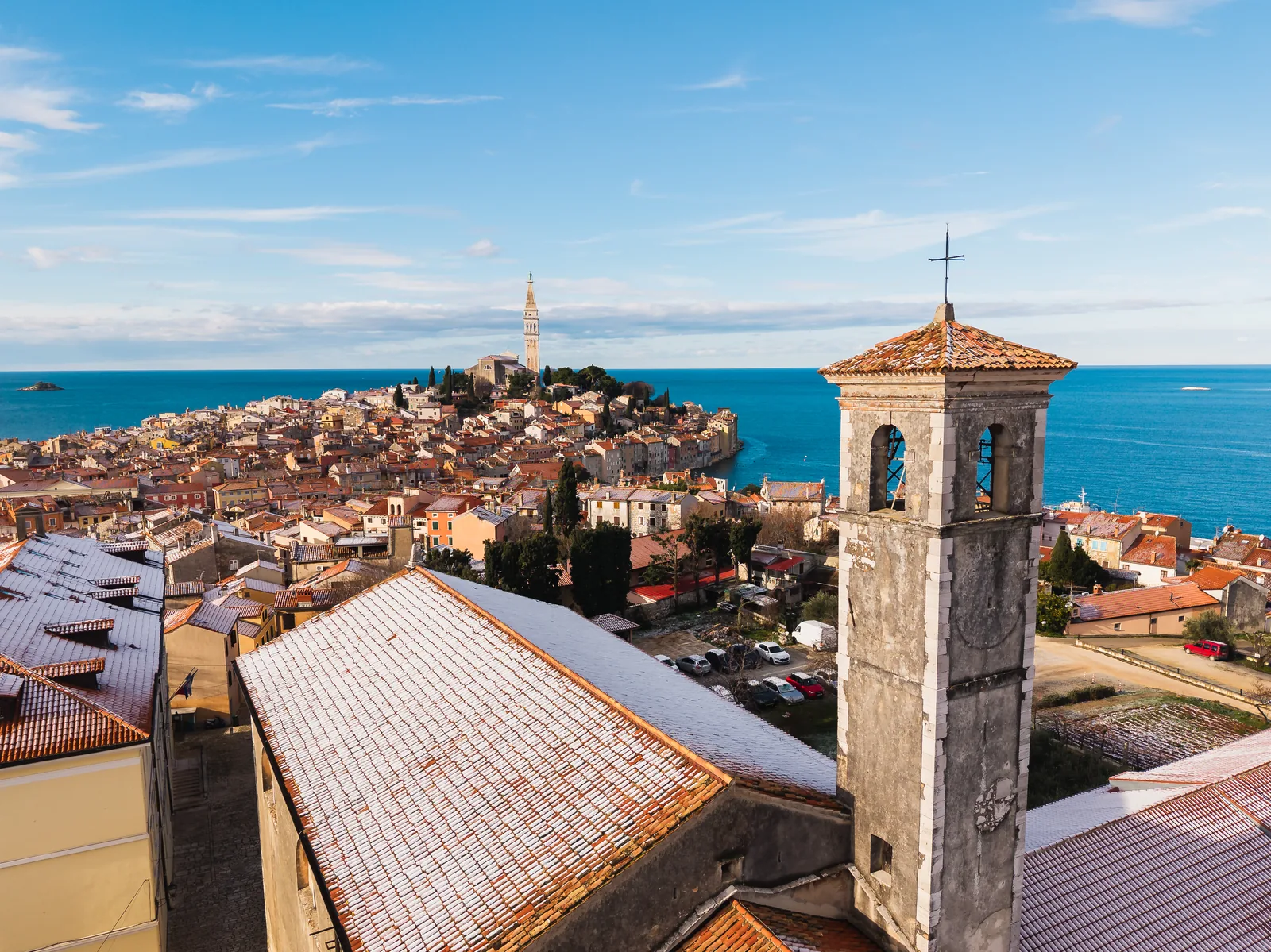
Similar to January but the days start getting noticeably longer. Carnival in Rovinj falls in February — masked parades through town, local food stalls, and a proper party atmosphere for a few days. Still too cold to swim. Accommodation is at its cheapest. Snow is extremely rare — maybe once every 5–7 years, usually in the first quarter. Only heavier falls actually stop the town; most years whatever snow arrives is gone by lunch.
Rovinj in March
Air: 4–13 °C. Sea: 11 °C. Rain: moderate. Sunshine: ~5h avg/day (rest overcast).
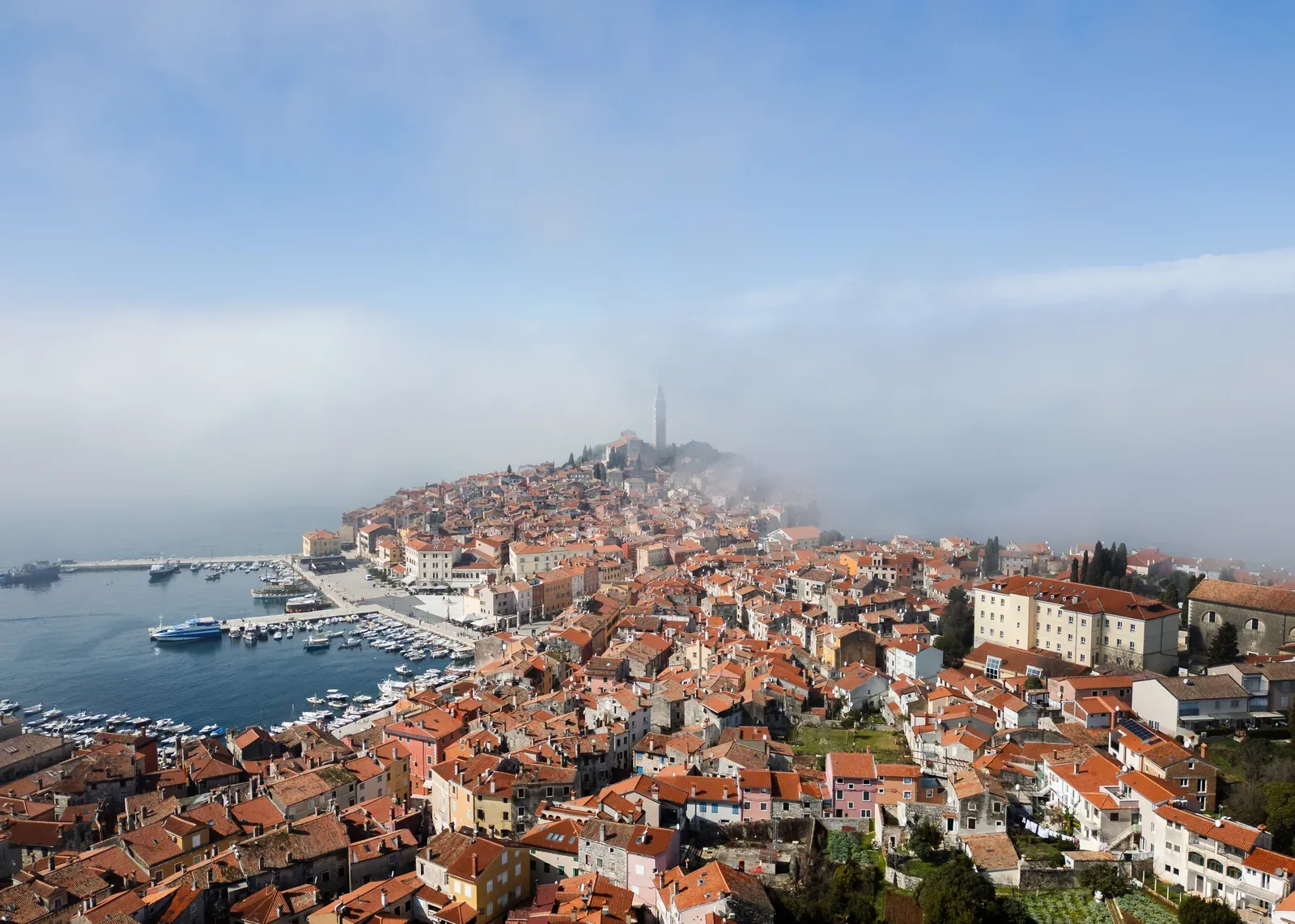
Spring arrives slowly. Wildflowers start appearing in Zlatni rt, the first outdoor café terraces reopen, and the light gets warmer. Still not swimming weather — the sea is barely 11 °C — but the coastal paths through Zlatni rt are perfect for walking and cycling. A good month for sightseeing without the summer heat.
Rovinj in April
Air: 7–17 °C. Sea: 14 °C. Rain: moderate. Sunshine: ~6h avg/day (rest overcast).
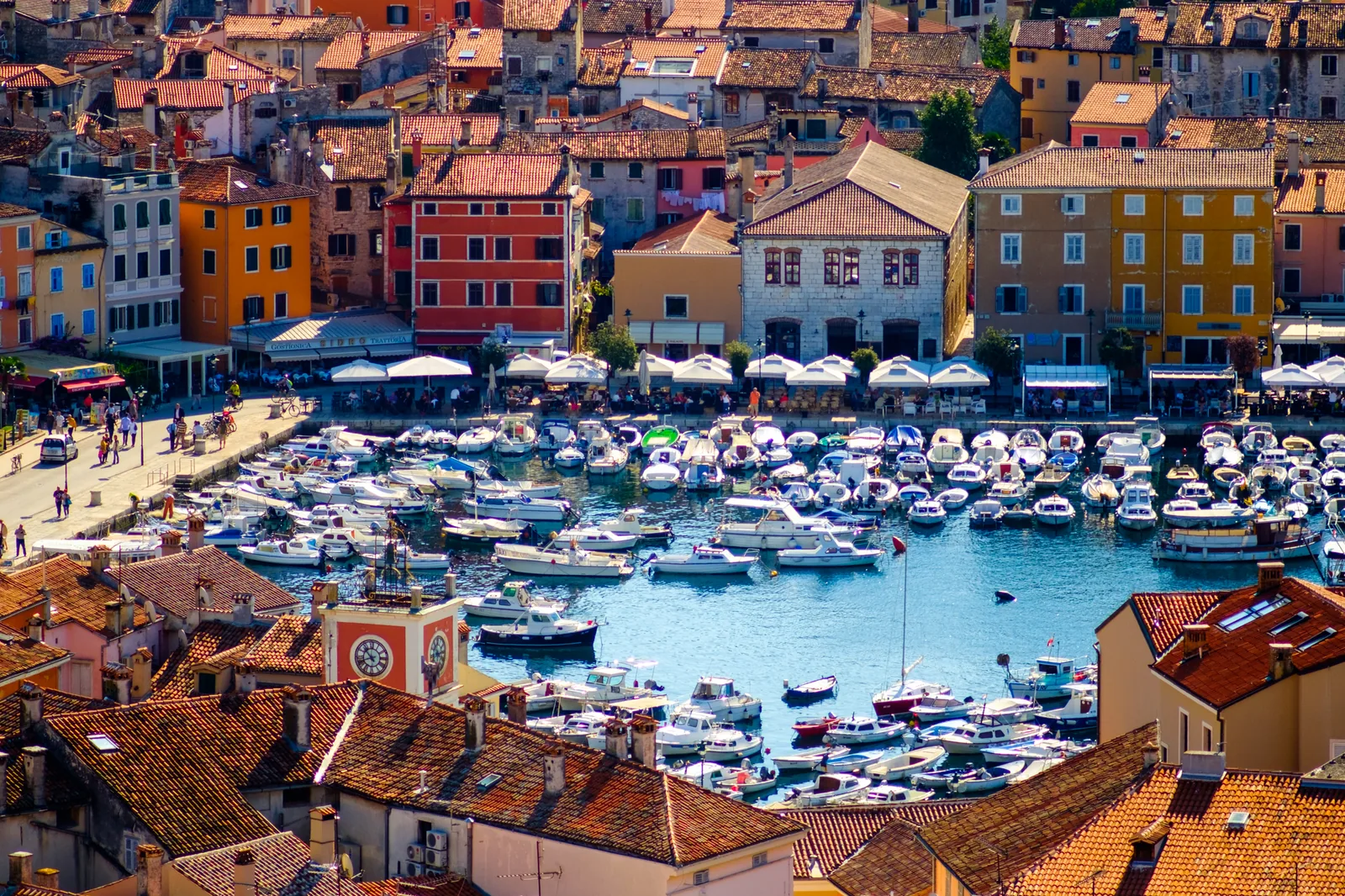
The town starts waking up. Easter brings the first wave of visitors. Hotels and restaurants reopen, boat tours start running, and the markets and restaurants fill with spring produce. Evenings are still cool — bring a jacket for dinner outdoors. The sea is too cold for most swimmers, but the brave wade in. Parking is easy and accommodation prices are still low.
Rovinj in May
Air: 12–22 °C. Sea: 18 °C. Rain: low. Sunshine: ~8h avg/day (rest overcast).
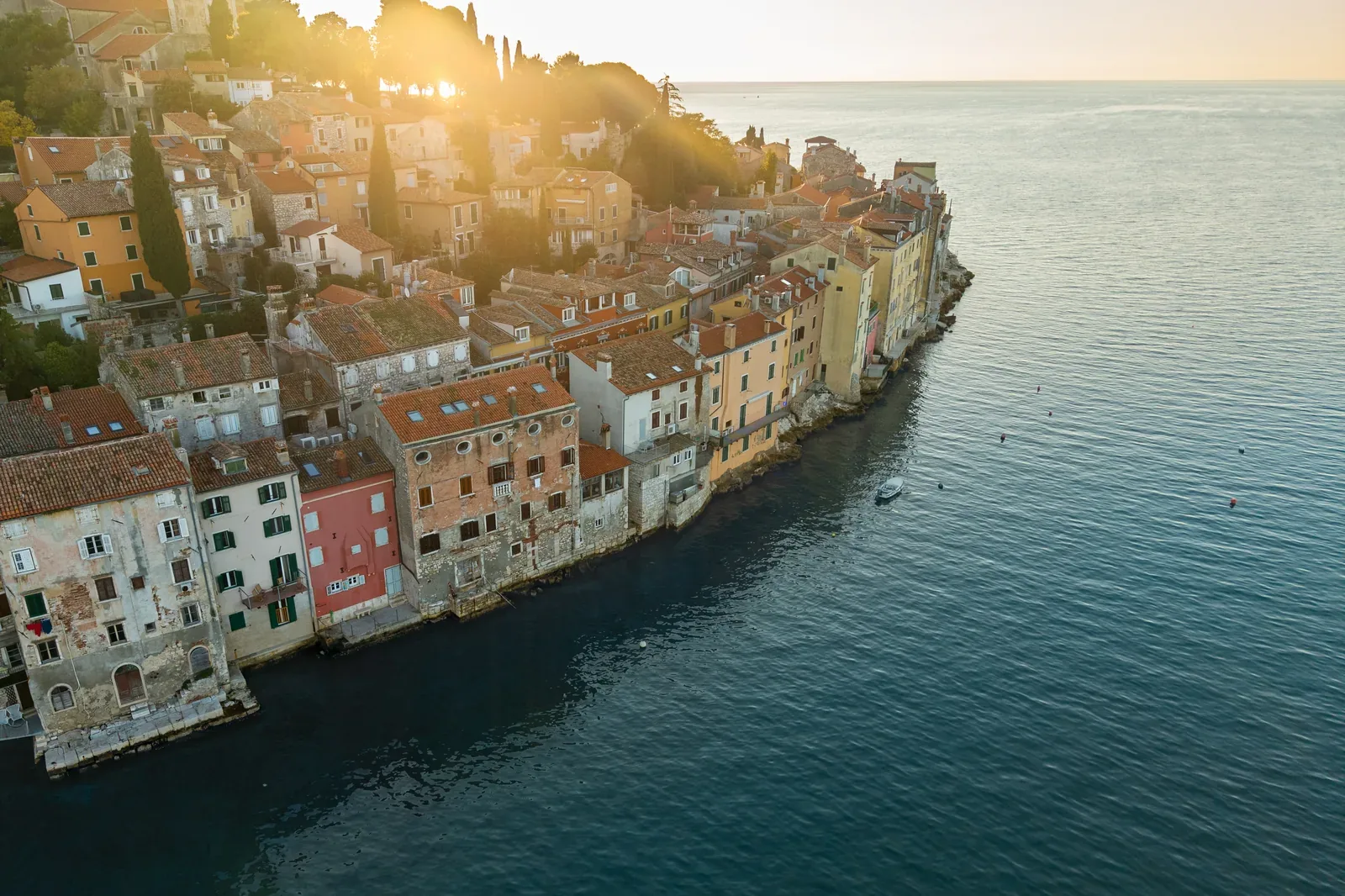
Our favourite month for a first visit. The weather is warm enough for T-shirts by day, the sea reads 18 °C on paper but feels colder — most visitors wade in and come back out, and the town hasn't filled up yet. Restaurants have full menus, all tours are running, and you can still find a parking spot after 10 am. Late May is particularly good — 10+ hours of sunlight, warm enough to eat outdoors every night, and prices are pre-peak.
Rovinj in June
Air: 15–25 °C. Sea: 22 °C. Rain: low. Sunshine: ~10h avg/day (rest overcast).
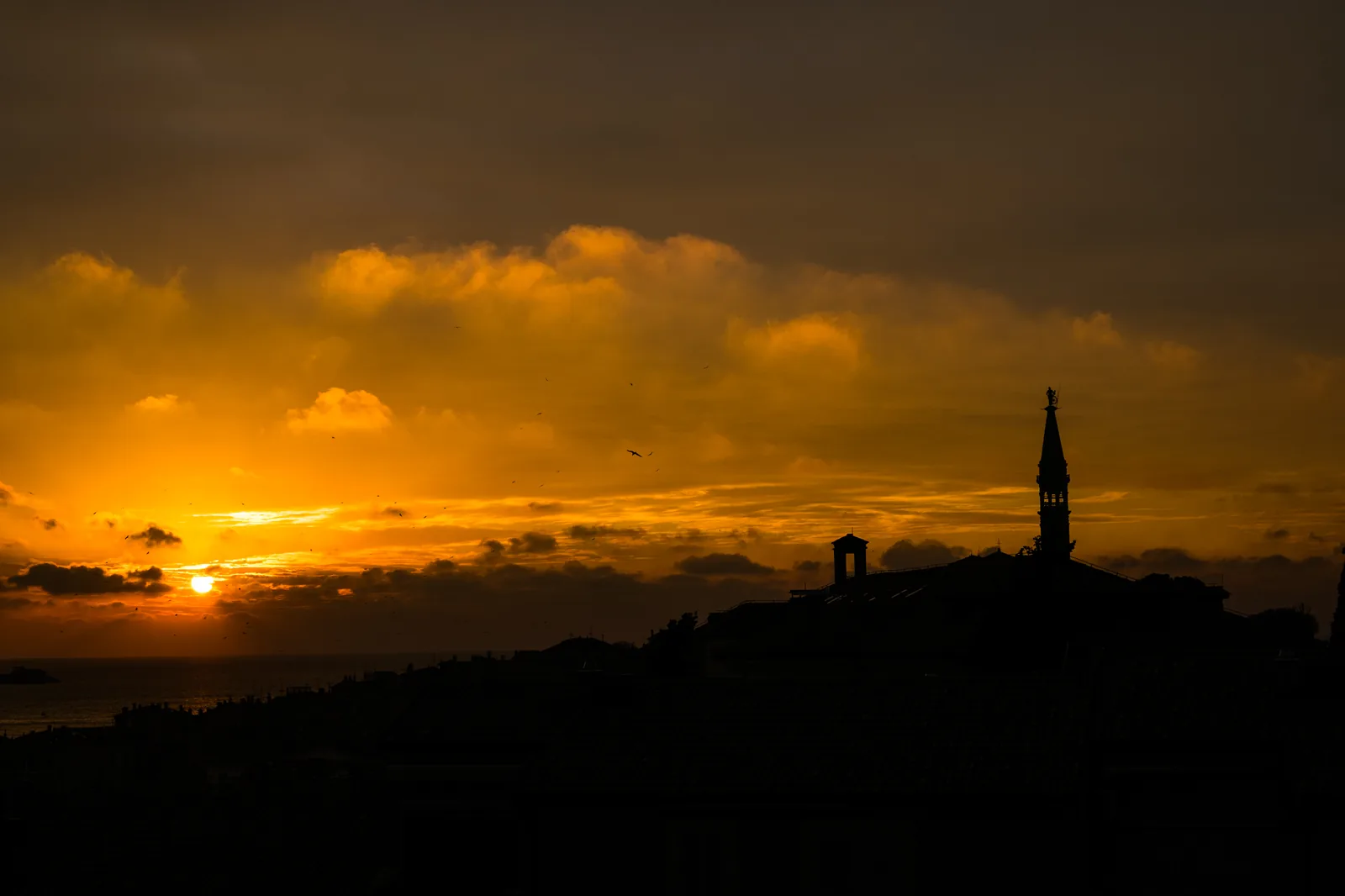
Summer starts properly. The sea hits 22 °C by mid-June (early June can still be 20–21 °C depending on wind) — comfortable for long swims. Days are the longest of the year (sunset after 21:00). Crowds are building but haven't peaked. This is arguably the best month overall: warm water, long evenings, manageable crowds, and every activity and restaurant running at full capacity. Book accommodation 2–3 weeks ahead.
Rovinj in July
Air: 17–29 °C. Sea: 24 °C. Rain: very low. Sunshine: ~11h avg/day (rest overcast).
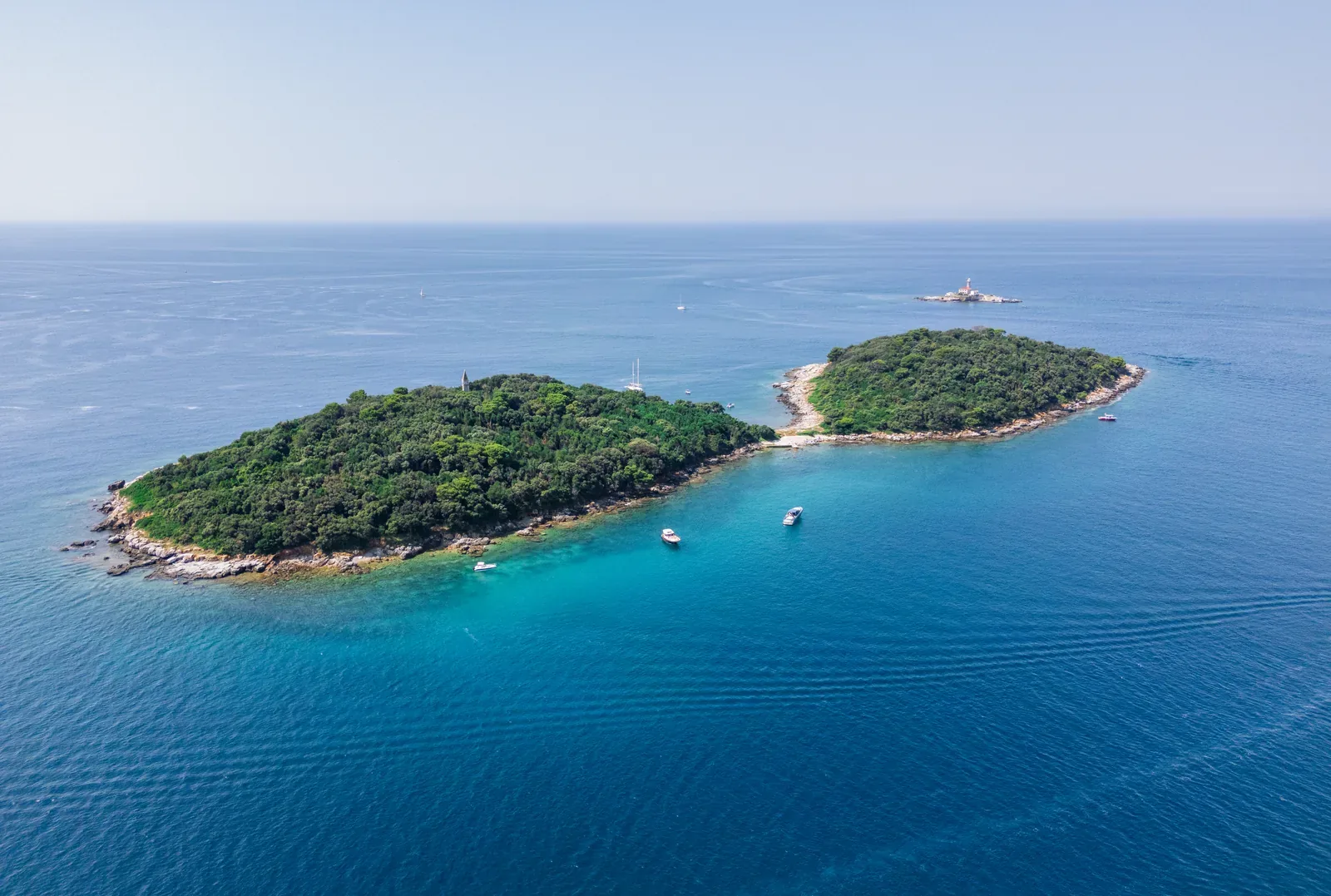
Peak season begins. Hot, sunny, and busy. The sea is bath-warm, the beaches are packed by 11 am, and the old town is shoulder-to-shoulder in the afternoon. This is when all the events happen — concerts, festivals, regattas. Parking fills early; arrive before 10 am or use Zone 4 lots. Evenings are the best part: warm enough for a midnight swim, sunset drinks on Molo Grande, and the harbour promenade buzzing until late. Book accommodation well in advance.
Partner Boat Tour · Excursion Nemo Rovinj from €15 per person Glass-bottom panorama cruises, island transfers and sunset dolphin tours from Rovinj's harbour. See prices & details →Rovinj in August
Air: 17–29 °C. Sea: 24 °C. Rain: very low. Sunshine: ~10h avg/day (rest overcast).
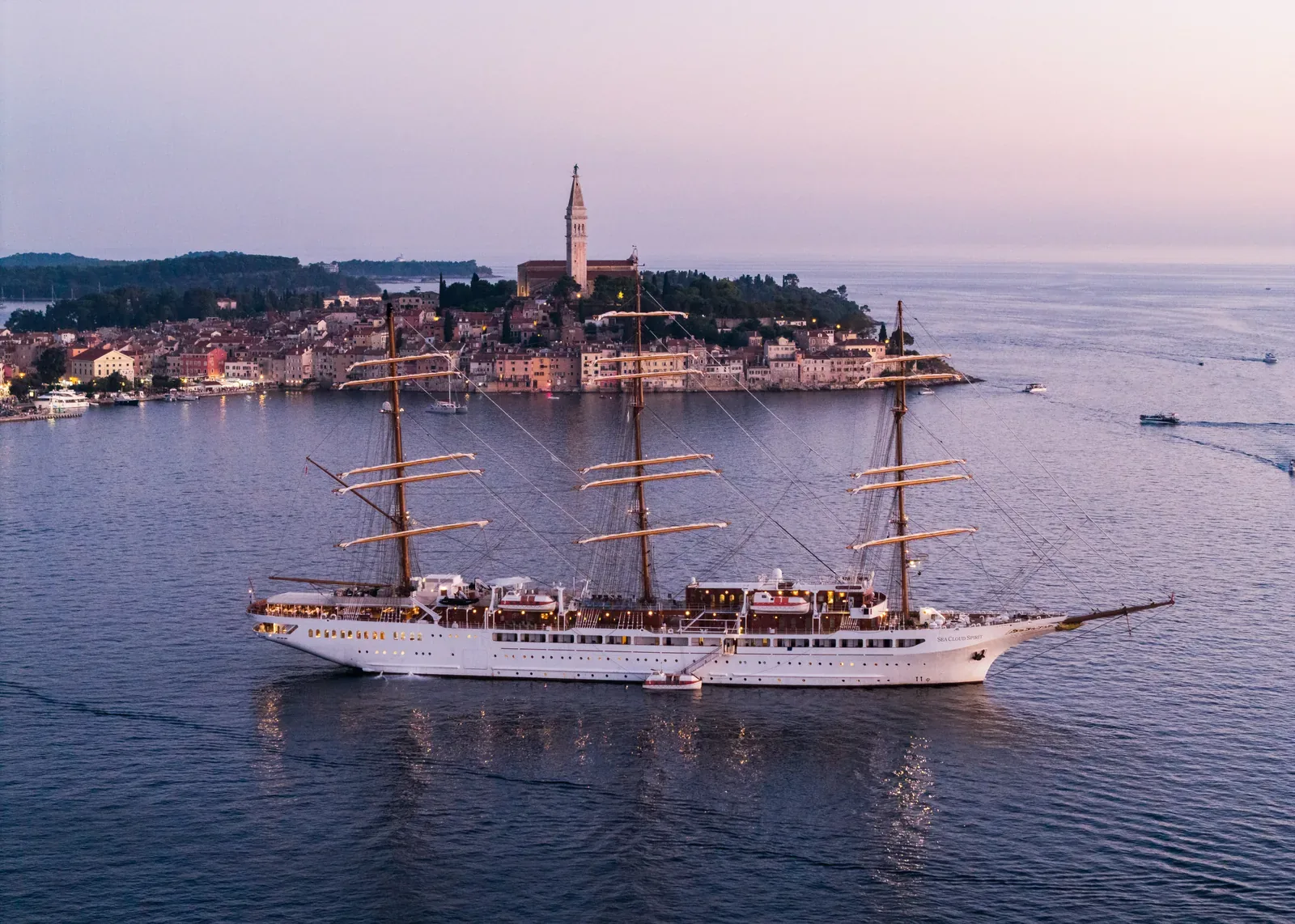
The hottest and busiest month. Temperatures regularly touch 33–36 °C — post-2015 heatwaves are now common, not exceptional. The town is at absolute capacity — Italian and German tourists make up the bulk. Prices peak. The upside: the sea is at its warmest, the town runs events and festivals across the whole month, and the energy is infectious if you don't mind the crowds. Drink water constantly, wear sun protection, and don't plan to drive anywhere in a hurry.
Rovinj in September
Air: 14–25 °C. Sea: 22 °C. Rain: moderate. Sunshine: ~8h avg/day (rest overcast).
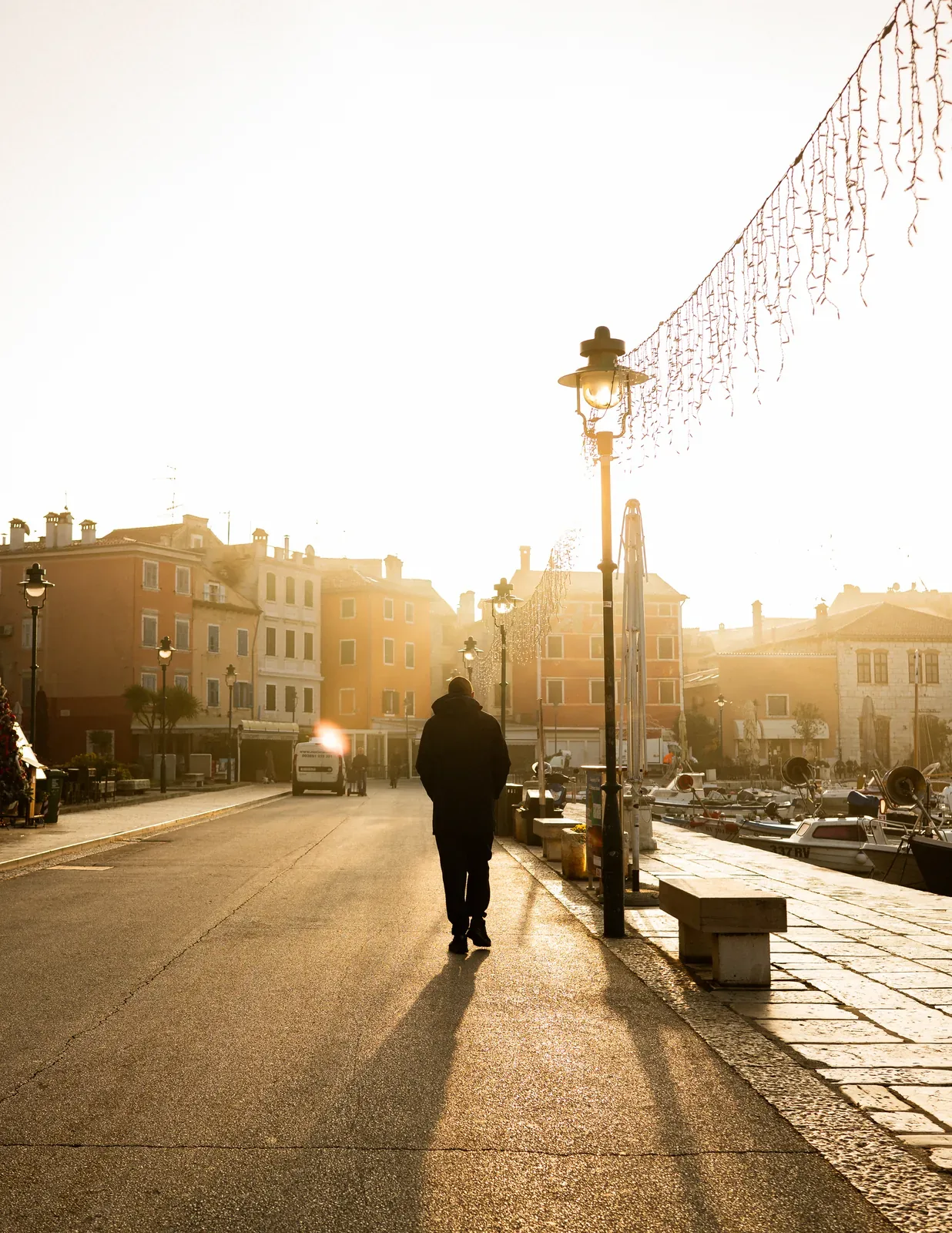
The sweet spot. Crowds thin out after the first week, the sea is still 22 °C, the light turns golden, and restaurant prices drop. Mid-September brings the Feast of St. Euphemia (16 September) — the town's biggest annual celebration. The first half of September is usually bone-dry and stable; storms cluster in late September, but even then the warm days outnumber the wet ones. Many locals say this is the best time to be in Rovinj.
Rovinj in October
Air: 10–20 °C. Sea: 19 °C. Rain: high (one of the wettest months, rivalled by November). Sunshine: ~5h avg/day (rest overcast).
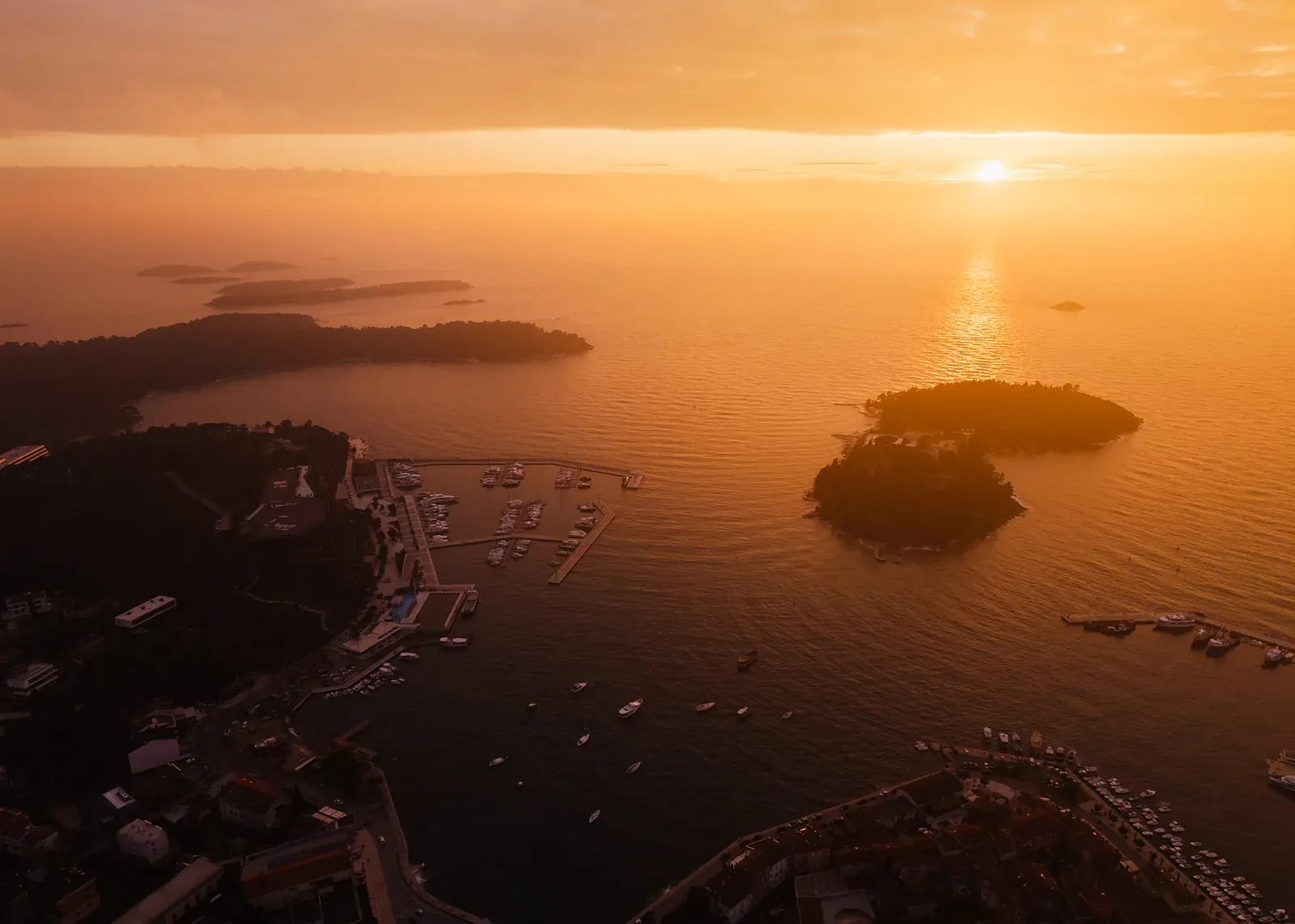
Autumn arrives. The sea is still swimmable in early October (19 °C), but rain becomes more frequent. The colours in Zlatni rt turn — oaks go amber, the pine needles darken. Tourist facilities start winding down by mid-month. This is truffle season in inland Istria — the best time for food-focused day trips to Motovun, Buzet, and the hill villages. Bring a rain jacket and closed shoes.
Rovinj in November
Air: 6–14 °C. Sea: 16 °C. Rain: high. Sunshine: ~4h avg/day (rest overcast).
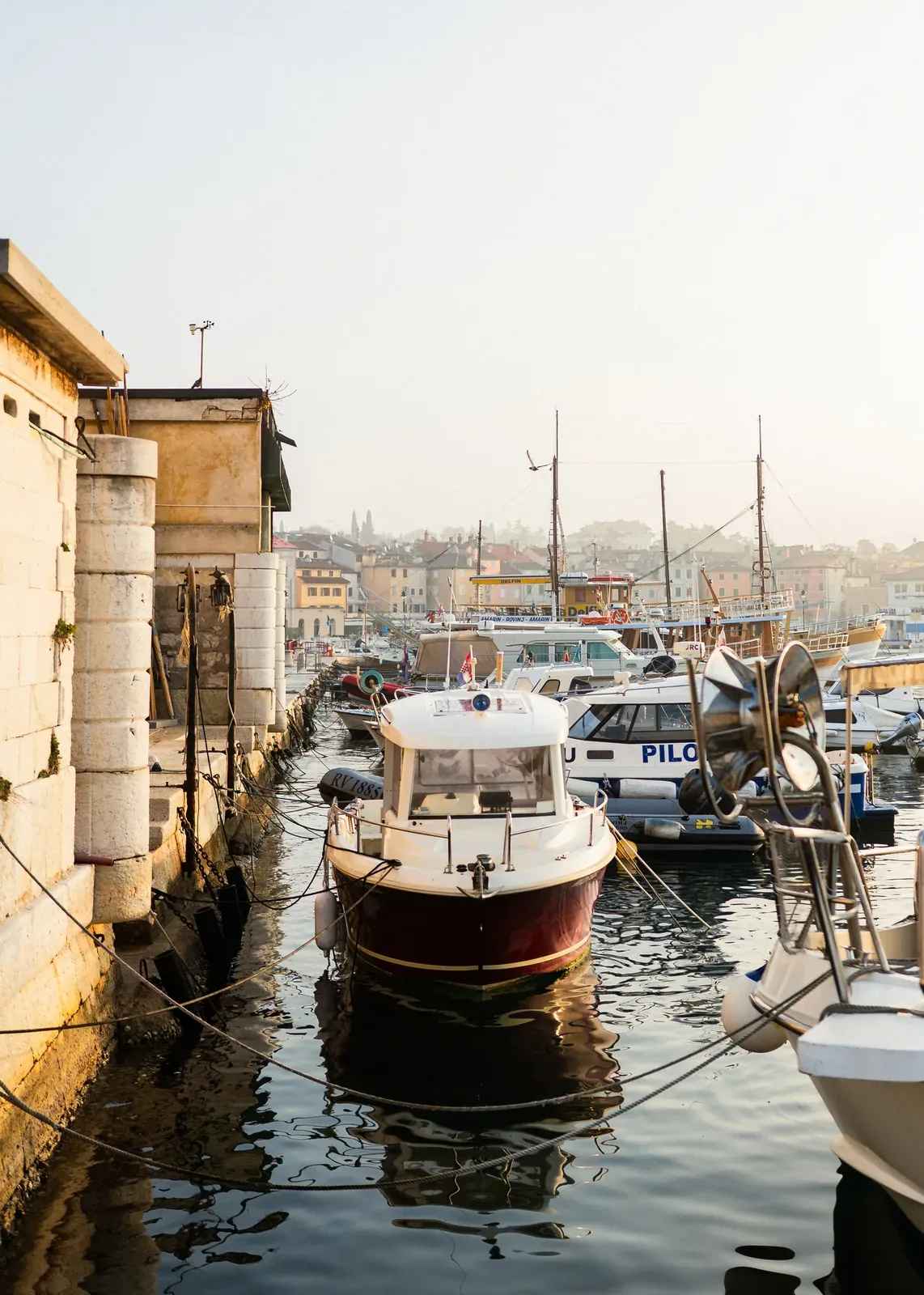
Grey, damp, and quiet. The sea drops below comfortable swimming range. Most boat tours stop running. The town contracts to its winter size — fewer restaurants, shorter hours, almost no tourists. The olive harvest happens in November, and if you know a local producer you can taste fresh-pressed oil straight from the press. Otherwise, it's a city-break-only month. The Antonja wine and olive oil festival in late November is worth the trip if you're into food.
Rovinj in December
Air: 3–11 °C. Sea: 13 °C. Rain: moderate. Sunshine: ~3h avg/day (rest overcast).
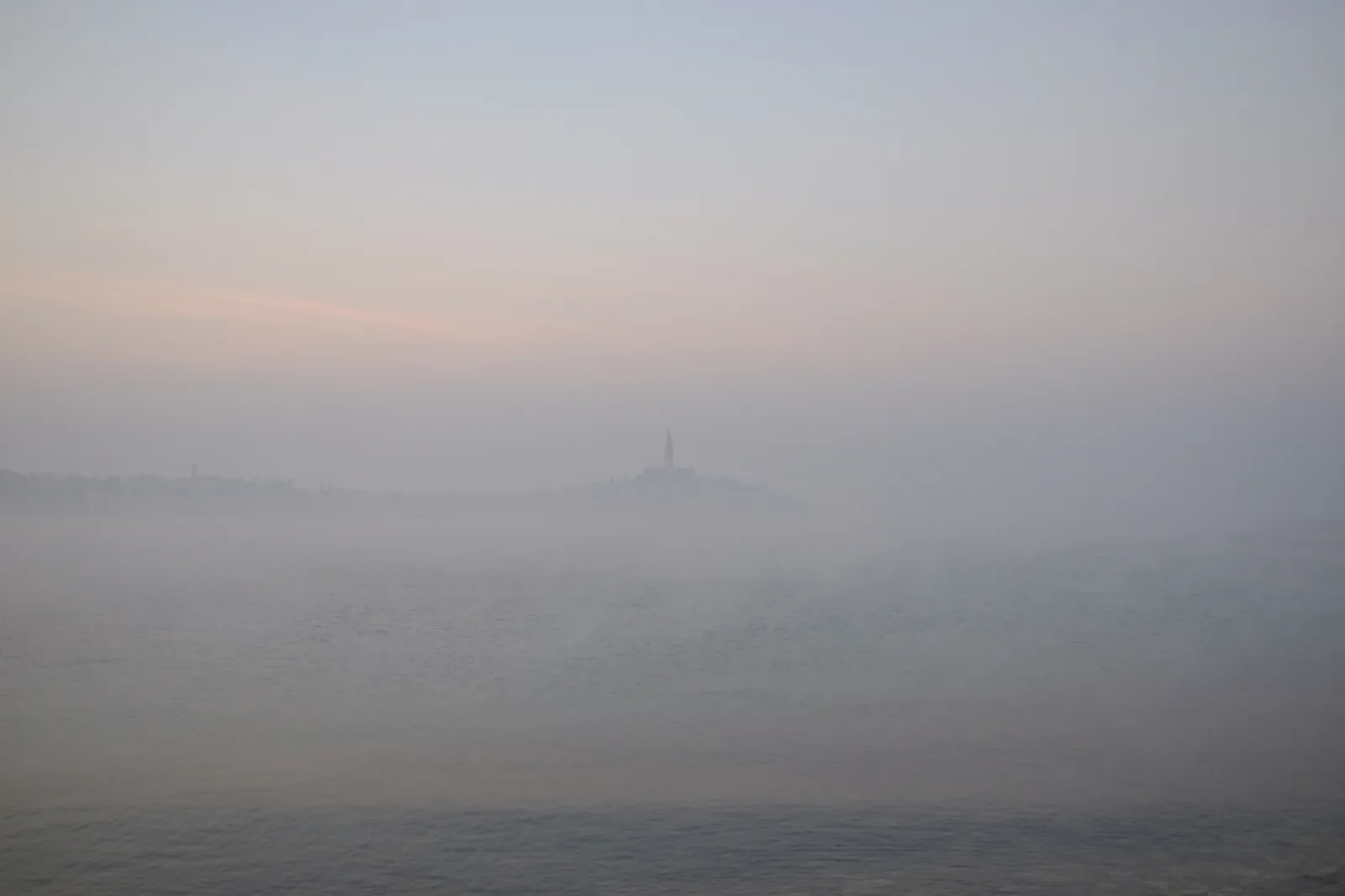
Cold and short days, but Advent in Rovinj transforms the harbour and main square with Christmas markets, mulled wine, lights, and live music through the holiday period. It's a different Rovinj — intimate, festive, and uncrowded. New Year's Eve on the harbour is a low-key affair with fireworks over the bell tower. Pack warm layers — December evenings near the sea are cold.
When should you visit?
- First time: May, June, or September — warm enough, uncrowded, everything open.
- Swimming holiday: July or August — hottest water, longest days, peak energy (and peak crowds).
- Quiet & local feel: March, April, or October — fewer tourists, lower prices, the town feels like it belongs to the people who live here.
- Food & wine: October and November — truffle season, olive harvest, new wine, and the hill villages at their most atmospheric.
What to pack by season
- Summer (Jun–Aug): Light clothes, swimsuit, sun hat, SPF 30+, sunglasses with strap (sea reflection), water shoes for rocky beaches. For boat tours: bring a windbreaker even on sunny days — the wind on open water cuts through thin shirts. For evening boat trips, pack a cardigan or light fleece.
- Shoulder (Apr–May, Sep–Oct): Layers. T-shirt + light jacket by day, a warmer layer for evening. Rain jacket. Closed walking shoes for Zlatni rt trails.
- Winter (Nov–Mar): Warm coat, scarf, waterproof shoes. Umbrella. Layers — sunny winter afternoons can be surprisingly mild, but evenings drop fast.
Sea temperature by month
- Jan–Mar: 10–11 °C (not swimmable)
- Apr–May: 14–18 °C (cold but possible)
- Jun: 22 °C (comfortable)
- Jul–Aug: 24 °C (warm, bath-like in coves)
- Sep: 22 °C (still warm)
- Oct: 19 °C (last chance for a swim)
- Nov–Dec: 13–16 °C (not swimmable)
Local tip
Before weather apps existed, Rovinj had its own forecast: the copper statue of St. Euphemia on top of the bell tower. She rotates freely with the wind — when she faces the open sea, the weather is settled; when she turns inland toward the town, a storm is coming. Locals still glance up at her before heading out on the water. Read more in our St. Euphemia Church & Bell Tower guide.
In summer, the maestral — a pleasant northwesterly thermal wind — blows almost every day from late morning through the afternoon. It keeps the coast bearable on hot days and makes sailing conditions ideal. It's the wind you want.
The bura — a cold, dry northeasterly wind — can appear any time of year and drop the felt temperature by 10 °C in an hour. When it blows, the northeast-facing coast gets the worst of it. For shelter, head to the south and southwest-facing beaches — Cuvi, Borik, Kaštelan, and Zlatna Uvala are your best bets for staying out of the wind while keeping sun and warmth. If it's overcast with bura, even those will feel cold — stay in town. If the forecast says bura, don't plan a boat trip — most operators cancel. Check DHMZ (Croatian Met Service) the morning of any water activity.
Summer storms (neverin)
Rovinj gets sudden, violent thunderstorms in summer — locally called neverin. They typically arrive after a long stretch of hot, dry weather when a cold front pushes in from the northwest. The pattern: a shelf cloud rolls in fast, the wind picks up in seconds, then heavy rain, lightning, and sometimes waterspouts offshore. The whole thing lasts 30–60 minutes and then it's over.
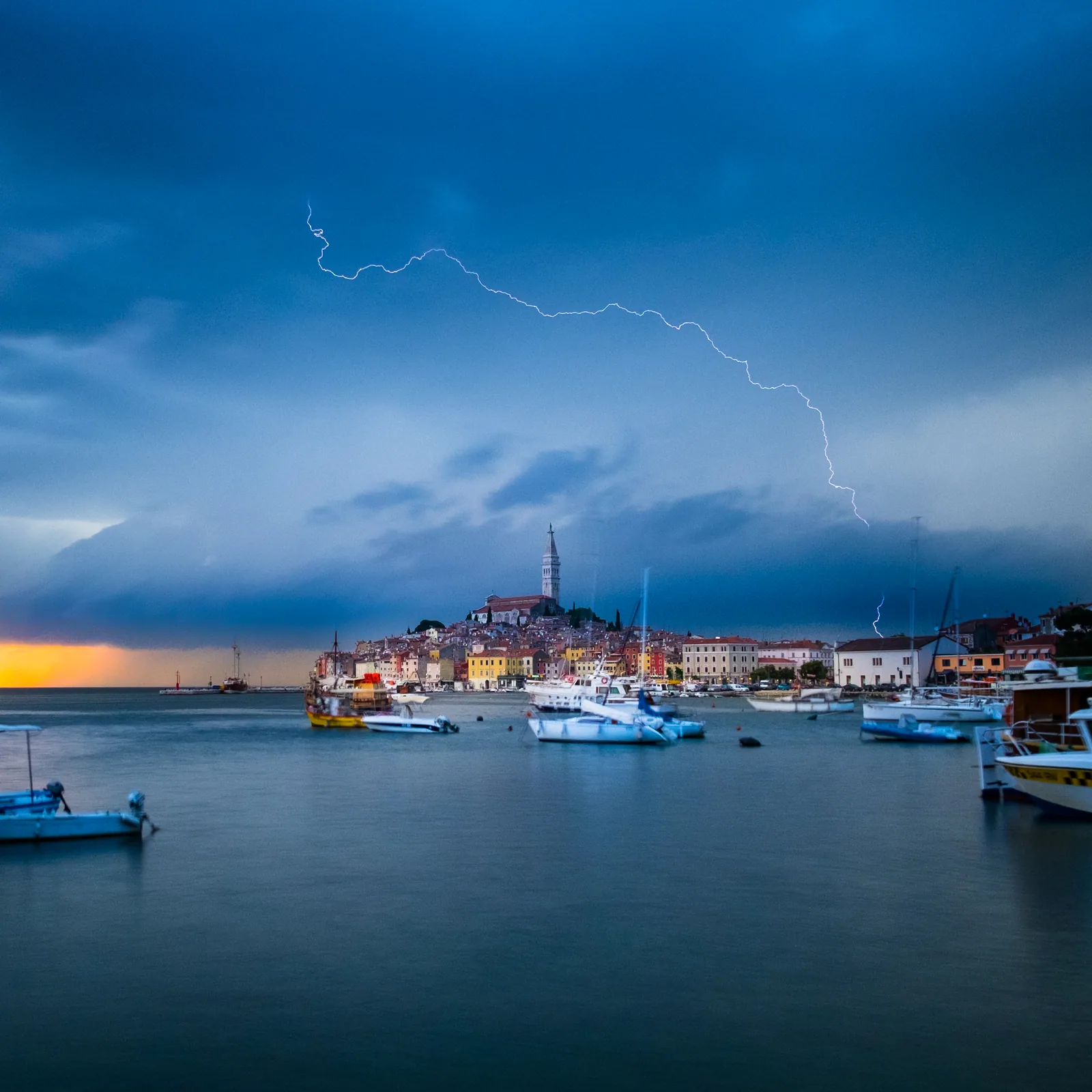
These are dangerous, not scenic. Take them seriously:
- Never shelter under trees during lightning — especially in Punta Corrente. The Aleppo pines are tall, isolated, and frequently struck. They're also known to fall in high winds.
- Get off the water immediately. Open sea and kayaks are the worst places to be in a thunderstorm. Lightning hits the Adriatic regularly.
- Leave the beach and the forest. Go to a restaurant, a hotel reception, a solid building — any closed environment. Wait until it passes.
- If you're camping: don't stay in the tent under pine trees. Head to the campsite reception or a nearby restaurant.
- Watch for shelf clouds — a dark, low, flat-edged cloud wall approaching fast. That's your 10–15 minute warning.
Useful tools:
- Use a Rain Alarm app on your phone — it shows approaching precipitation in real time.
- LightningMaps.org shows real-time lightning strikes across Europe. If you see a cluster moving toward Istria, get indoors.
- DHMZ (Croatian Met Service) posts storm warnings — check it every morning in summer.
After the storm passes (usually within an hour), the air clears, the temperature drops 5–10 °C, and the evening is often the best part of the day. Don't let a neverin ruin your trip — just respect it.
One or two a summer are worth taking seriously, and the last two have put people in hospital. Our guide to summer storms in Rovinj covers what one looks like coming, what to do on the water, in a campsite and in the old town, and where to check before you go out.
Frequently asked questions
When is the best time to visit Rovinj?
The best time to visit Rovinj is June and September. Temperatures are warm (22–25 °C), the sea is swimmable (22 °C), crowds are manageable, and prices haven't peaked. July and August are hotter and busier — great for a full beach holiday. May and October offer good weather with far fewer tourists.
Can you swim in Rovinj in May?
The sea in May averages 18 °C — technically swimmable but cold for most people. Locals start swimming in late May; most tourists wait until June when the water reaches 22 °C. If you're used to cold water (Northern Europe, UK), May is fine for a quick dip.
Is Rovinj crowded in August?
Yes — August is Rovinj's busiest month. The old town is shoulder-to-shoulder in the afternoon, beaches fill by 11 am, parking is difficult, and accommodation prices peak. If you prefer a quieter experience, visit in June, September, or early July instead.
What is the sea temperature in Rovinj?
The Adriatic sea in Rovinj ranges from 10 °C in winter to 24 °C in July–August. Comfortable swimming starts in mid-June (22 °C) and lasts through September. October (19 °C) is the last month for a warm swim.
Does it rain a lot in Rovinj?
Rovinj gets about 941 mm of rain per year. Summer (June–August) is the driest period with very little rain. October and November are the wettest months. Rain in summer is rare and usually comes as short afternoon thunderstorms that clear quickly.
For more on getting here and getting around once you arrive, see our Getting to Rovinj and Getting Around guides.
Not booked your stay yet? Compare the best areas and hotels for your trip to Rovinj.
Where to stay in Rovinj →Looking for an apartment in Rovinj?
Private apartments are the biggest choice in Rovinj — compare areas, prices and what to check before you book.
Browse apartments in Rovinj