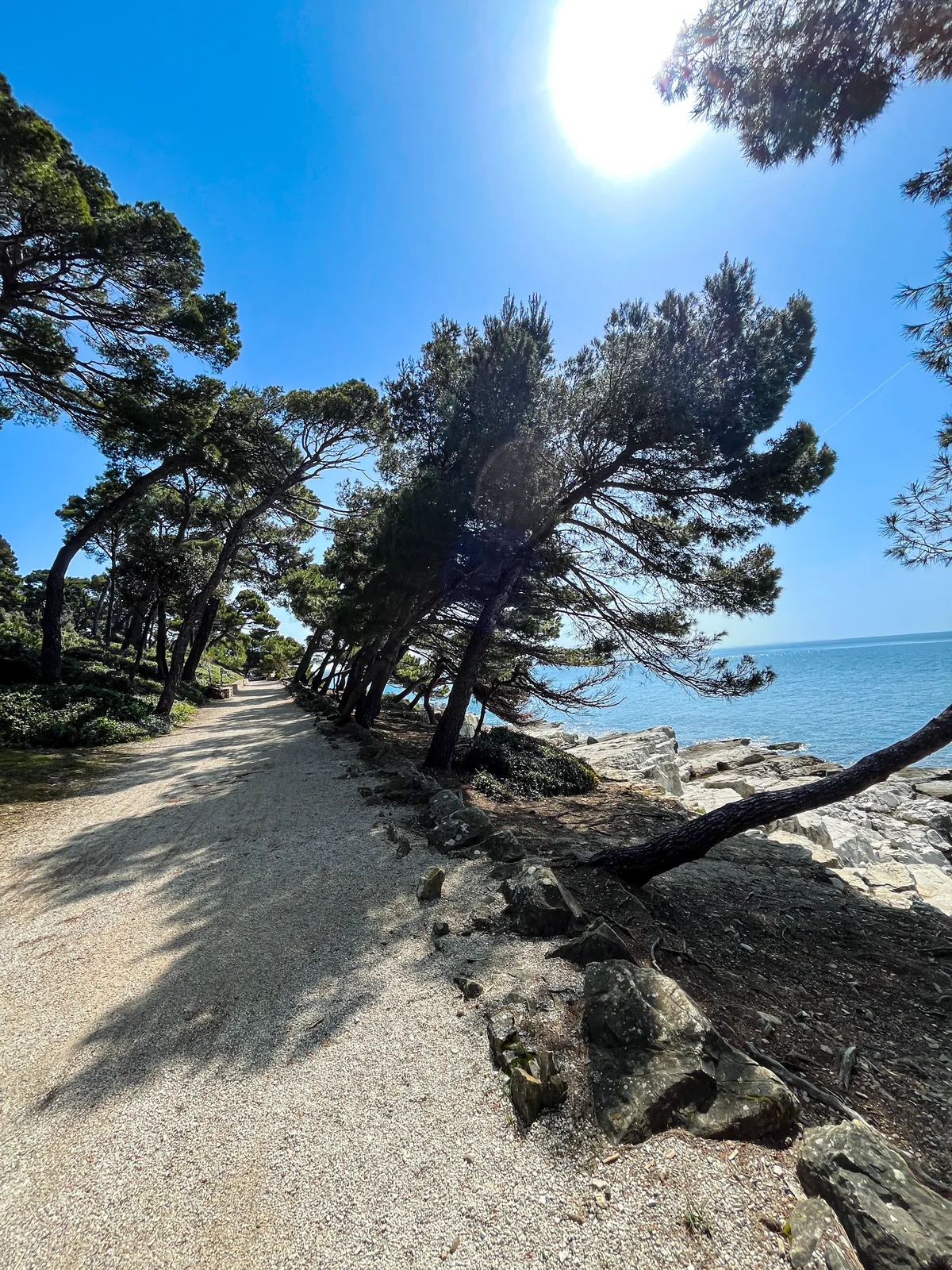
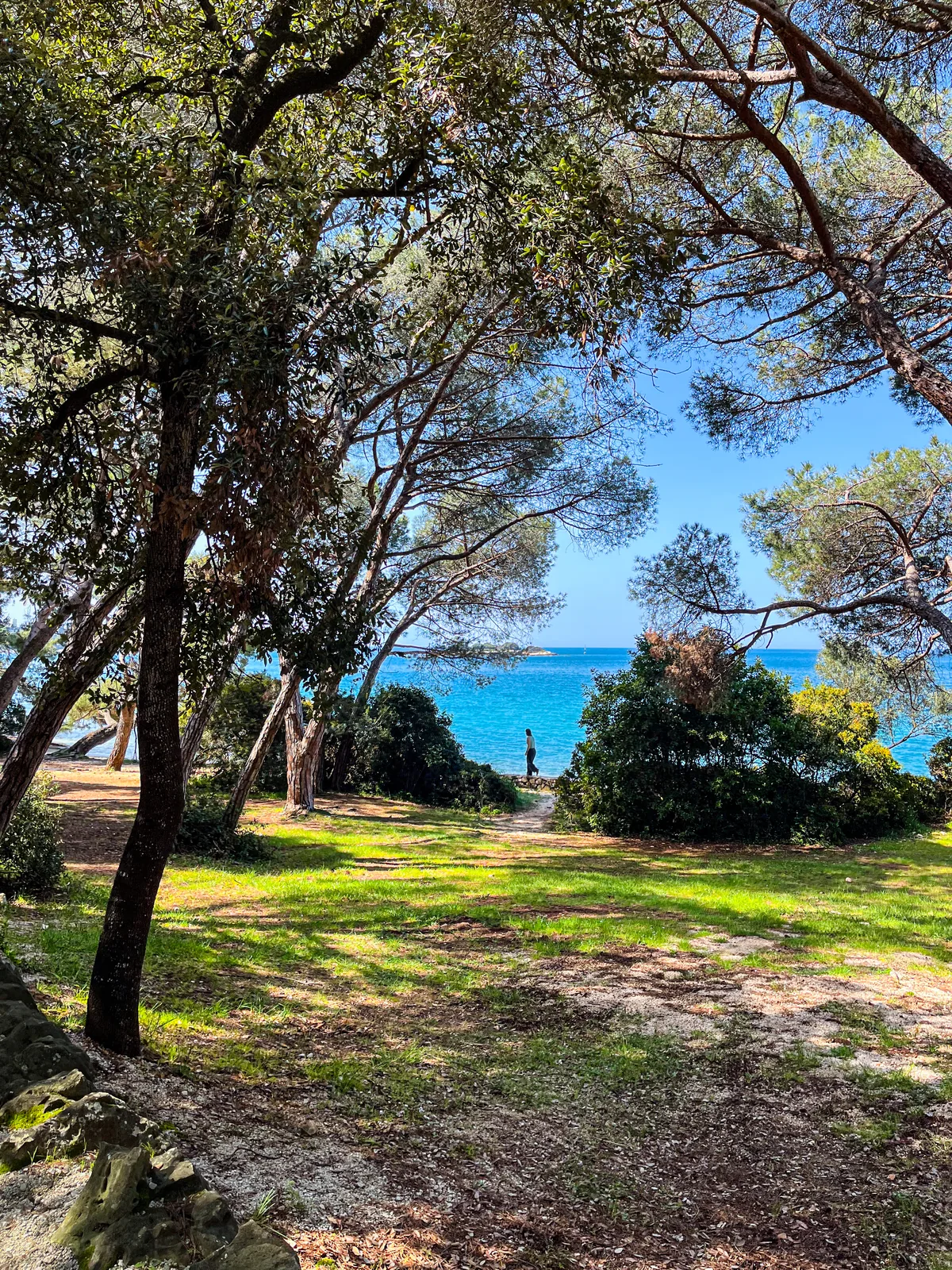
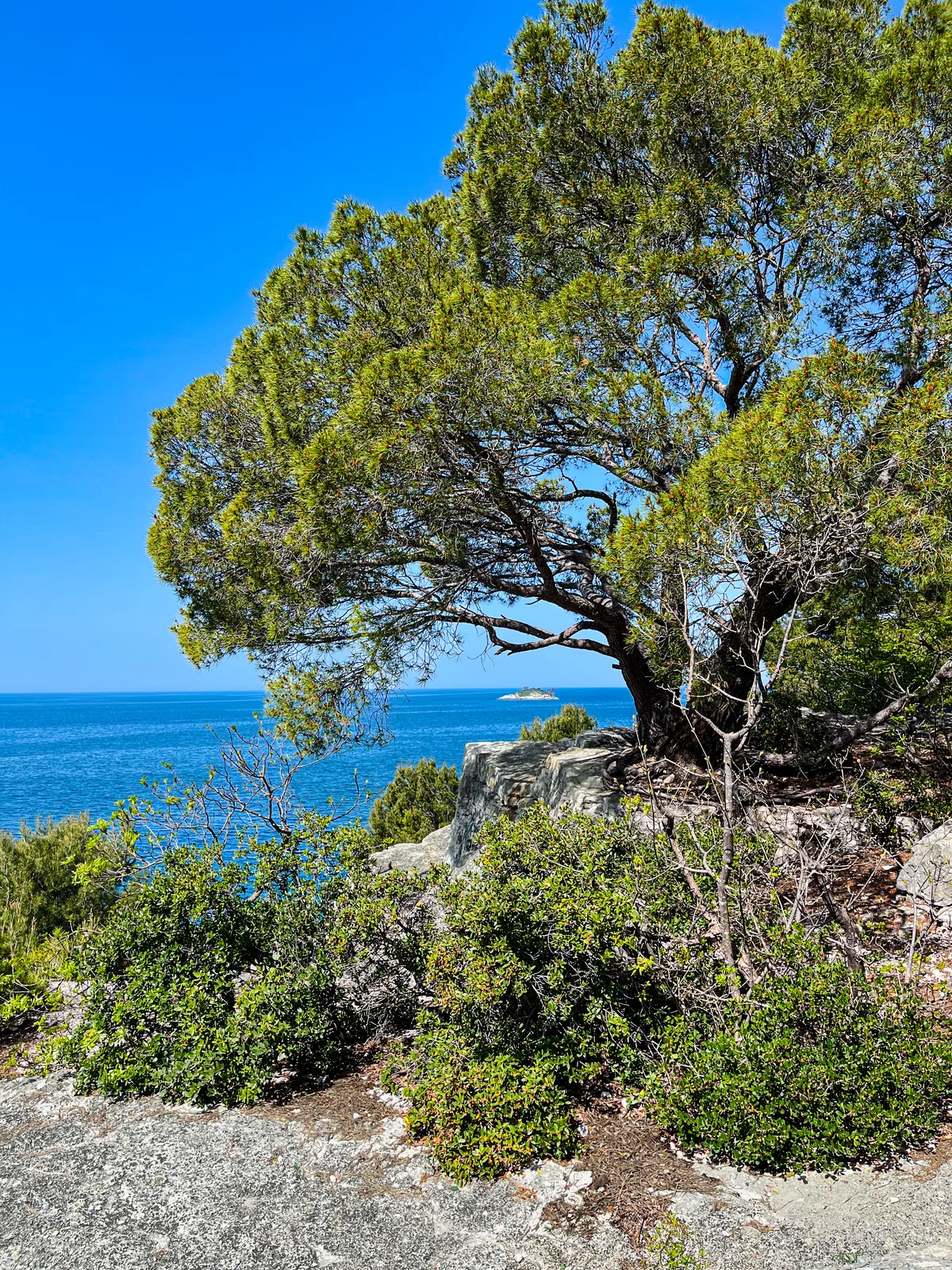
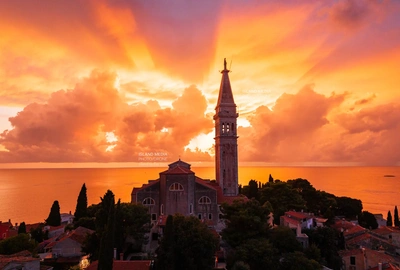
Follow the seafront south from Rovinj for 20 minutes and the town fades into a tunnel of stone pines. You've arrived at Punta Corrente — also called Zlatni rt, the Golden Cape — a 52-hectare forest park that stretches between the coves of Lone and Škaraba out to the capes of Montauro and Punta Corrente. It has about 5 km of coastline, 12.5 hectares of beaches, and 800 metres of old drystone wall on the landward side. It's the closest thing Rovinj has to a proper day out in nature, and it's free.
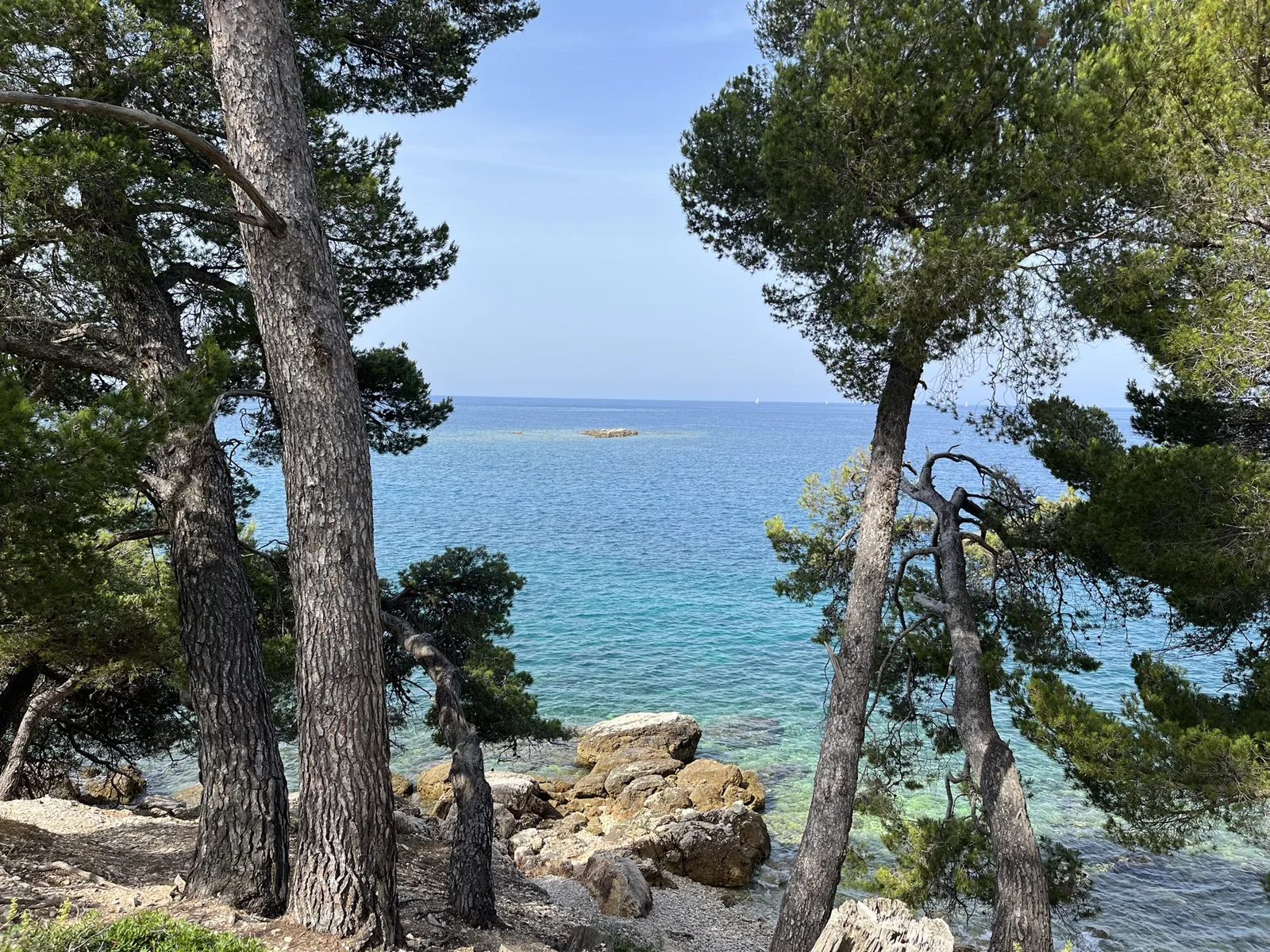
How to get there
From the old town, walk south along the waterfront past the marina and Hotel Lone. The park starts just after Lone Bay and runs for about 2 km down the coast. It's roughly a 20-minute walk from Trg Maršala Tita, and the path is flat the whole way.
If you're driving, park at the Škaraba or Lone Bay lots at the north edge of the park — they fill up by mid-morning in July and August. See our getting around Rovinj guide for the full map.
A quick bit of history
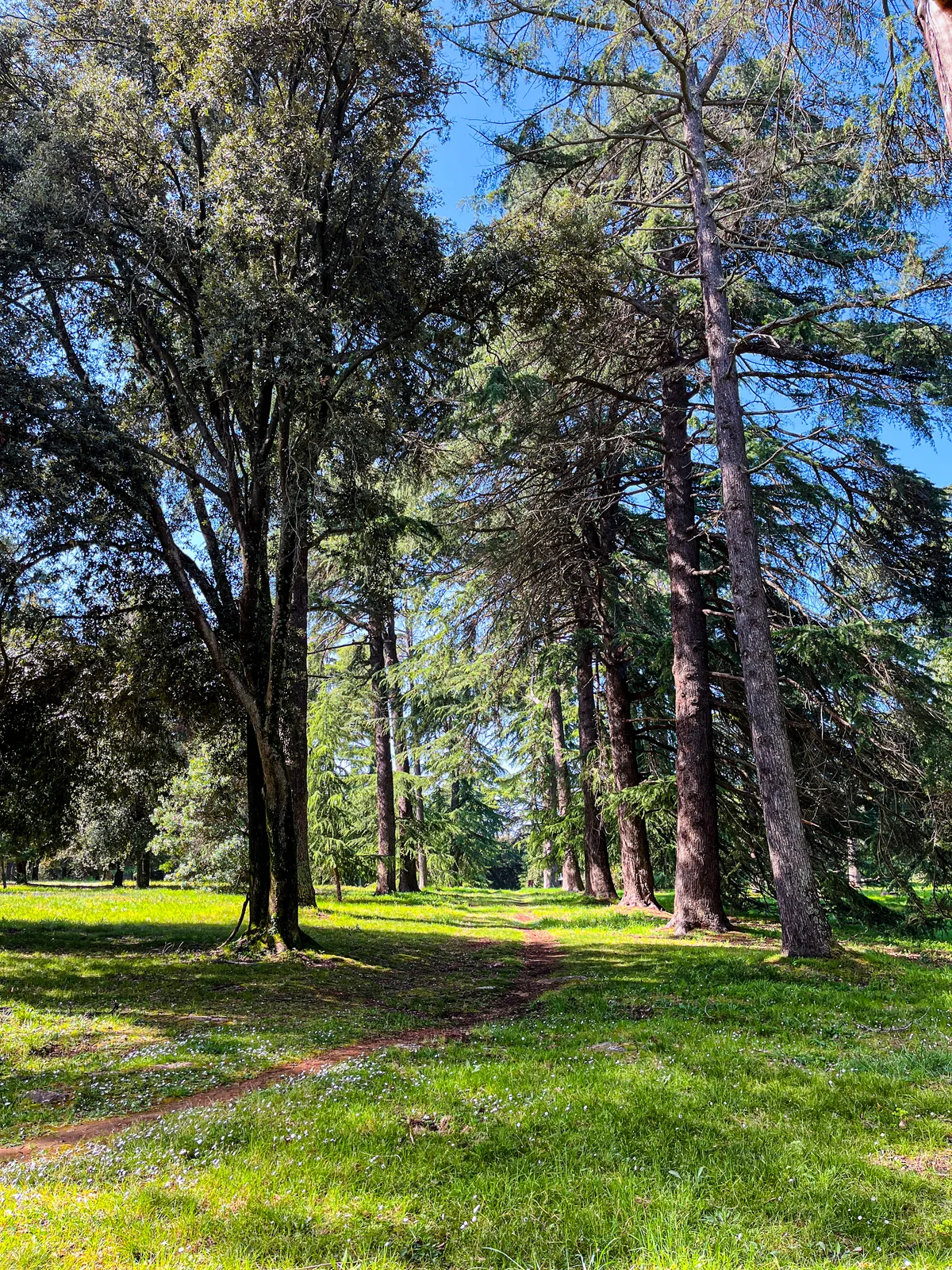
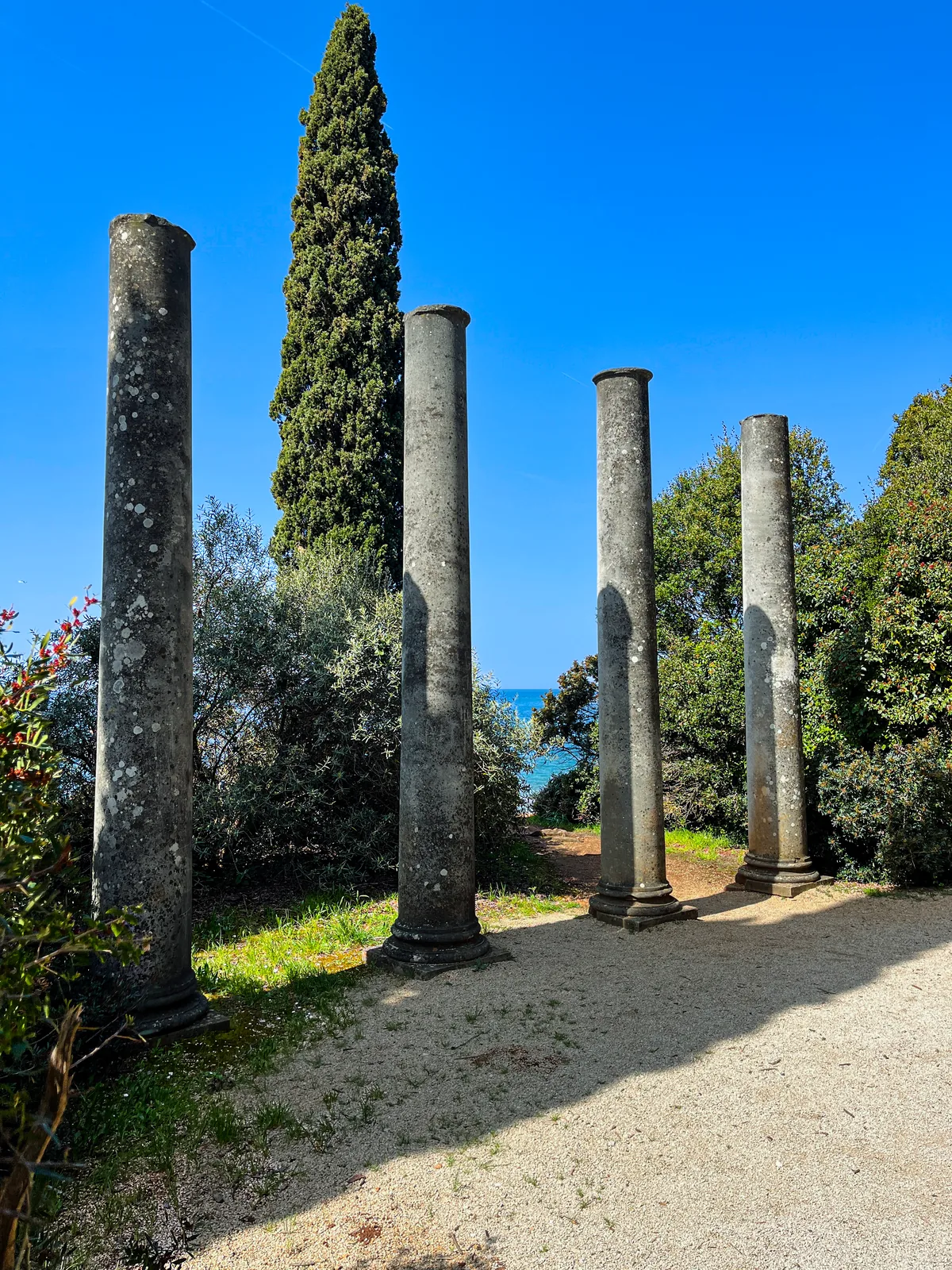
The park as you see it today was planted by one man. In 1890, a Trieste-born industrialist of German descent called Georg Hütterott (1852–1910) — later a board member of Trieste's Stabilimento Tecnico shipyards — bought four small islands off the coast and, over the following years, the stretch of land that would become the park. He gradually turned it into something between an English country park and an arboretum — bringing in exotic species from his travels: Himalayan cedars, Douglas firs, cypresses, ginkgo biloba and rare trees from Mexico, America and Japan carried back by sailors. The row of Himalayan cedars (Cedrus deodara) arranged as a six-pointed star near the Punta Corrente meadow is still there.
Hütterott had a bigger plan. In 1908 he self-published a booklet titled "Climate Health Resort Cap Aureo near Rovinj – Istria", laying out hotels, villas and bathing resorts along Lone, Škaraba and the capes. His timing looked perfect: the Vienna–Pula railway had reached southern Istria in 1876 with a branch into Rovinj, and a marine climate health resort had opened just north of town in 1888. But he died prematurely in 1910, before any of it was built.
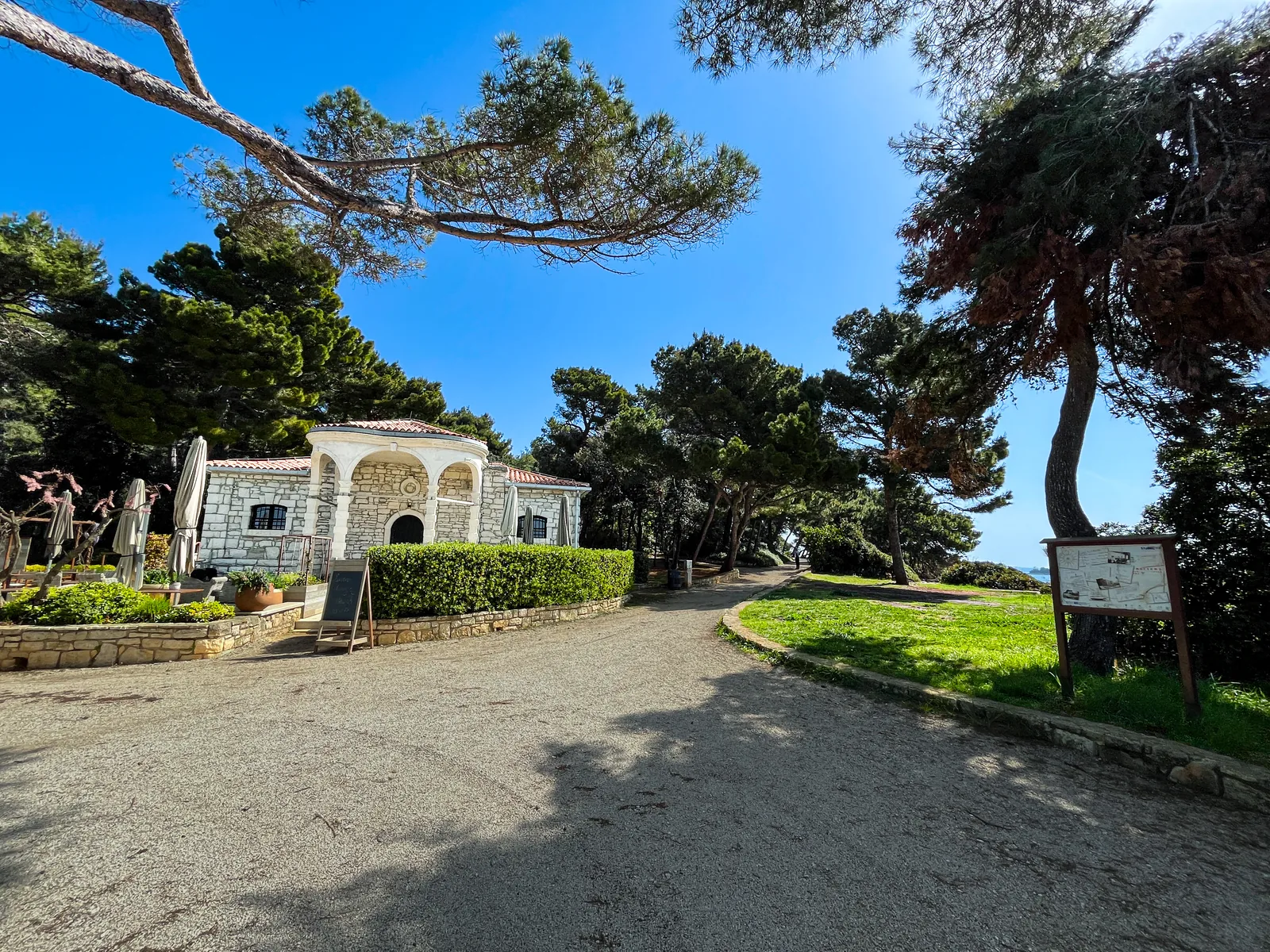
Two world wars and a lot of political upheaval later, only the park itself remained. It was declared a protected natural rarity in 1948 ("because it represents beauty and is an ornament of this region"), and upgraded to forest park status in 1961. The designation hasn't changed since. A small guardian's cabin and the old stables — now converted into a café — are the only built remnants of Hütterott's era still on the peninsula.
The best swim spots
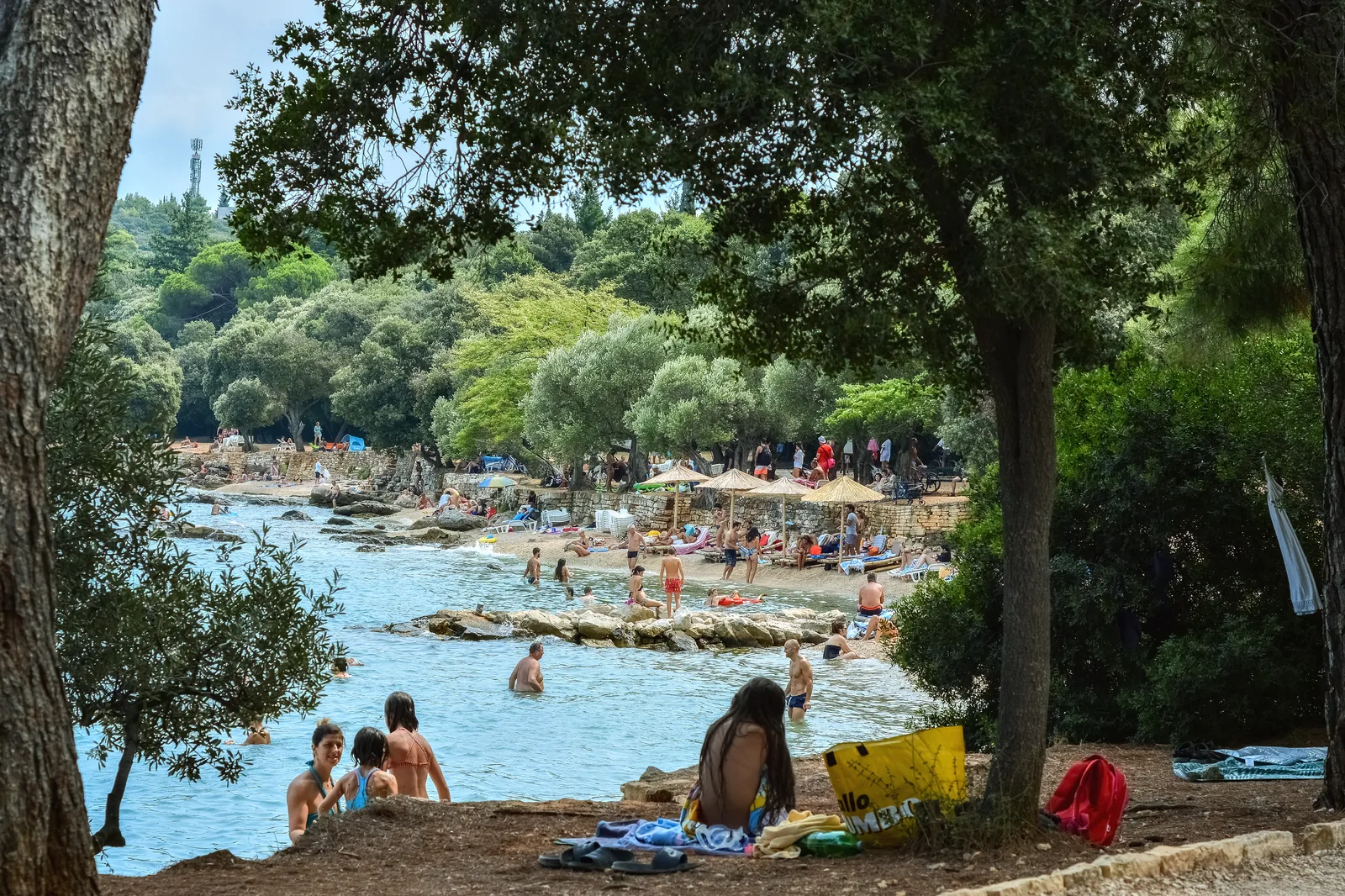
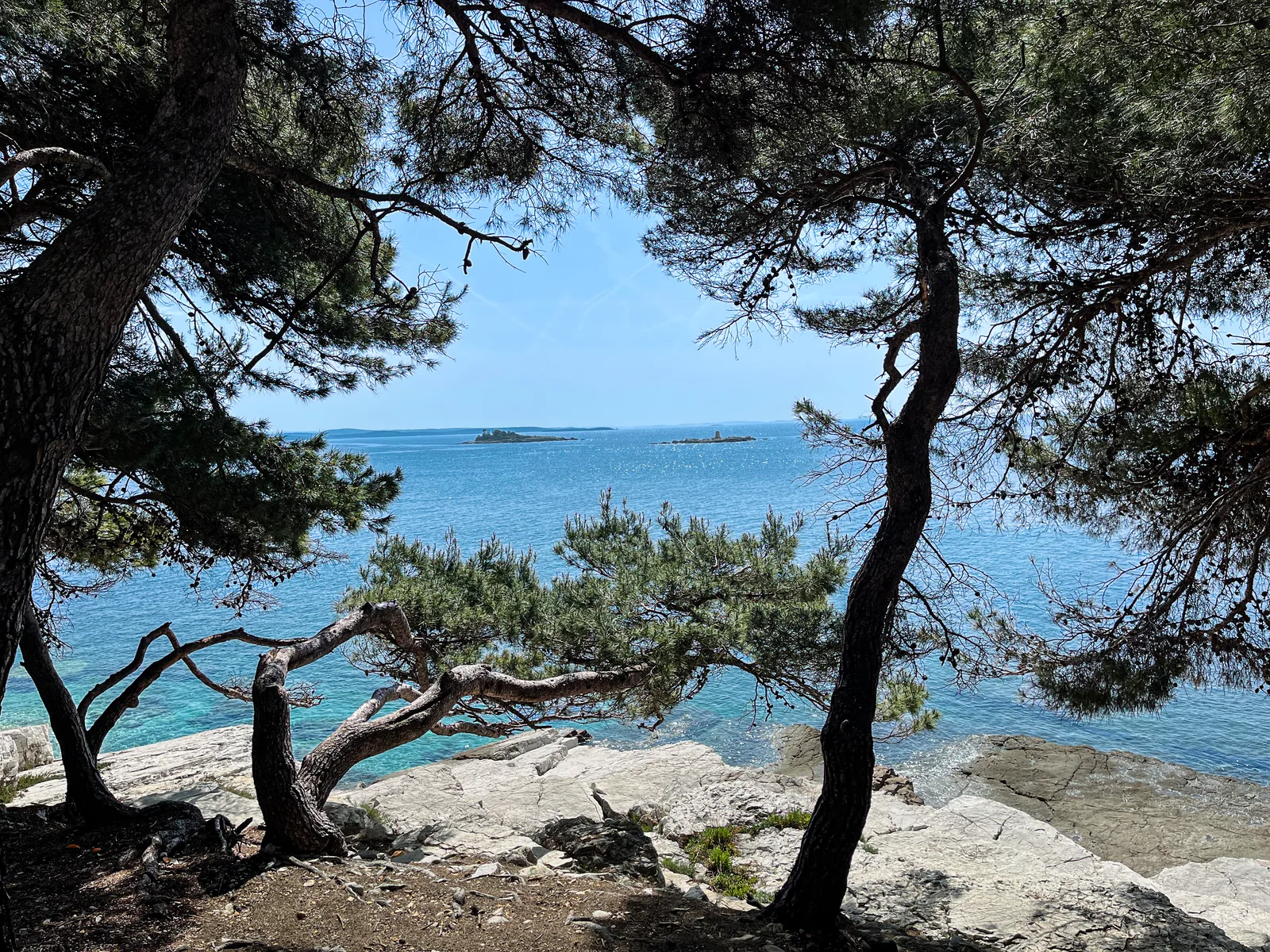
The coast here is flat limestone shelves and small rocky coves, not sand. You get in from ladders or by scrambling down the rocks. The water is clear enough to see your feet at 3 metres.
- Lone Bay — the first swim spot you hit walking from town. Pebbly, a bit busier because of Hotel Lone, good for a quick dip.
- Škaraba — just past Lone. Stone shelves, deep water straight in, pine shade overhead. Locals' favourite for a morning swim.
- Cape Montauro ("Cap Aureo") — the central stretch. Dozens of small coves; walk until you find an empty one. This is where we'd go on a hot August Sunday.
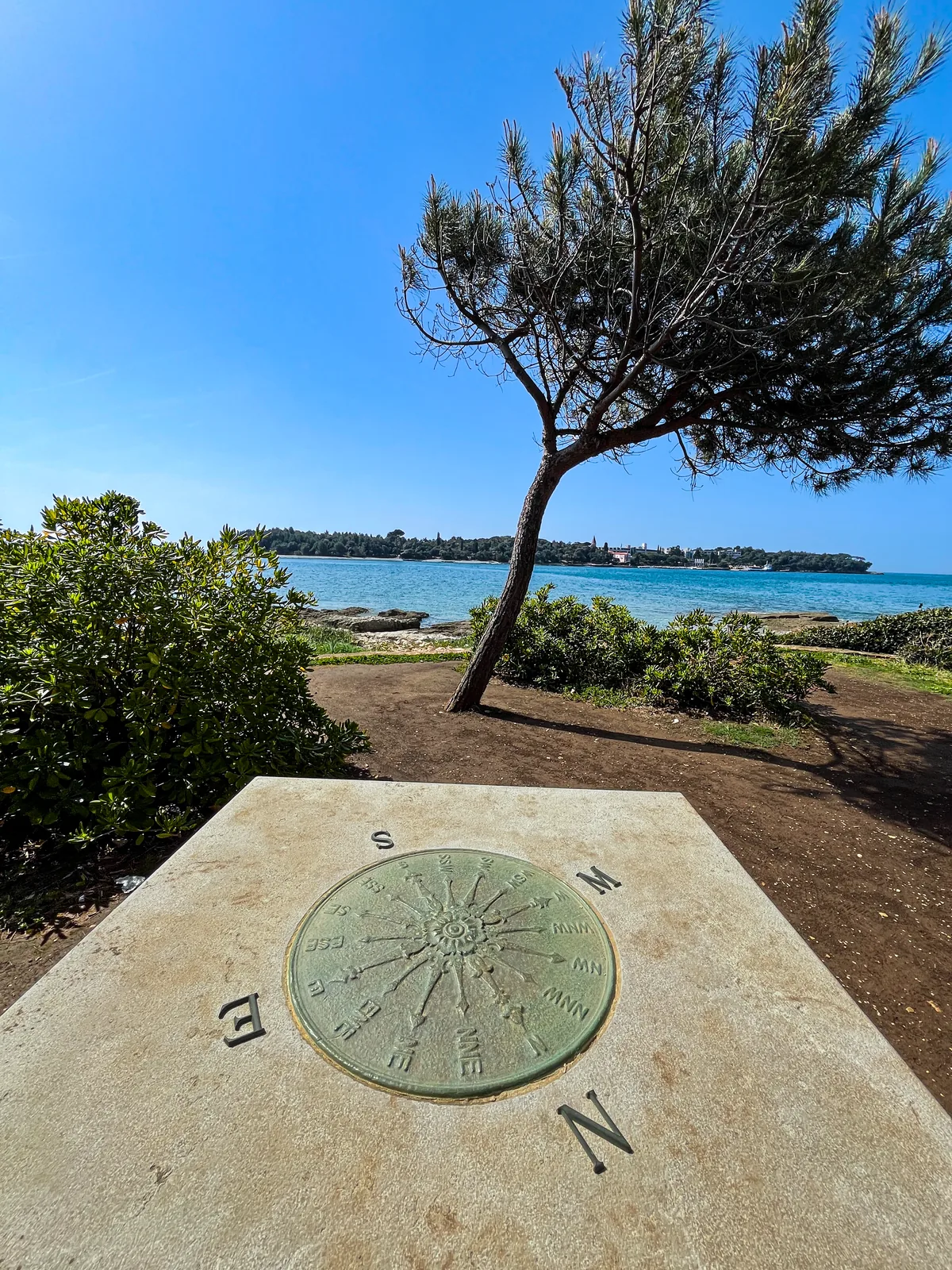
- Punta Corrente — the southern tip, past the six-pointed cedar grove. Quieter than Montauro, better for sunset.
A few beach bars along the coast can sort you out for a drink, and there's a café at the park entrance. Still smart to bring water and snacks.
Walk, cycle, or both
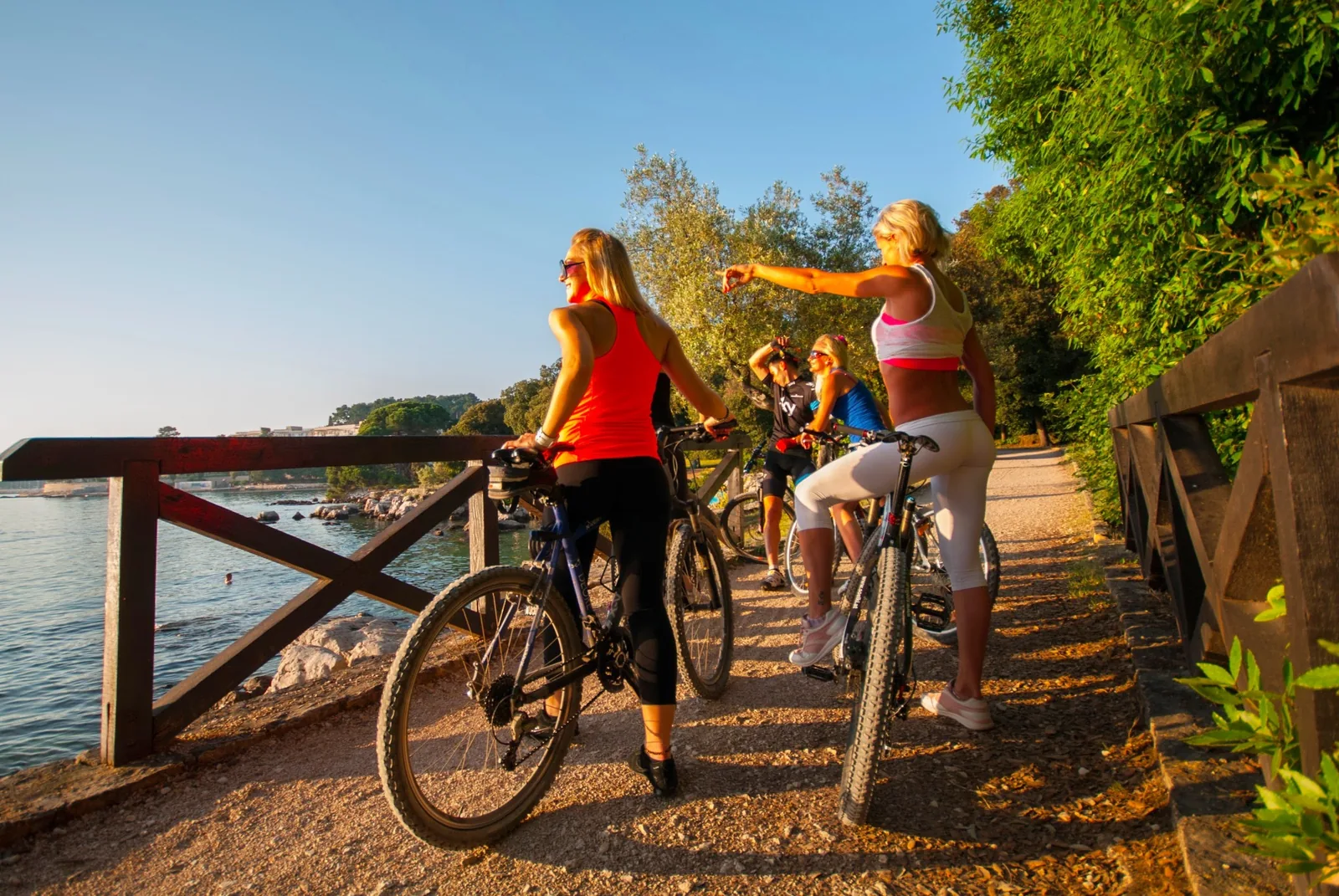
The main coastal path is wide, flat and shaded — perfect for a slow cycle. You can loop the whole park in under an hour. Inner trails branch off into the pines if you want shade or solitude; some lead up to small meadows where families picnic.
Bike rental shops on Obala Palih Boraca near the harbour hire out hybrids and e-bikes by the hour or day. From the park's south end you can continue along the coast to Cuvi and Villas Rubin, or push on to the Lim Fjord (about 15 km one way).
Partner Bike Rental RM Group from €5 per hour Quality bike rentals throughout Rovinj See prices & details →What else is in there
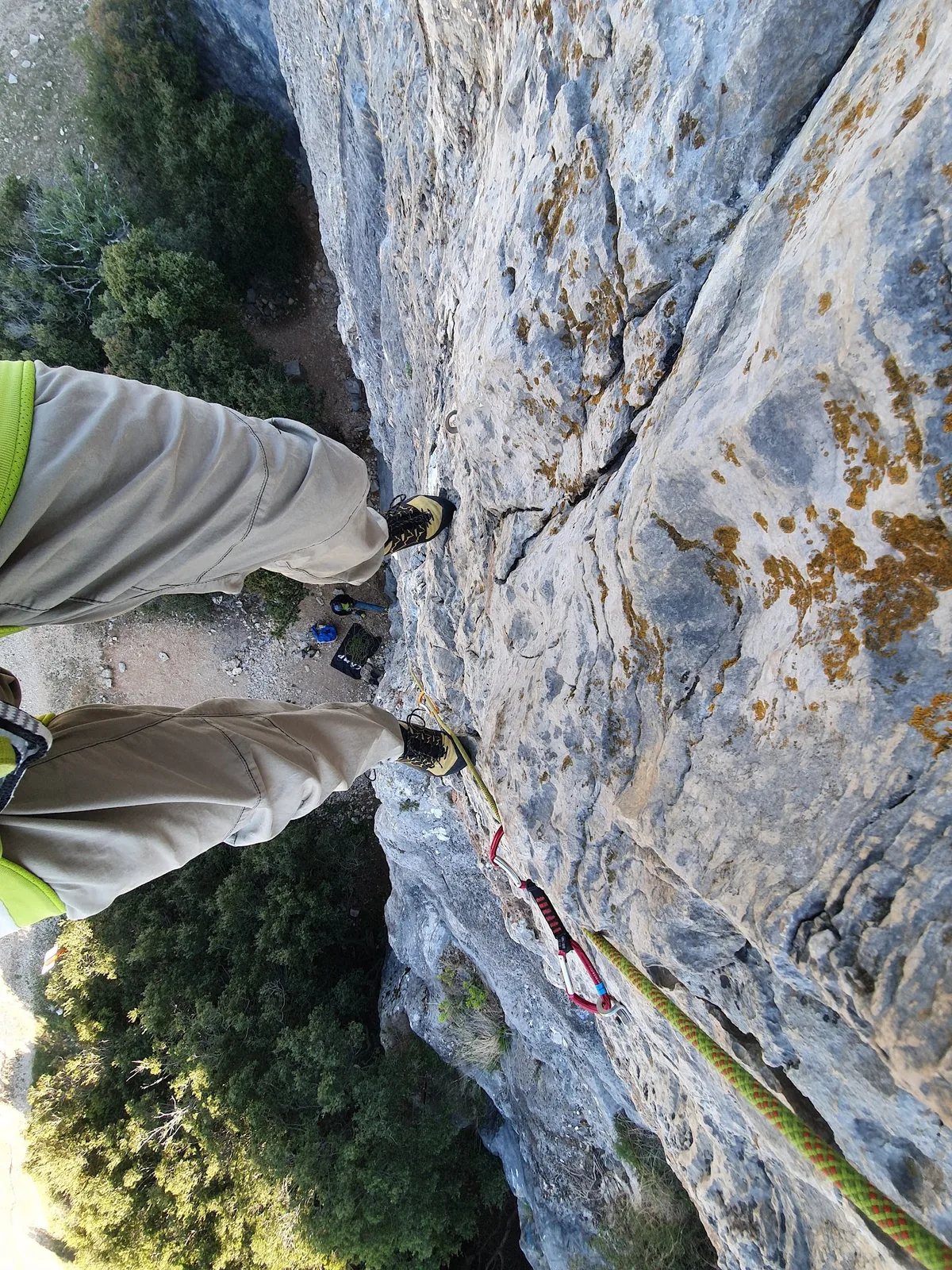
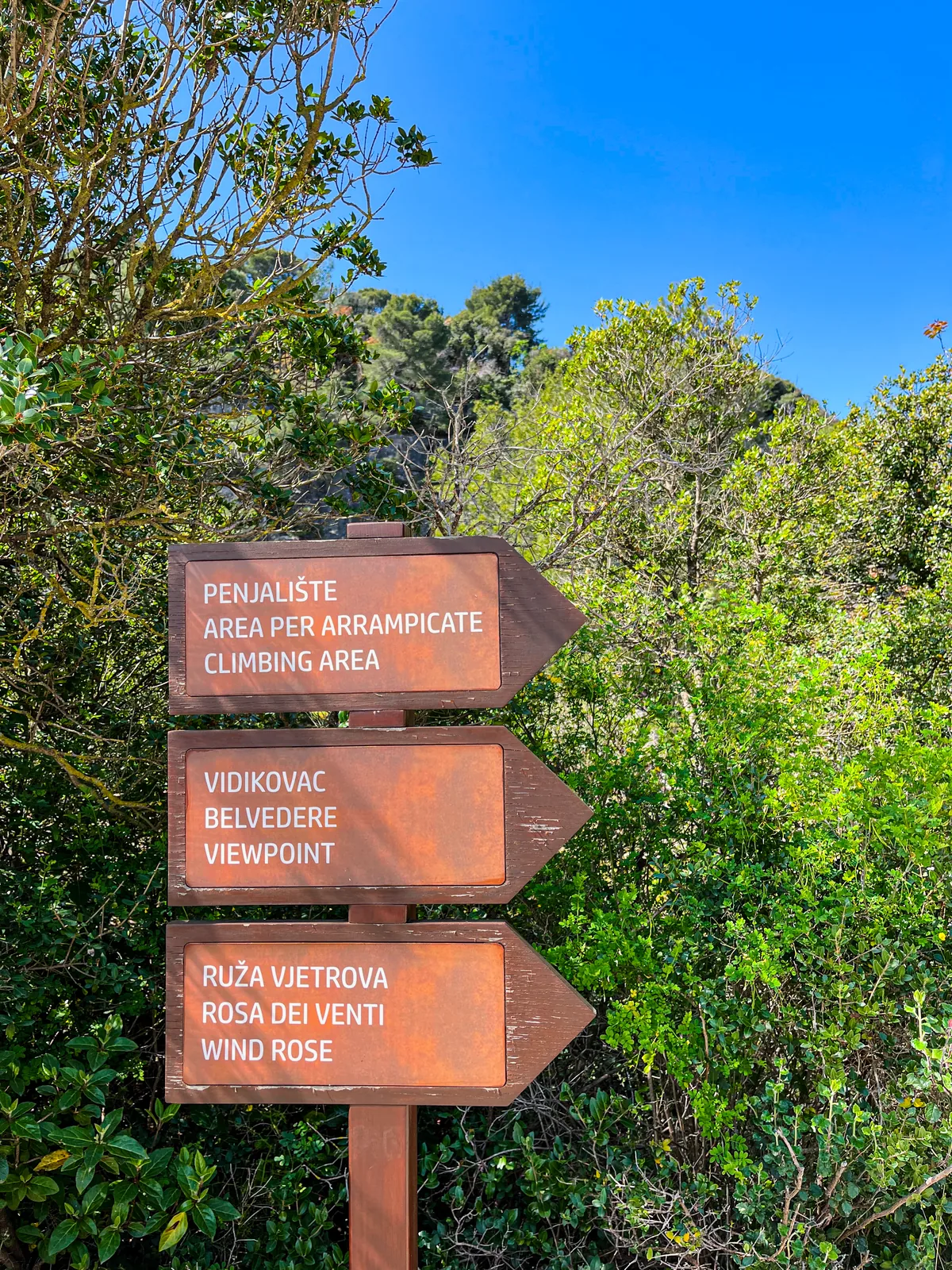
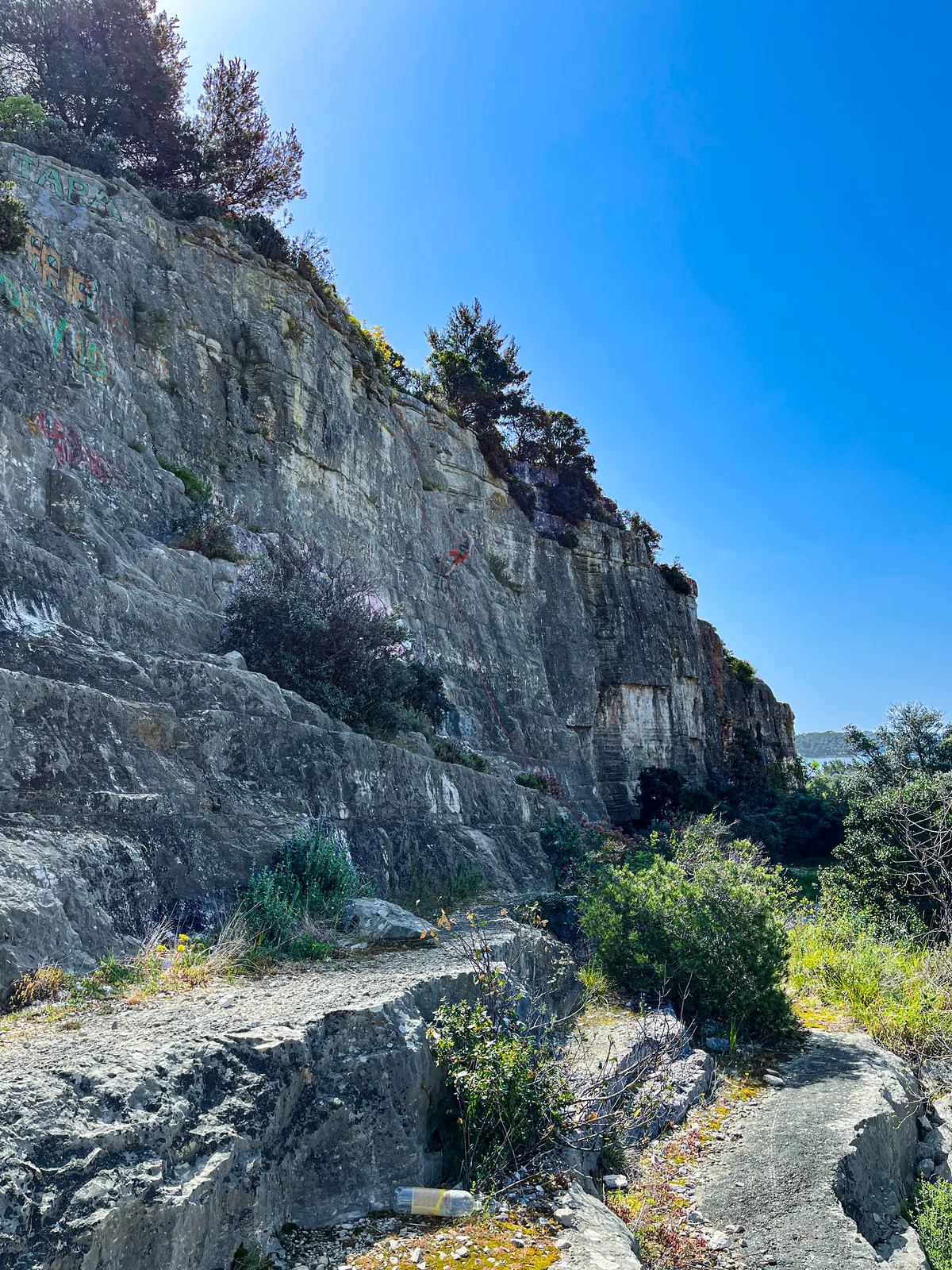
The shore side of Cape Montauro is one long line of cut cliff — hundreds of metres of pale vertical walls, quarried for centuries to build Venice and the towns across the lagoon. Today they're a favourite with rock climbers — you'll see bolts in the rock and sometimes a rope team. Surprisingly atmospheric for photos too.
Other things to look for:
- The six-pointed star of Himalayan cedars at the meadow before Punta Corrente — Hütterott's signature move.
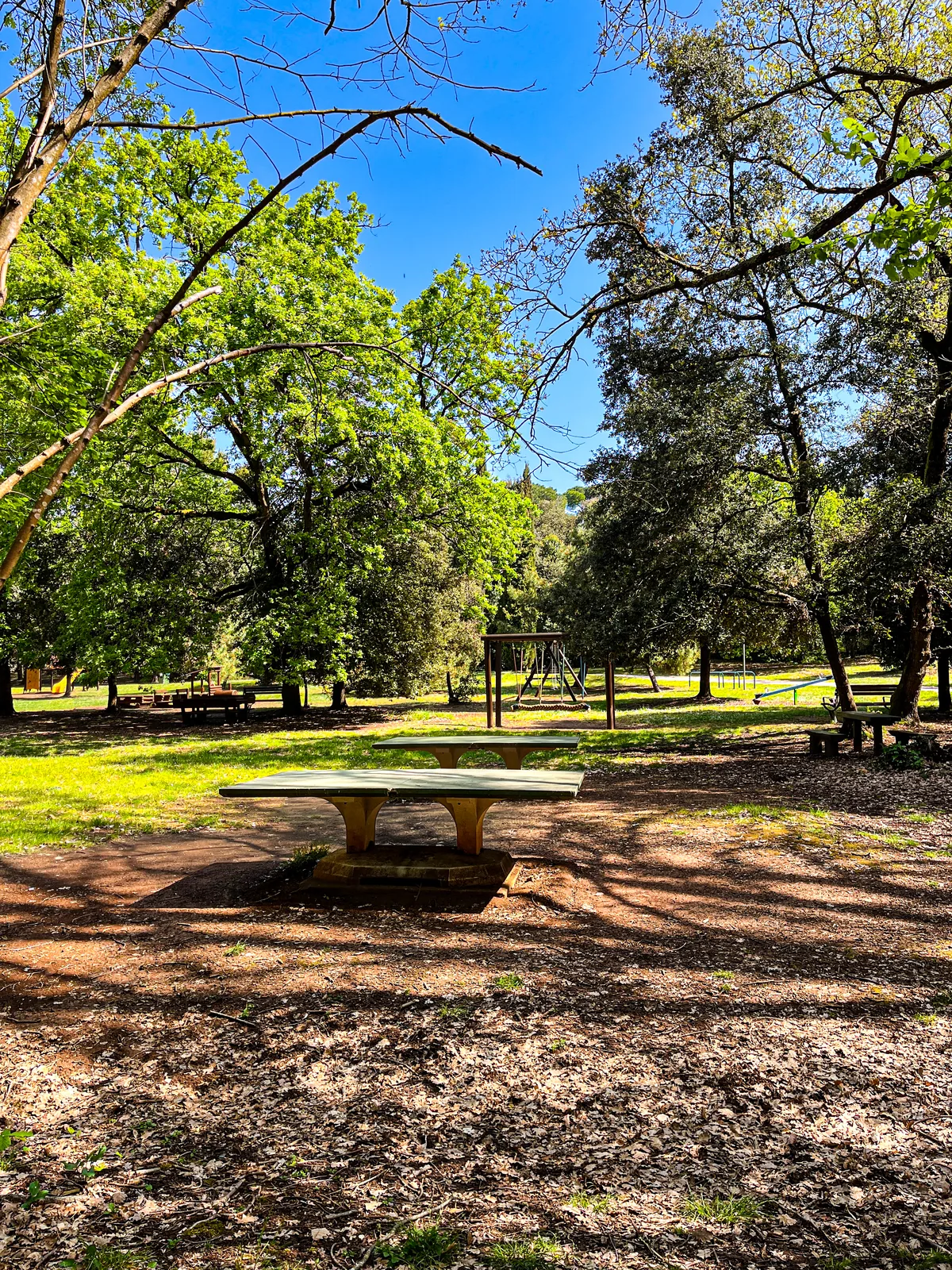
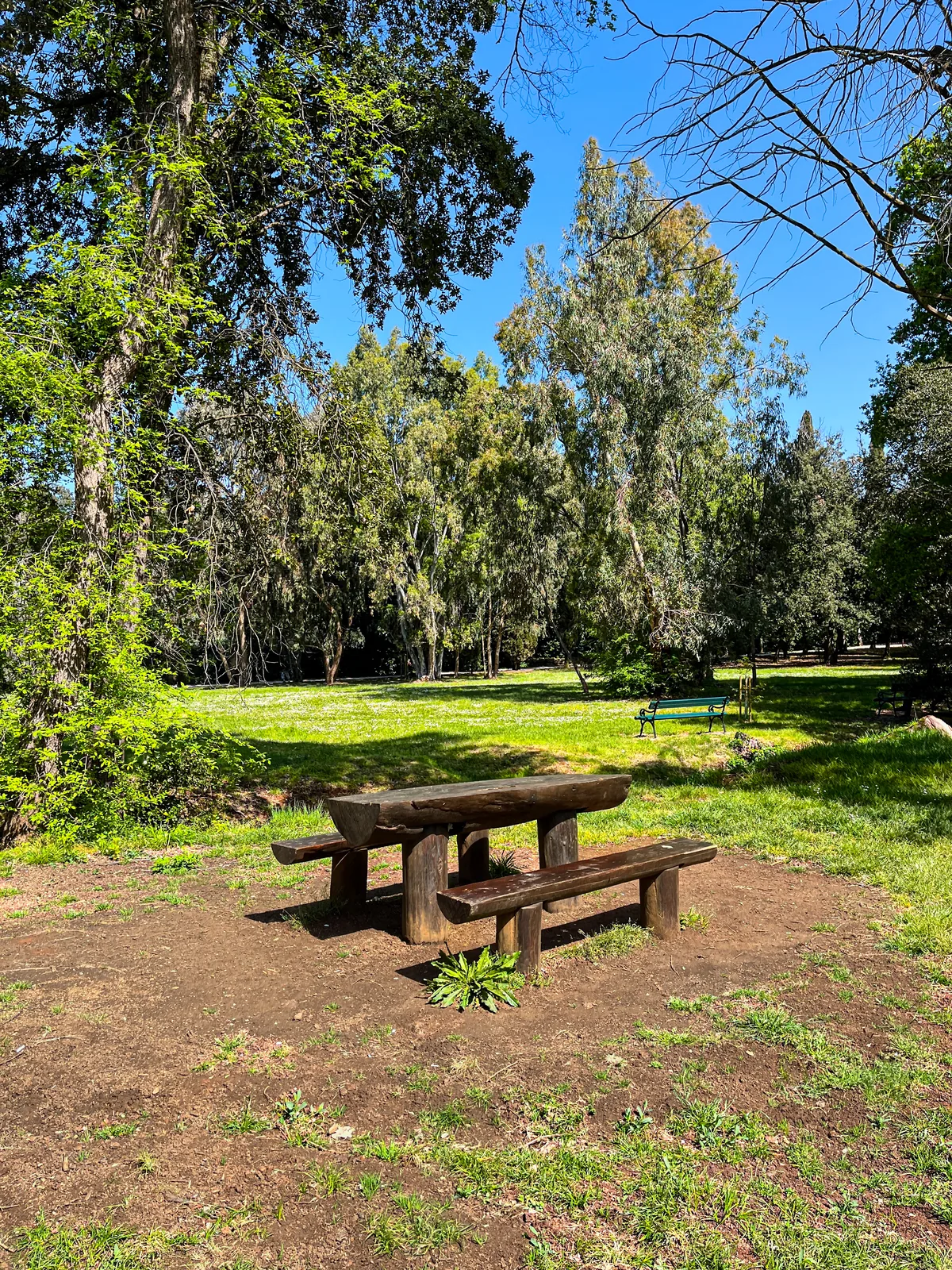
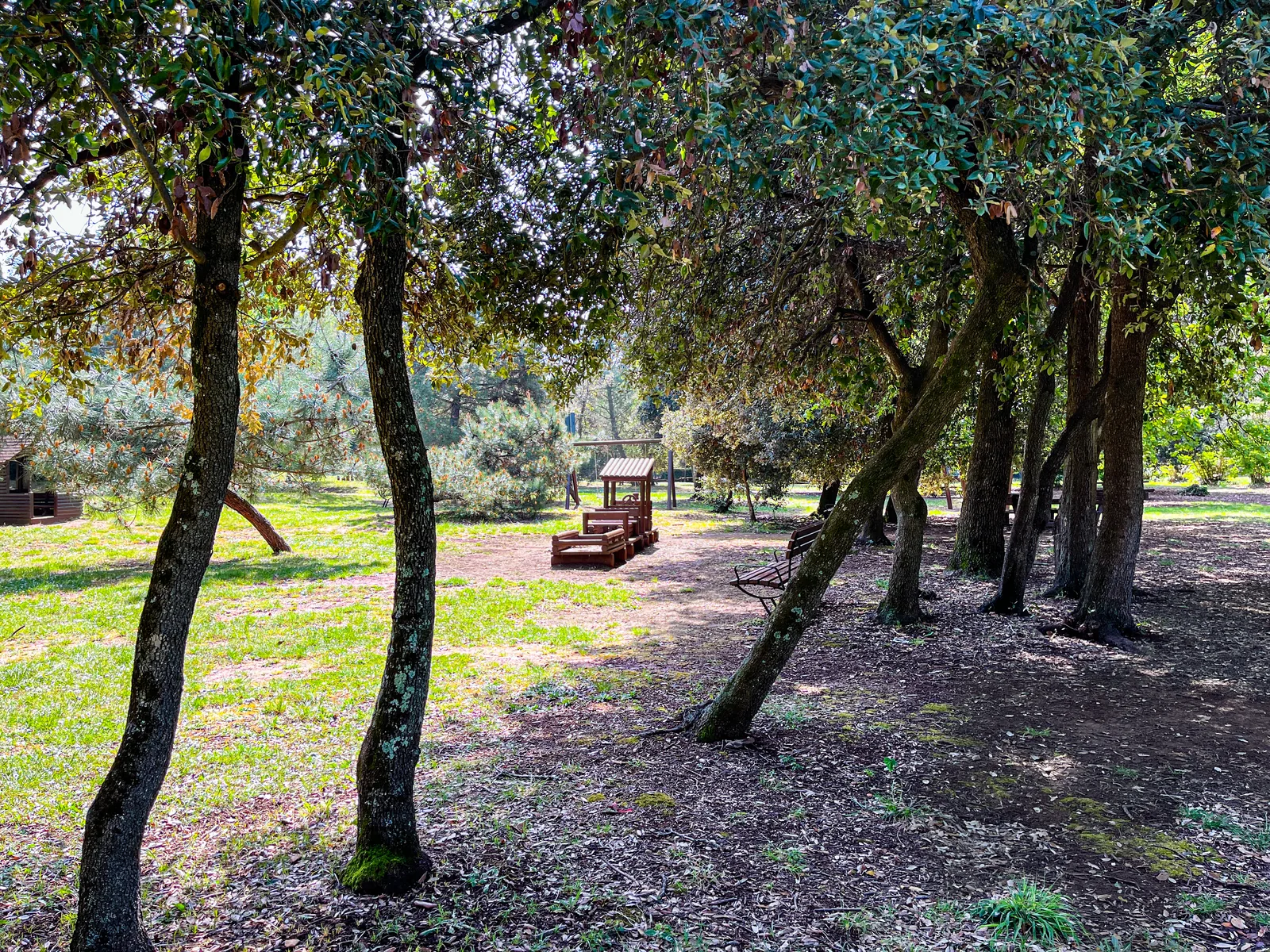
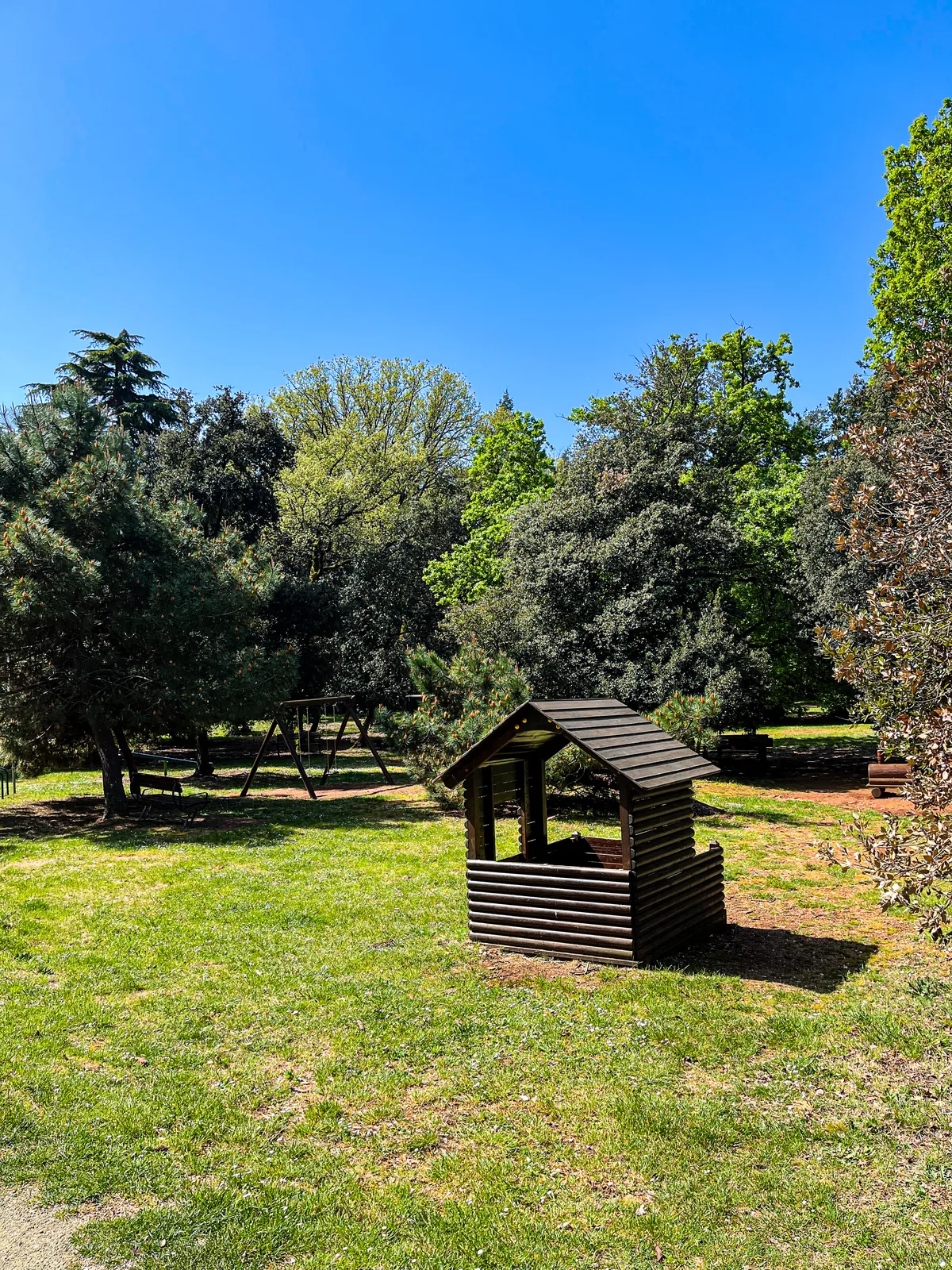
- Picnic tables and benches scattered through the meadows (first-come, no booking).
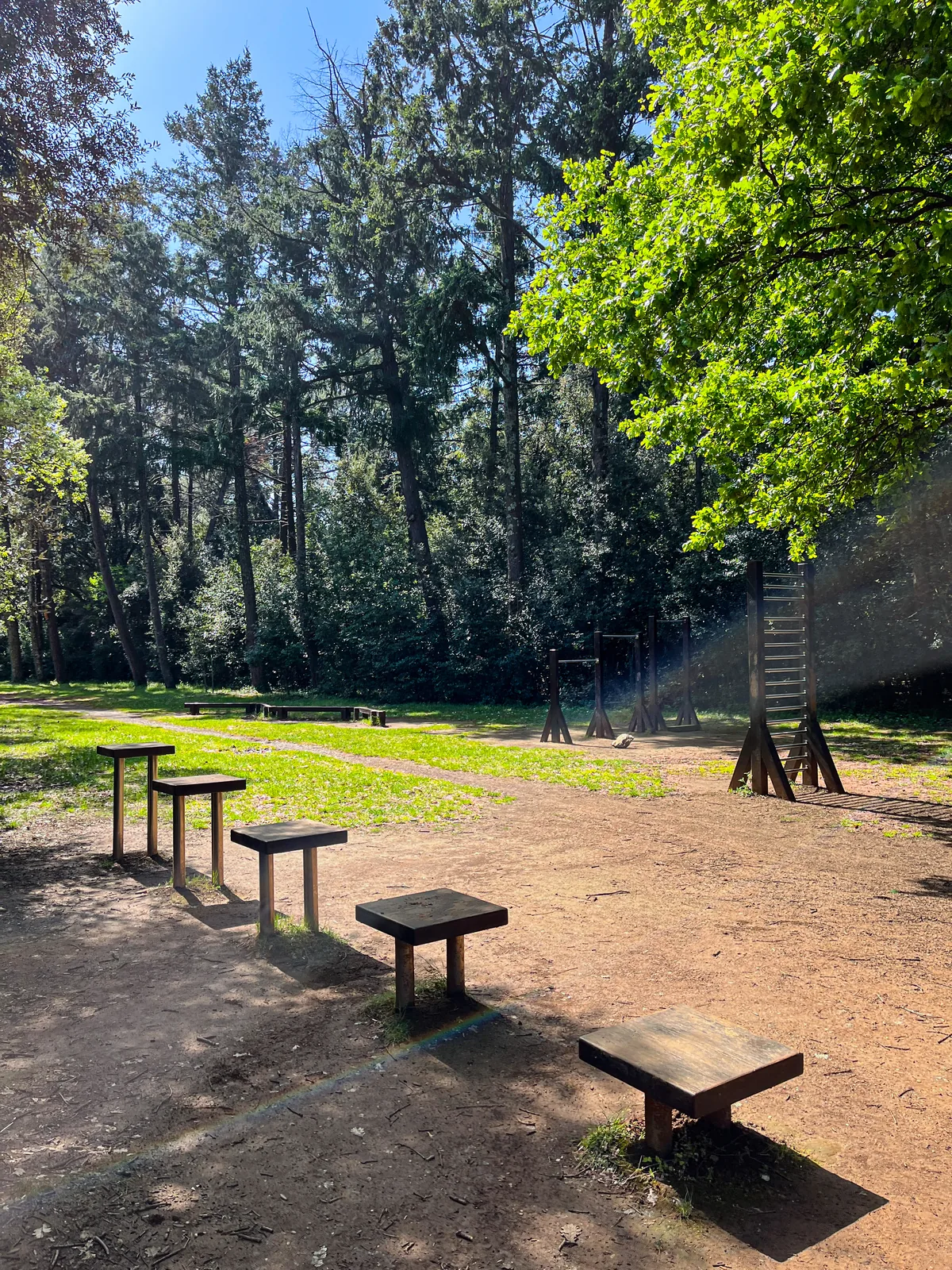
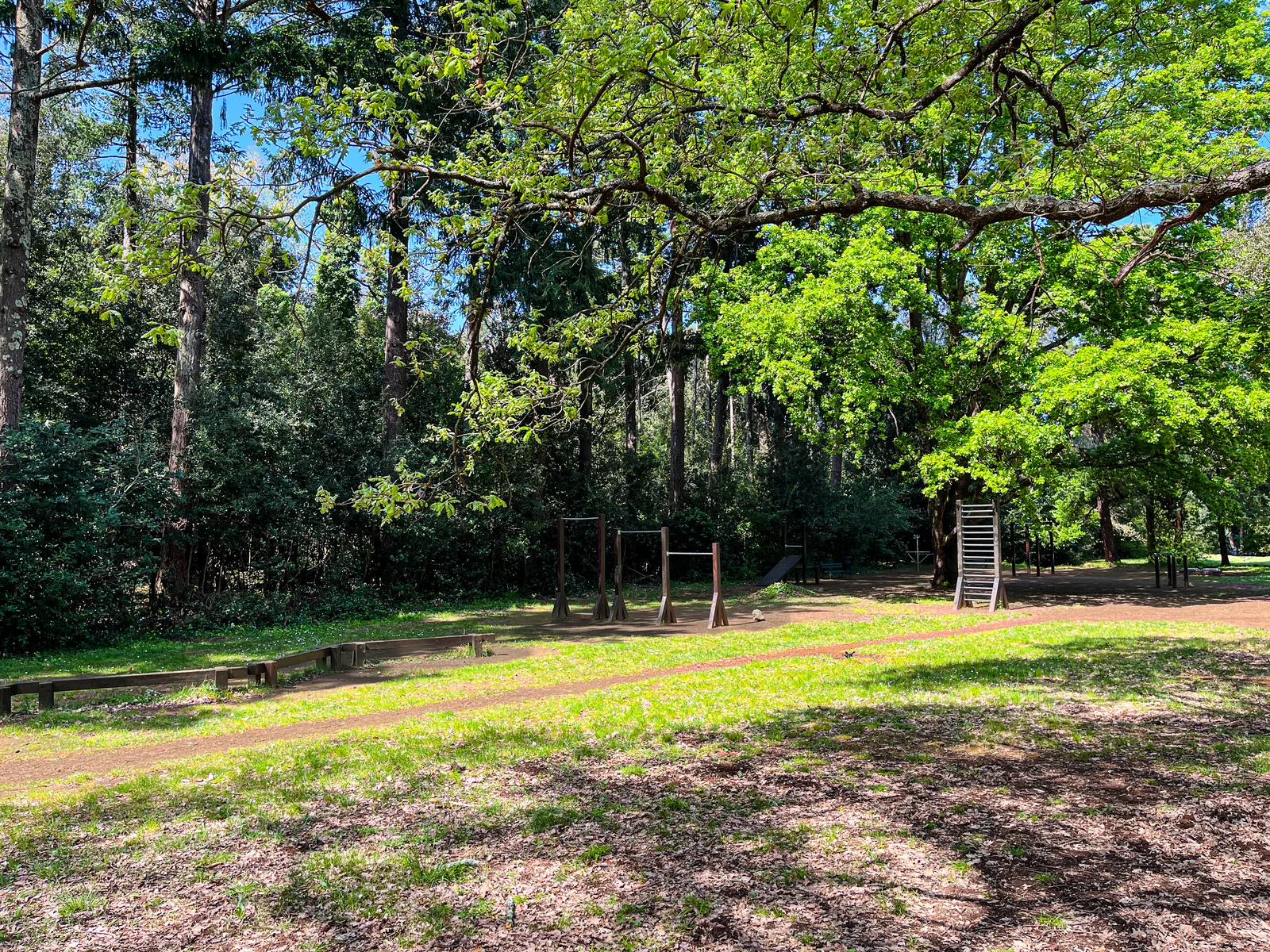
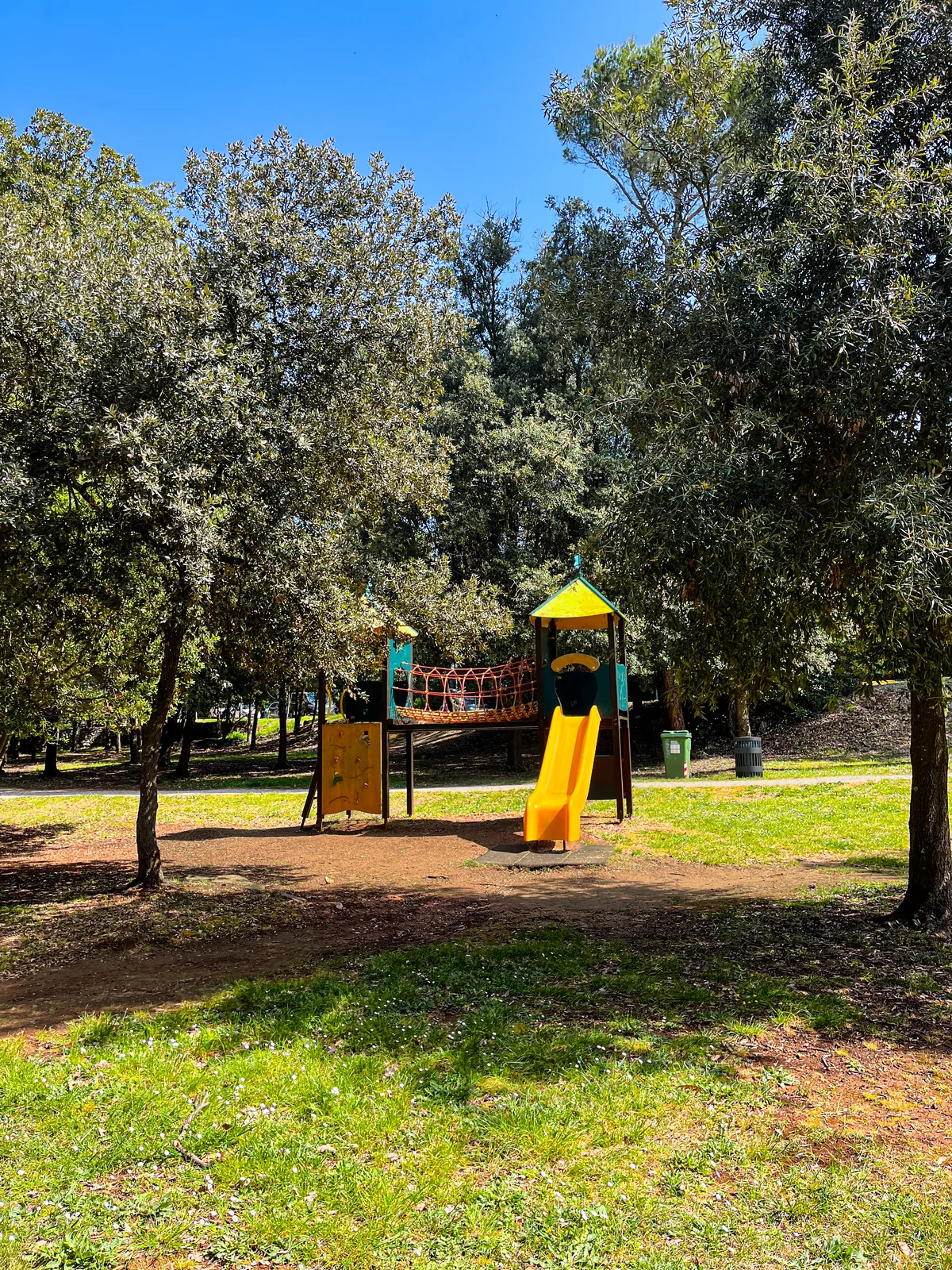
- One outdoor fitness station and a kids' playground along the park.
- Wildlife — roe deer, hare and pheasant live in the forest; watering stations were built for them back in the park's early days.
What grows here
Zlatni rt is half natural forest, half 19th-century botanical experiment. The backbone is native: Holm oak (Quercus ilex) — the evergreen oak that gives the park its cool deep shade in August — and Flowering ash. Underneath grow the Mediterranean shrubs you'd expect along this coast: pubescent oak, strawberry tree, bay laurel, myrtle, mastic, common boxwood.
If you're here in late autumn — October to December — look for the strawberry tree in fruit and flower at the same time — a small thing, but it's the one plant that wakes up when the rest of the forest is asleep.
The planted half reads like a map of Hütterott's travels. Four species of pine line the main paths — Aleppo, Calabrian, Maritime and Stone pine — the last one (Pinus pinea) gives the park its signature umbrella-crowned avenues. Beside them grow the exotic cypresses (Cupressus sempervirens), Douglas firs, and the ginkgo biloba, often called a living fossil. The six-pointed star of Himalayan cedars (Cedrus deodara) stands at the meadow before the Punta Corrente tip.
About 20,000 m² of the park is hard-surfaced promenade and another 5,000 m² is softer forest trail — so there's plenty of shade whether you're cycling, jogging or taking a slow walk.
When to go
- June and September are perfect — water's warm, paths are quiet, light is long.
- July–August is packed — most of Rovinj's beach traffic flows this way, through Punta Corrente and on to Cuvi, Villas Rubin, Polari and Vestar. Locals come at 7am or after 6pm.
- Off-season (Oct–May) the park is open and beautiful, just bring a jumper. We cycle here year-round.
- Sunrise and sunset hit different sides of the peninsula — sunrise over Montauro, sunset from the Punta Corrente tip.
Local tip
Skip the first two coves after Lone Bay — they're the most crowded because people stop at the first water they see. Walk another 10 minutes into the pines and the crowd thins out by about 80%. The best coves don't have signs.
Practical tips
- Entry: Free, open 24/7 year-round.
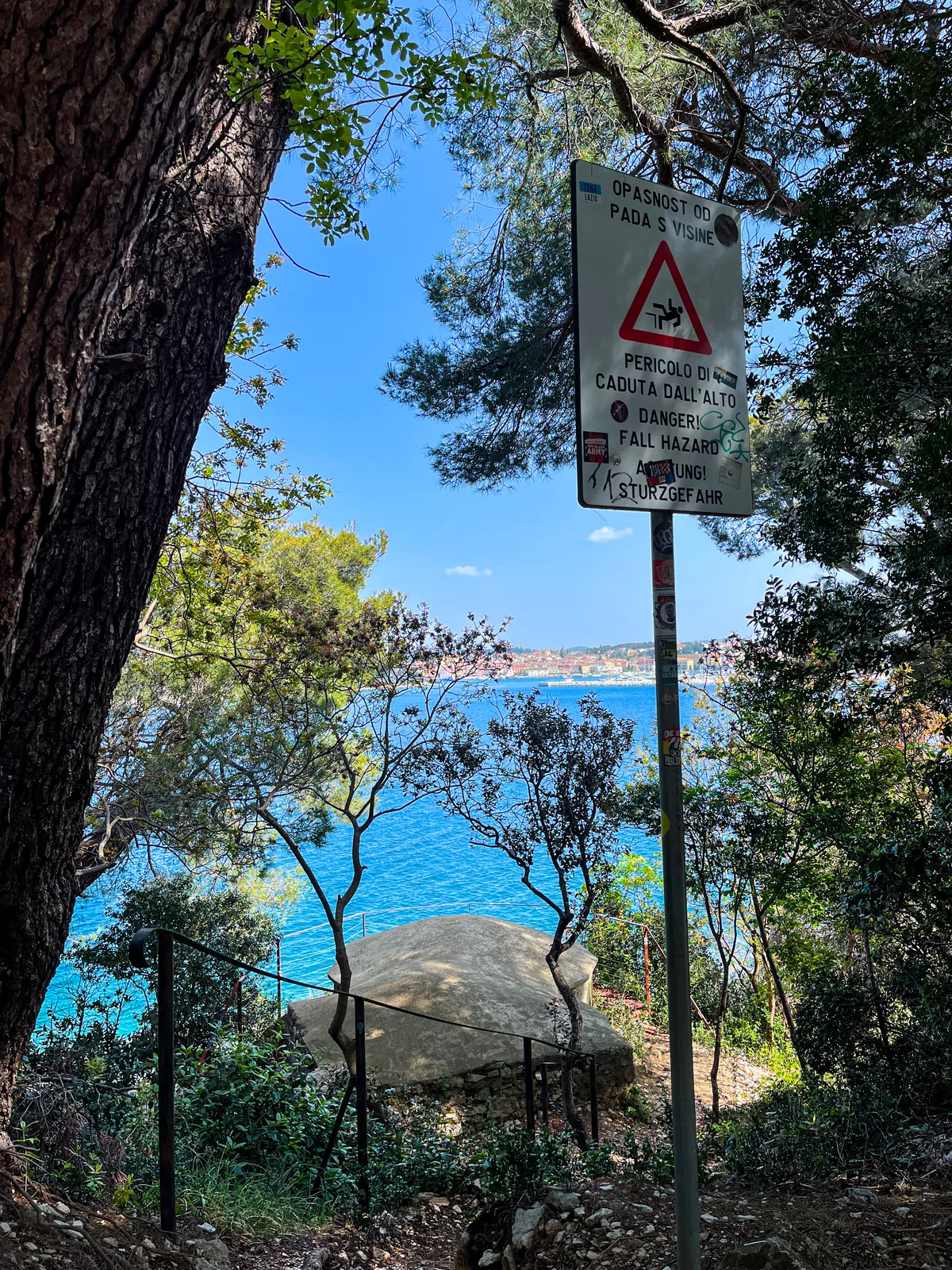
- After sunset: There is no lighting in the park — once the sun drops, the forest paths go dark fast. Bring a headlamp or phone torch, and remember the route you came in on. People often linger on the rocks to watch the sun go down, then realise the trail back through the pines is pitch black. Don't try new shortcuts in low light.
- Facilities: Public toilets at the Škaraba entrance; the beach bar on the cape opposite Sveta Andrija has a proper one too. The other beach bars inside the park (at least four along the coast) run on chemical toilets. Hotel Lone's beach bar and a café at the entrance round it out.
- Dogs: Allowed on leash throughout the park. There are several designated dog beaches along the coast — look for the signs.
- Shoes: Water shoes help on the rocky entries. Trainers for the paths.
- Timing: Plan 2–3 hours minimum; a full day if you're cycling + swimming + picnicking.
If you only have one morning in Rovinj and you like nature more than monuments, this is where we'd send you. Pair it with a swim, a coffee at the park entrance, and a walk back through the old town at golden hour — that's a good day.
Want more swim spots? See our local's guide to the best beaches in Rovinj and the full beach directory.