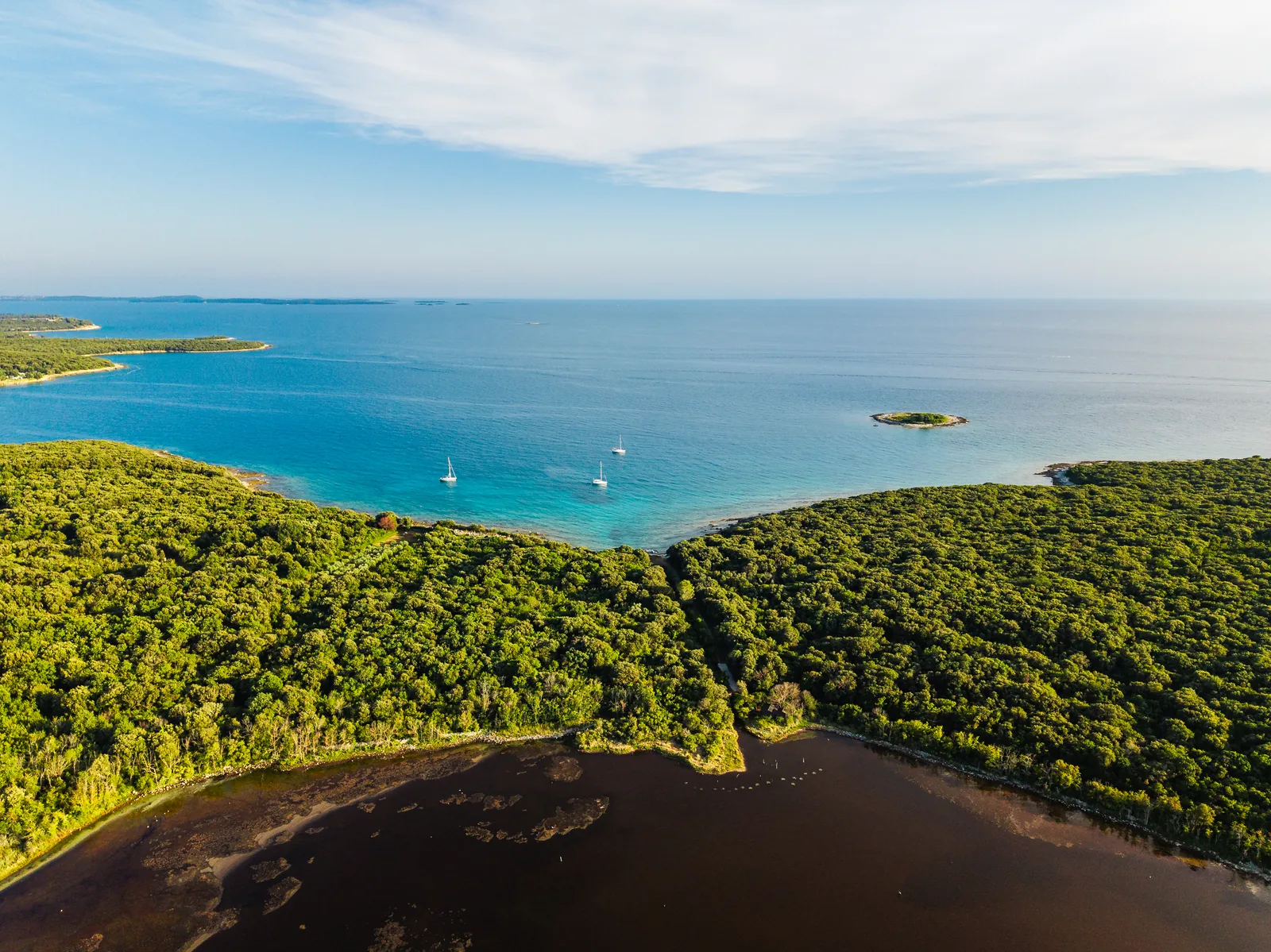
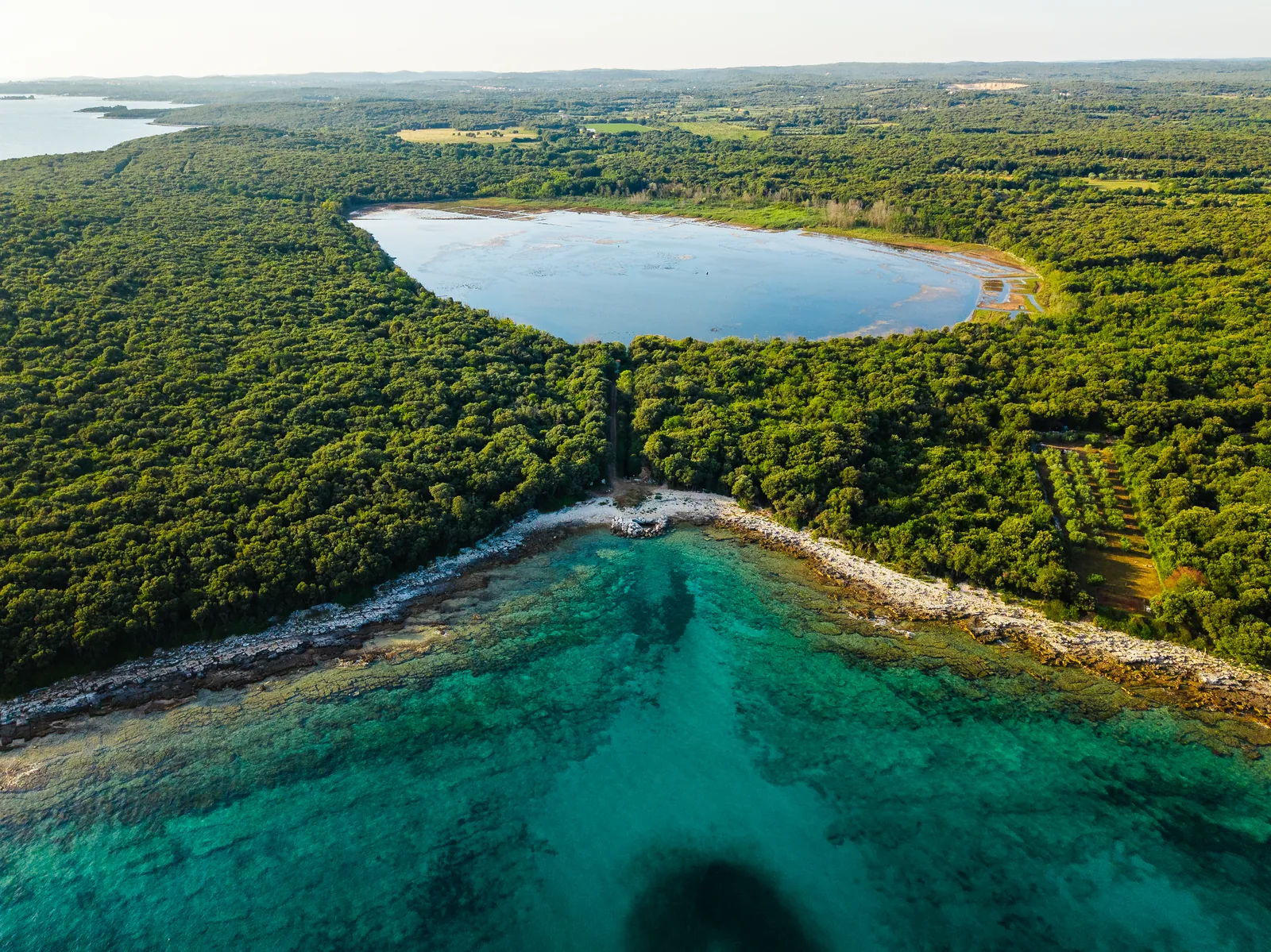
Palud is the one properly wild corner of the Rovinj coast — a brackish marsh ringed by old oak and ash forest, about 8 km south of town, where more birds turn up than anywhere else in the area. It's Istria's only ornithological reserve, and you can walk the whole thing in a morning.
What Palud actually is
The marsh is an accident of history. In 1906, Austro-Hungarian engineers dug a canal to the sea from the military base at Barbariga, hoping the salt water would kill off the malarial mosquitoes breeding here. It didn't work — but the water turned brackish, carp and eels moved in, and the wetland that formed became a magnet for birds. Fed by seawater through the canal and underground fissures, it never fully dries; it swells and shrinks between roughly 2 and 20 hectares depending on the rain.
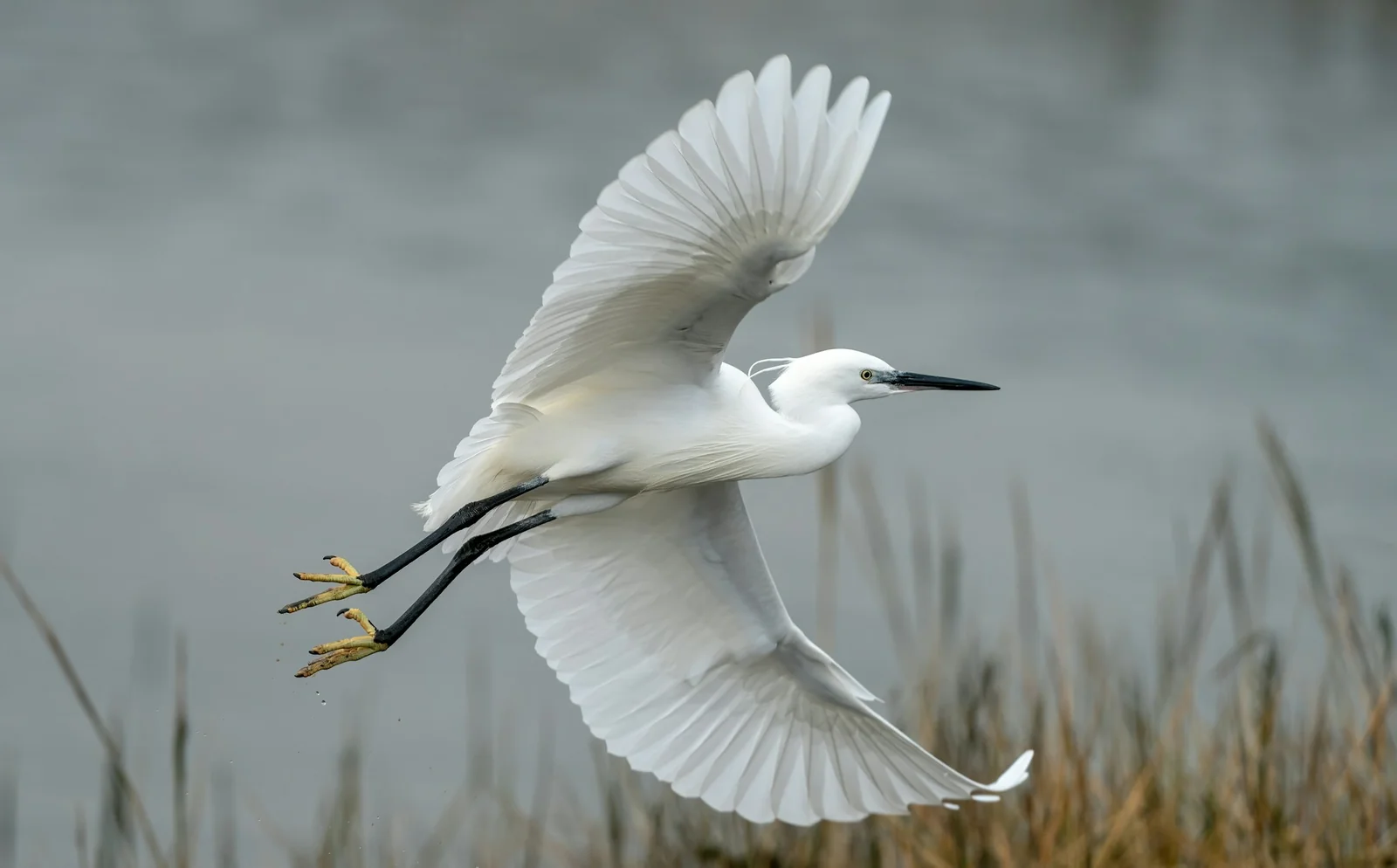
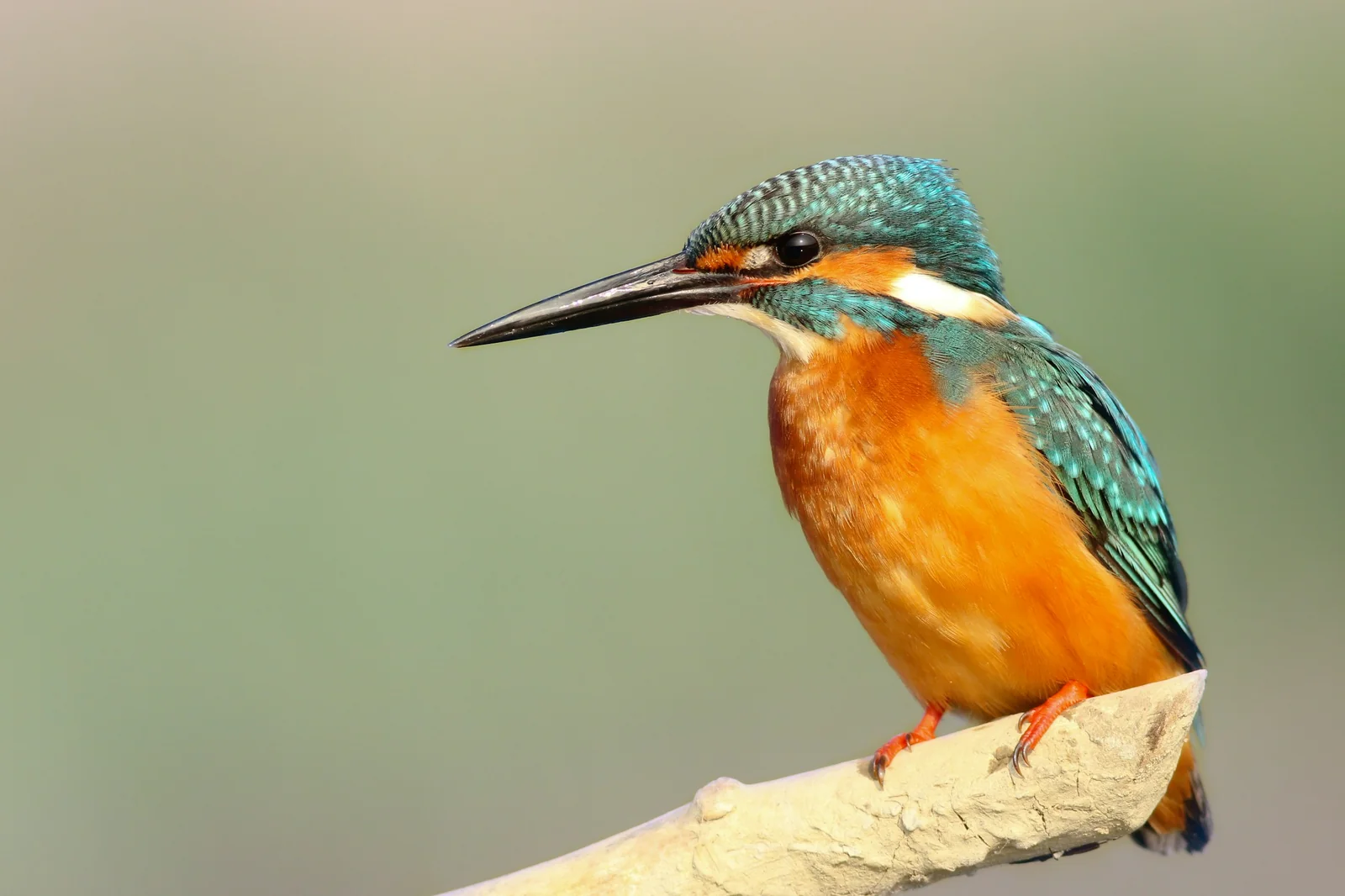
Over 230 bird species have been recorded here. On a normal walk you'll see grey herons, little egrets, mallards, coots and moorhens — and, if you're lucky at the hide, the leggy black-winged stilt. Reed, sedge and cattail fringe the water; ancient willows lean over the northern end.
Birdwatching: when to go
A simple wooden hide on the southern edge of the marsh lets you sit quietly and watch, and there's a warden station with a permanent photo exhibition of the birds you might spot. Timing matters:
- Late February–April — spring migration, the busiest and most varied
- May–mid-July — breeding season
- Mid-summer — young waders passing through (the birders' favourite)
- September–December — autumn migration
- January — winter residents
Come at first light or the last hour before dusk — midday is quiet, hot, and the birds are hiding. Bring binoculars, water and mosquito repellent (the irony of the place isn't lost on anyone).
The Monbrodo loop — birds, a hillfort and a Roman cistern
If you want more than the hide, there's a 5.7 km loop walk that starts and ends at a Roman cistern (1st–2nd century) near the cove of Bačvice. From there the path climbs to Gradina Monbrodo, a hilltop fort at just 31 m that was lived in from the Bronze Age (around 2000 BC) through Roman times — you can still trace its dry-stone ramparts down the western slope. Near the top, a stone memorial dated 3 August 1947 honours local WWII partisans. It's flat and easy apart from the short climb, and it stitches the birds, the archaeology and the coast into one walk.
Getting there and practical tips
Palud sits off the Ž5096 Bale–Rovinj road, reached by a gravel track near the hamlet of Španidiga — about a 15-minute drive south of Rovinj, or a good ride on a bike. As of 2026, entry is free — it's an open reserve, with no shops, café or sunbeds, so bring what you need and take your rubbish home. For current visiting details, the reserve is managed by Natura Histrica.
Combine it with a swim — the Palud beach is right beside the reserve — and the area pairs well with cycling the southern coast or a stroll through Punta Corrente forest park on the way back.