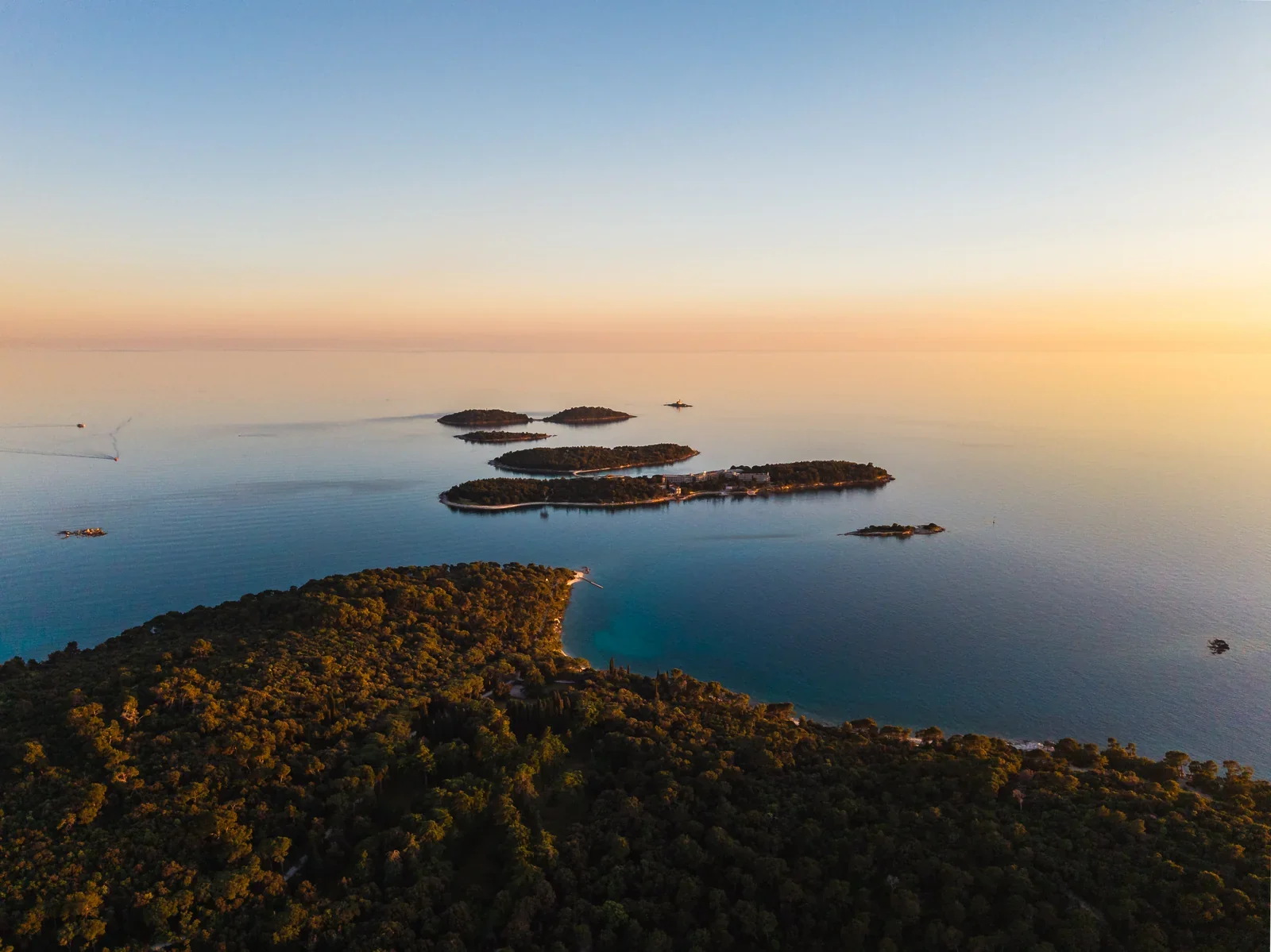
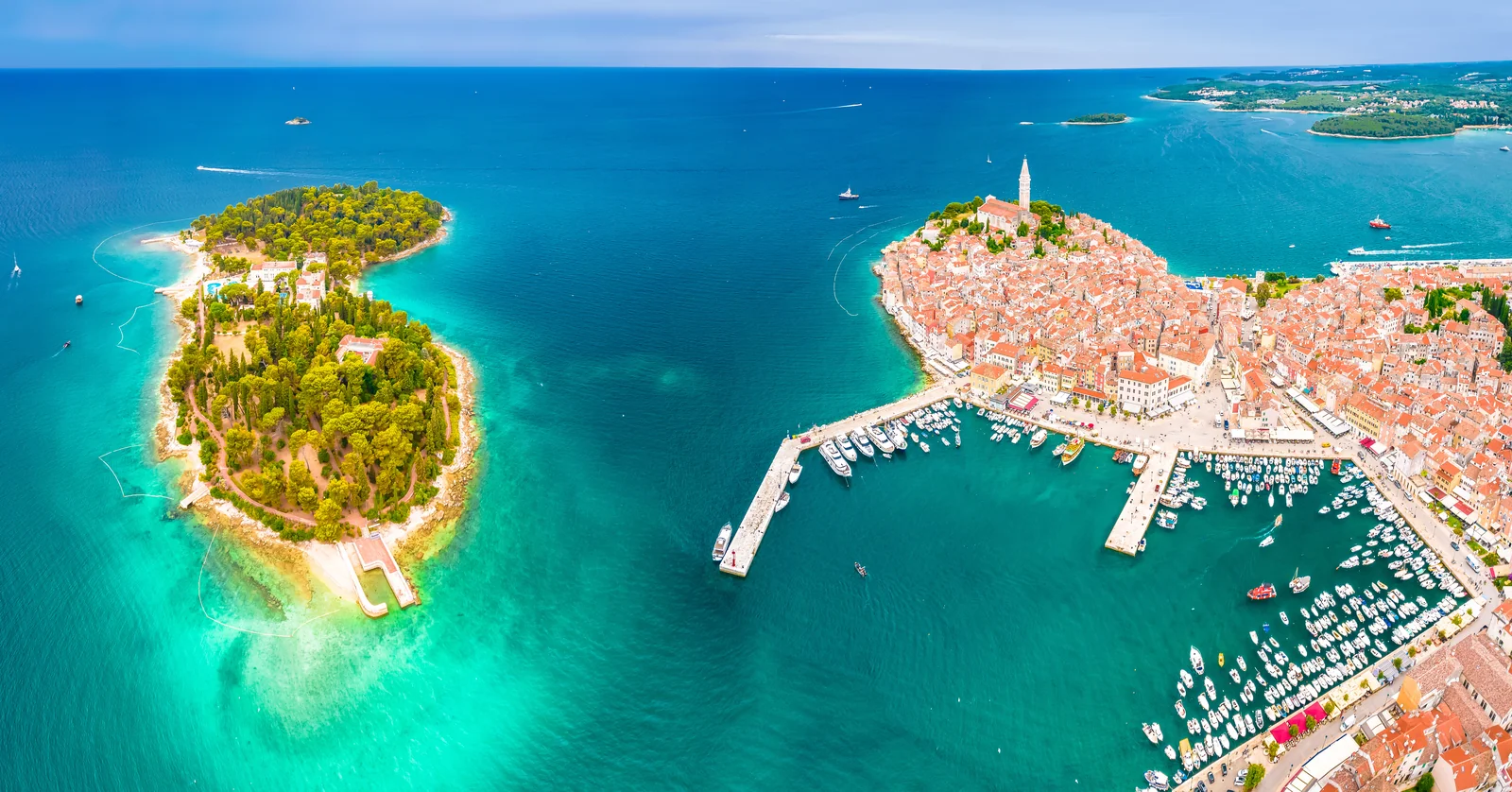
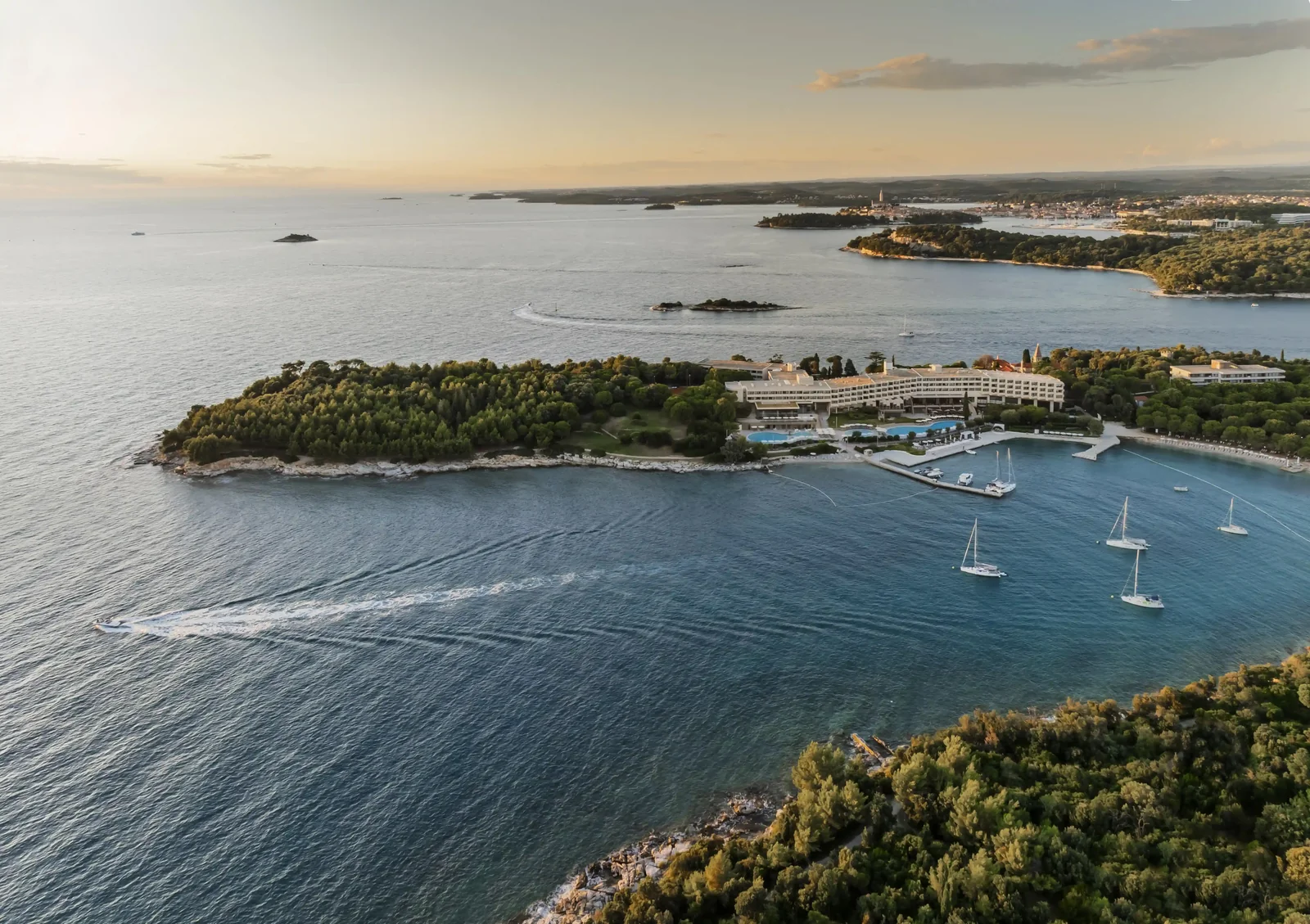
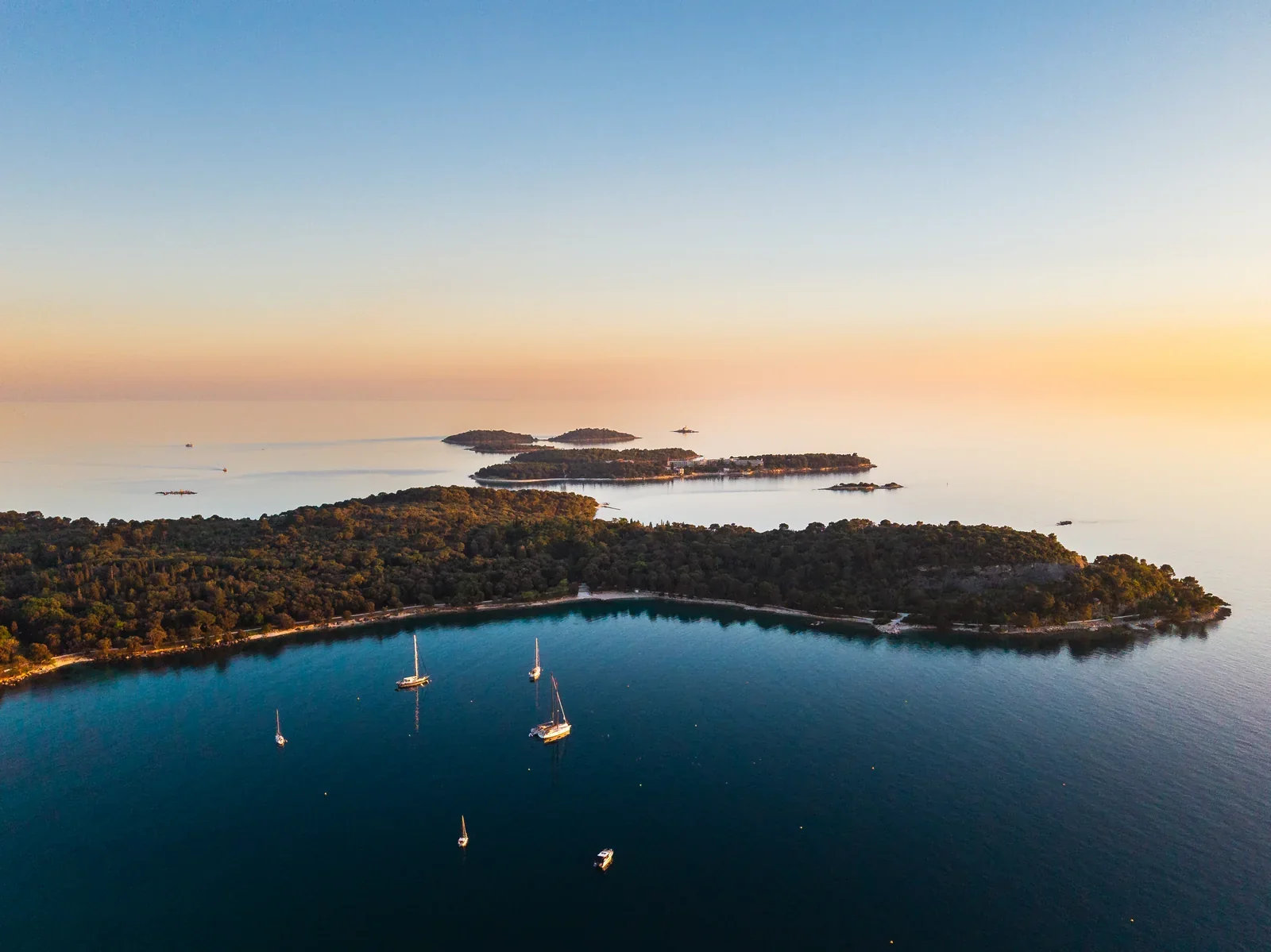
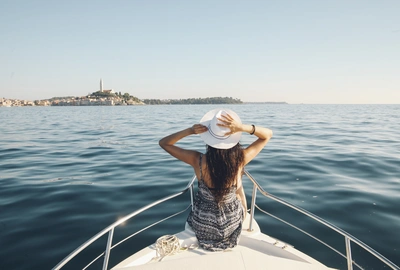
Rovinj looks out over a 22-island archipelago, and two of those islands are close enough — and interesting enough — to build a day around. Both have swimmable coves, pine woods and old stone; both are a short boat ride from town. And both were transformed, a century ago, by a pair of eccentric noblemen who spent fortunes turning bare rock into gardens — partly, it seems, to outdo each other.
The quick version
- Sveta Katarina — the closest, a 5-minute hop. A wooded island-hotel with easy swimming platforms facing the Old Town. A relaxed half-day.
- Crveni otok (Red Island) — about 15 minutes out, and bigger: two islets joined by a causeway, more beaches, and the ruins of a medieval monastery.
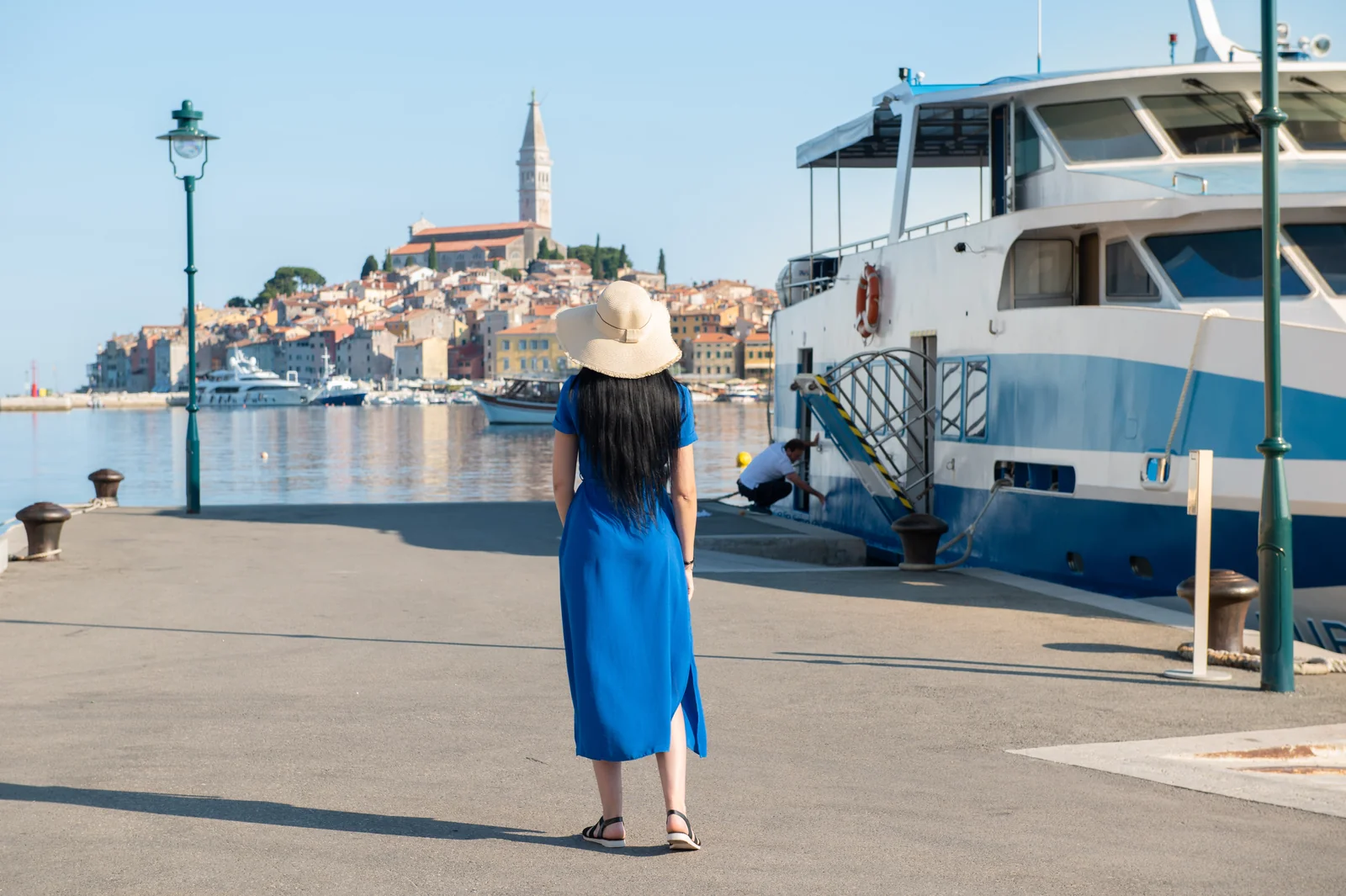
- Getting there — the island hotels run a scheduled boat from Delfin pier; independent taxi boats also run from the town harbour.
Two islands, two rival barons
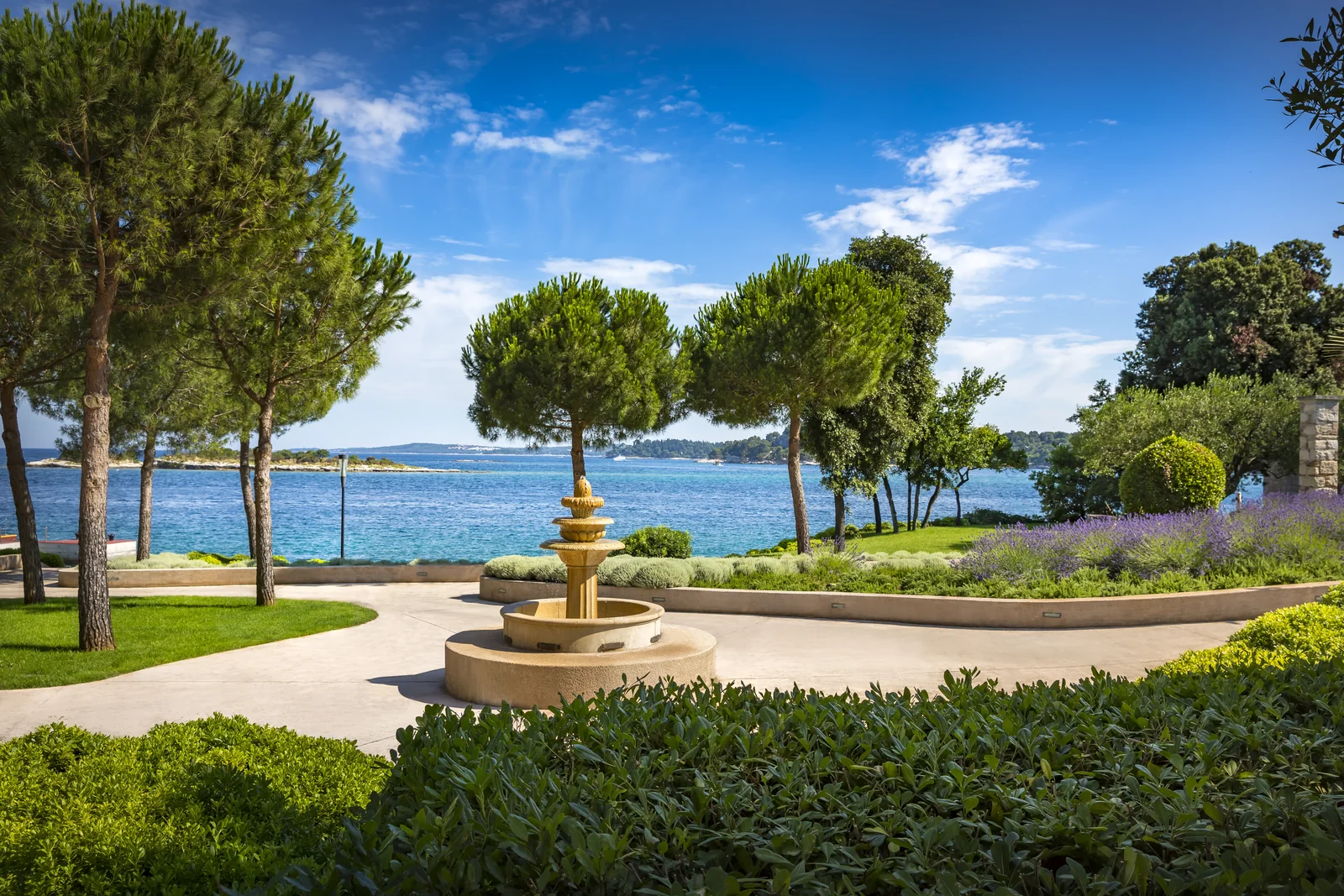
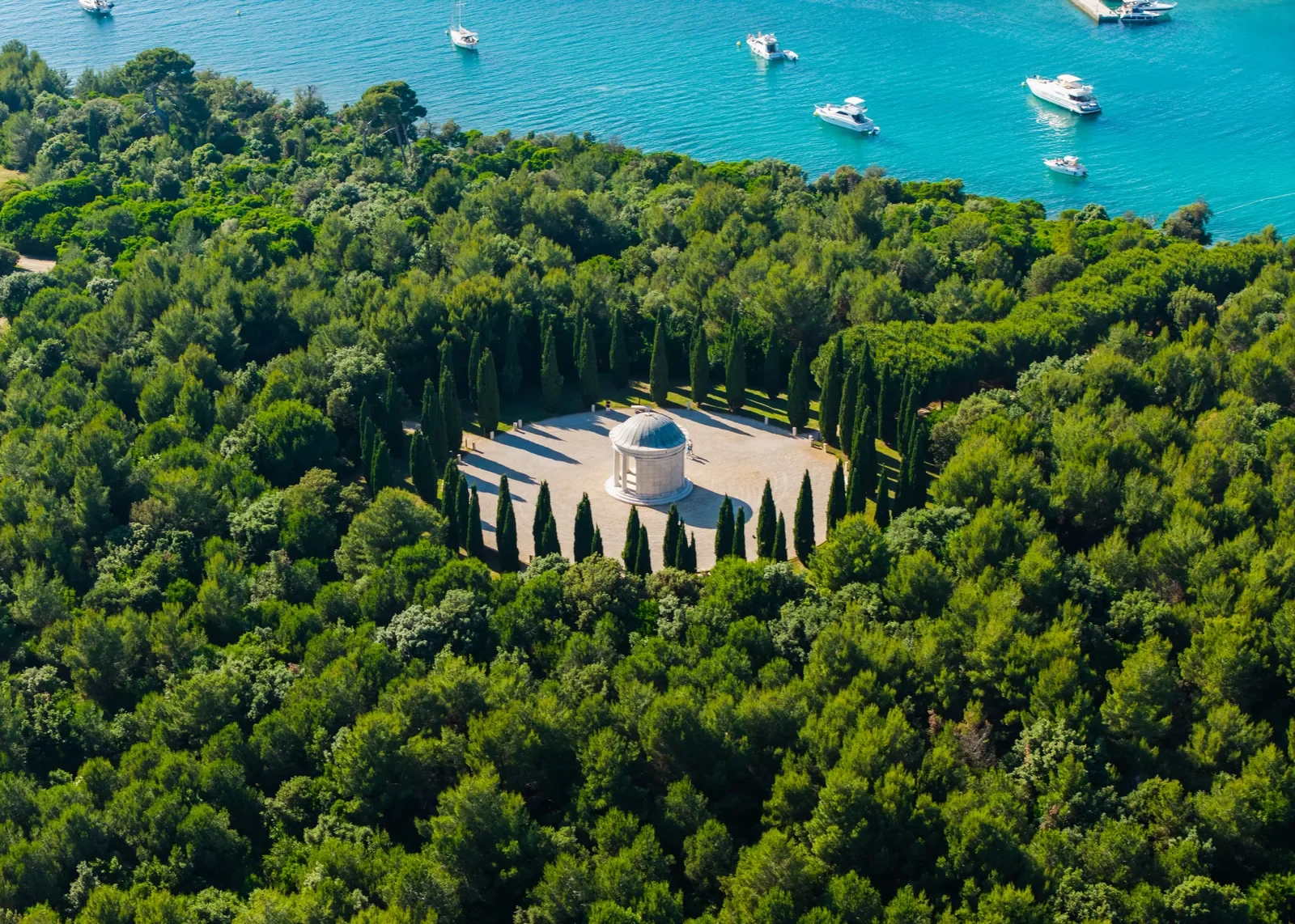
Look at how green these islands are and you'd assume it's natural. It isn't. On Crveni otok, the Trieste industrialist Baron Georg Hütterott bought the island in 1890 and planted it with Mediterranean and exotic species. A short stretch of water away on Sveta Katarina, the Polish-Lithuanian Count Ignaz Milewski did much the same after 1905 — shipping in boatloads of soil to cover the bare karst and reforesting it from scratch. The two were contemporaries and, by local account, rivals, each determined to out-garden the other. Rovinj came out the winner: between them they left the town two of the oldest planted forests on the Croatian coast.
Boats run about once an hour in each direction, and the last one back is later than most people expect: see the full island boat timetable for departure times, fares and both piers.
Sveta Katarina — the five-minute island
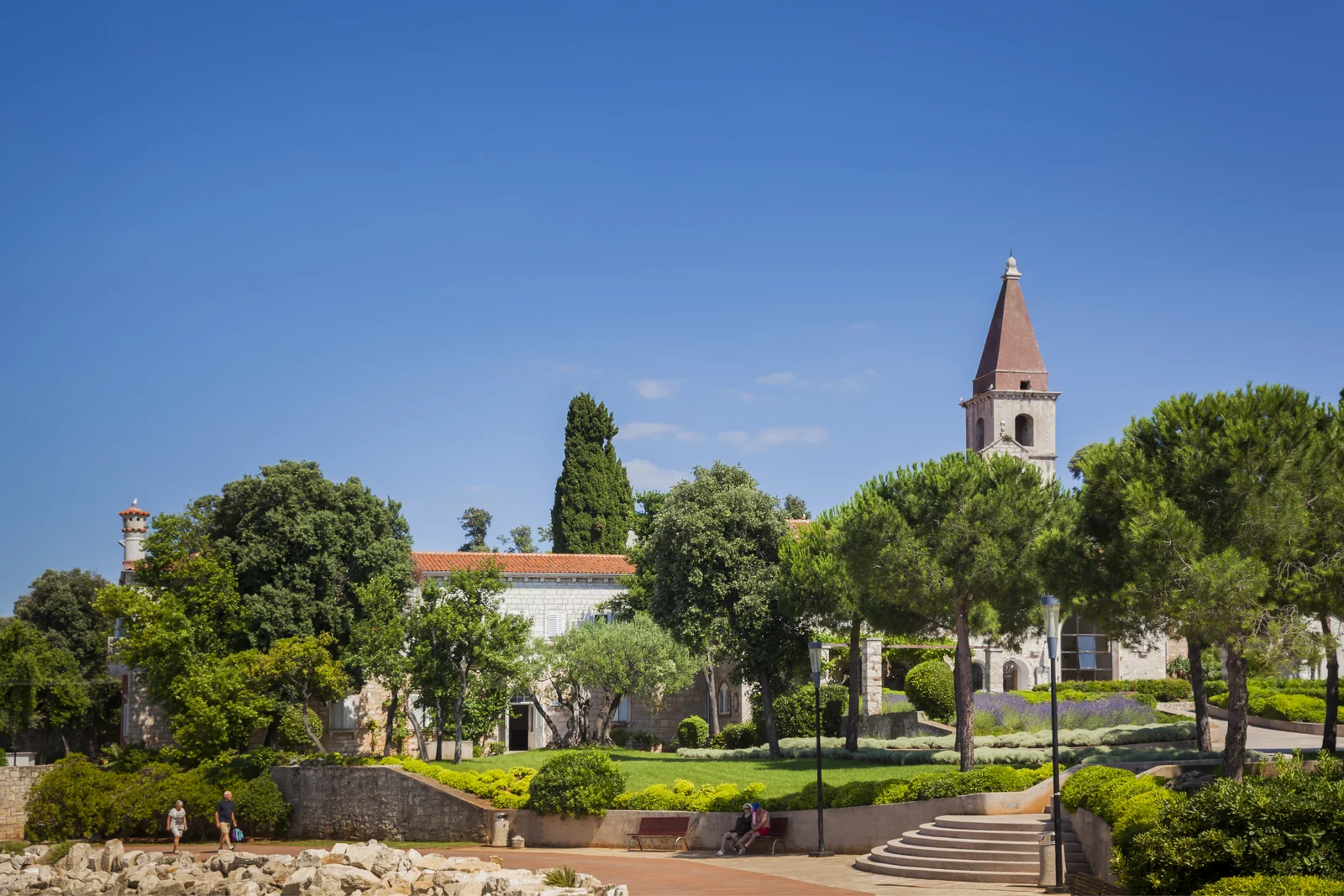
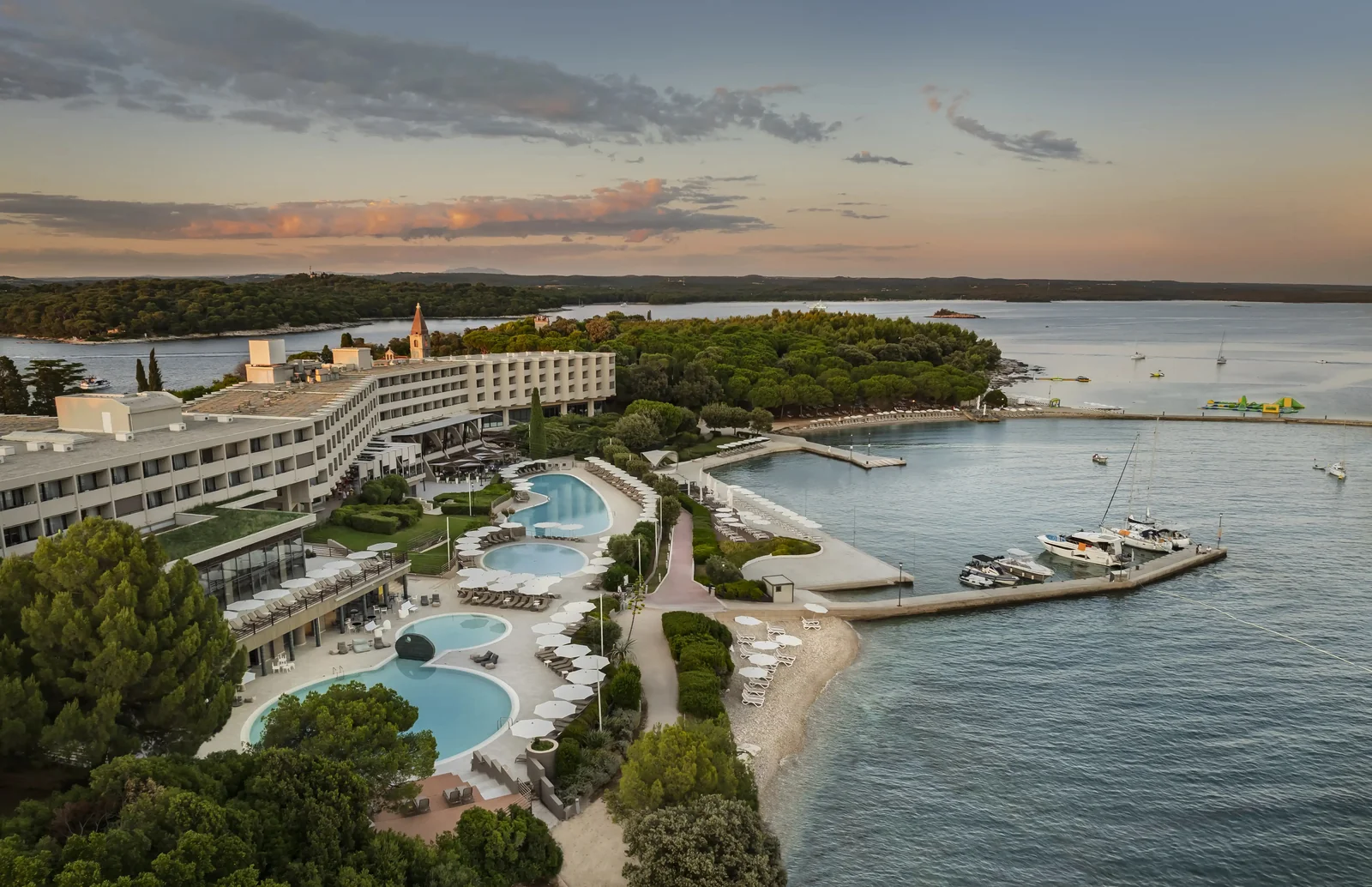
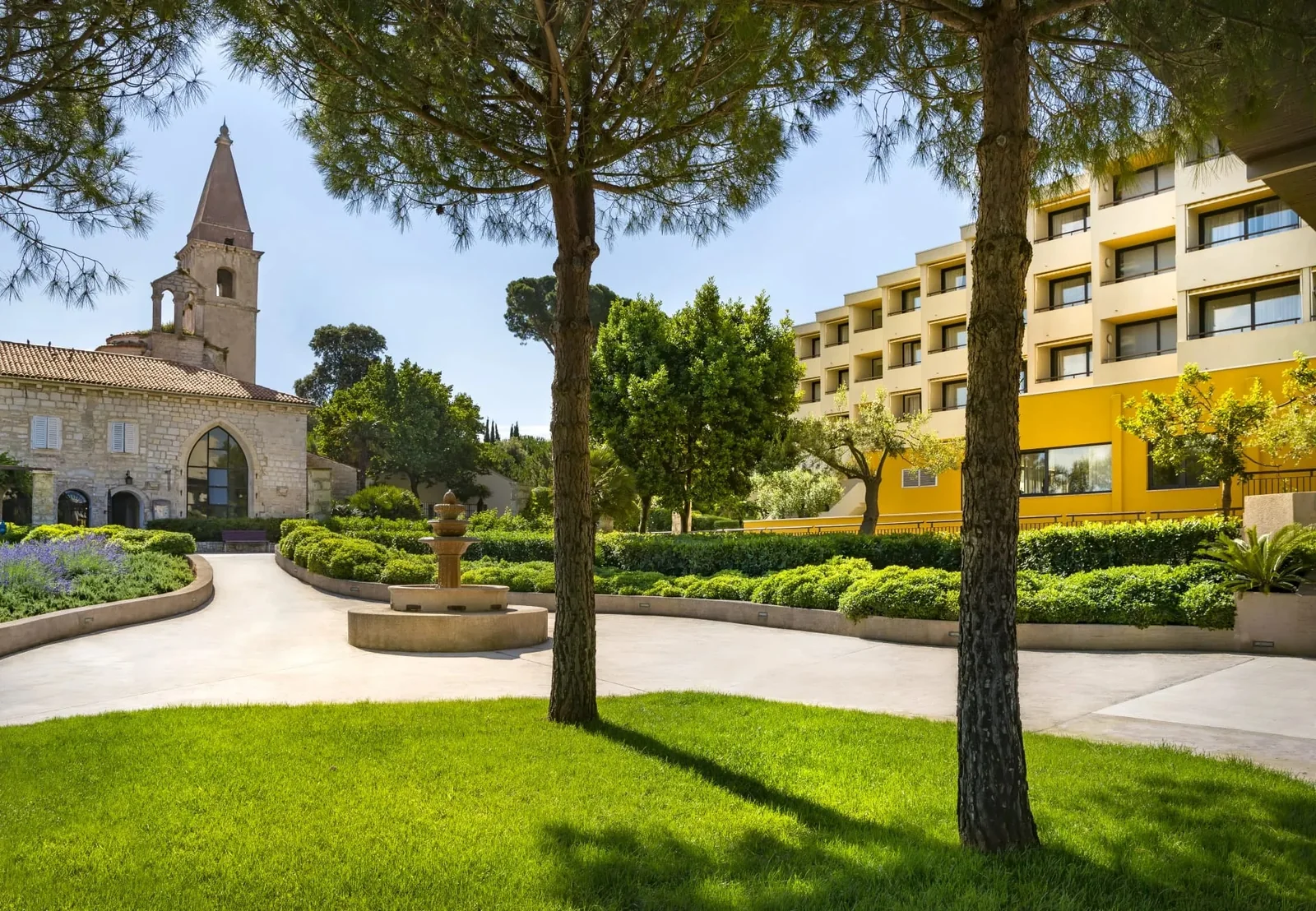
Sveta Katarina (St. Catherine) sits right across the harbour, barely five minutes by boat. It's 13 hectares of dense conifers — botanists have counted over 450 plant species — small enough to walk around in an hour, with a hotel built into the shell of Count Milewski's villa. There was a hermits' hospice here in the Middle Ages, and later a small Servite convent whose last friar died in 1779; Milewski's mansion replaced that world with a Belle Époque one (he even planned a casino inside).
The eastern side, sheltered and facing town, has calm coves with rock and concrete swimming platforms and the postcard view back at the Old Town and the St. Euphemia bell tower. The western side is wilder — home to the cliff-jumping rocks locals call Gold, Silver and Bronze (Zlatna, Srebrna and Brončana stijena), dropping up to about 15 metres into clear water. Detail on our Sveta Katarina beach page.
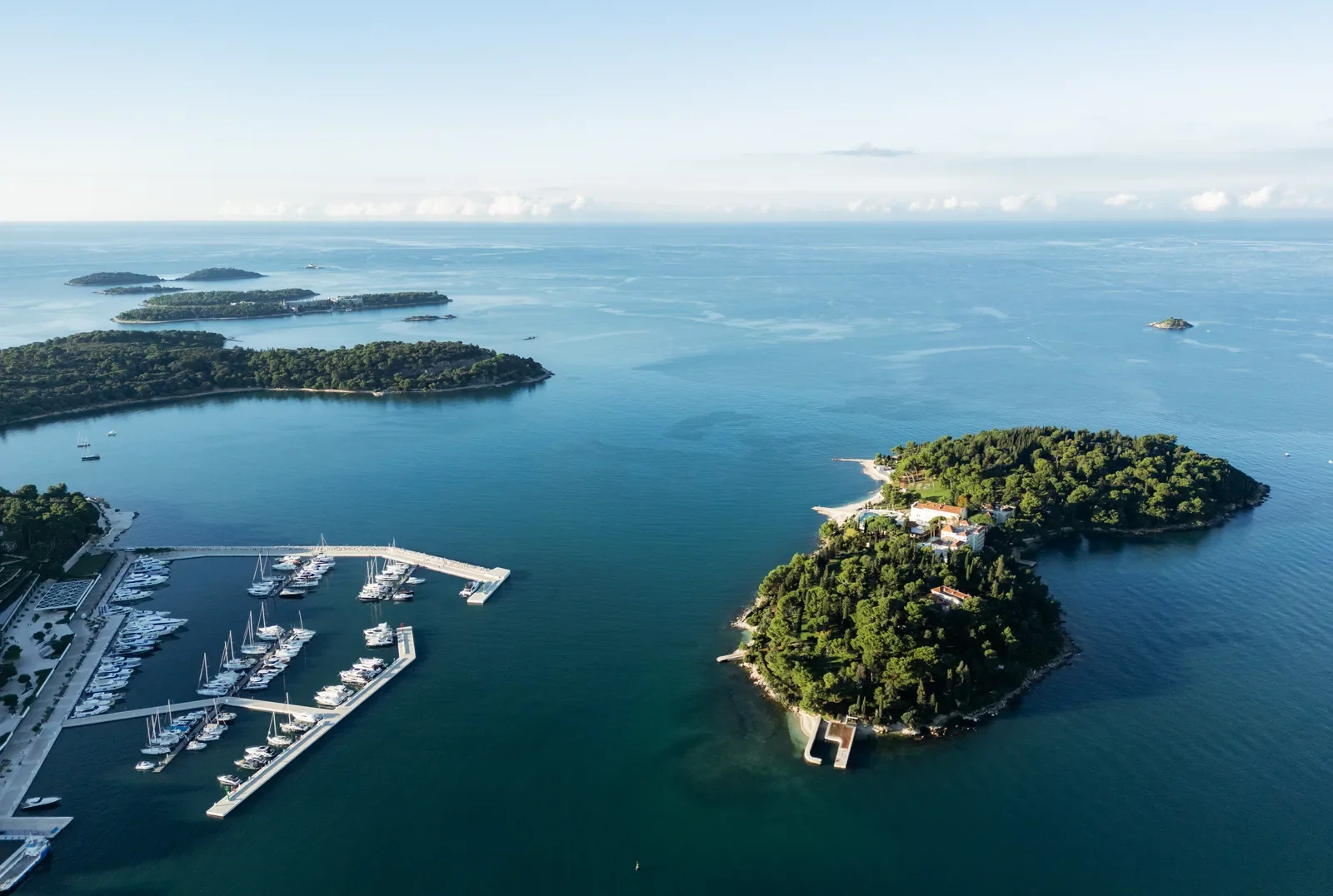
Crveni otok (Red Island) — monastery, factory, castle
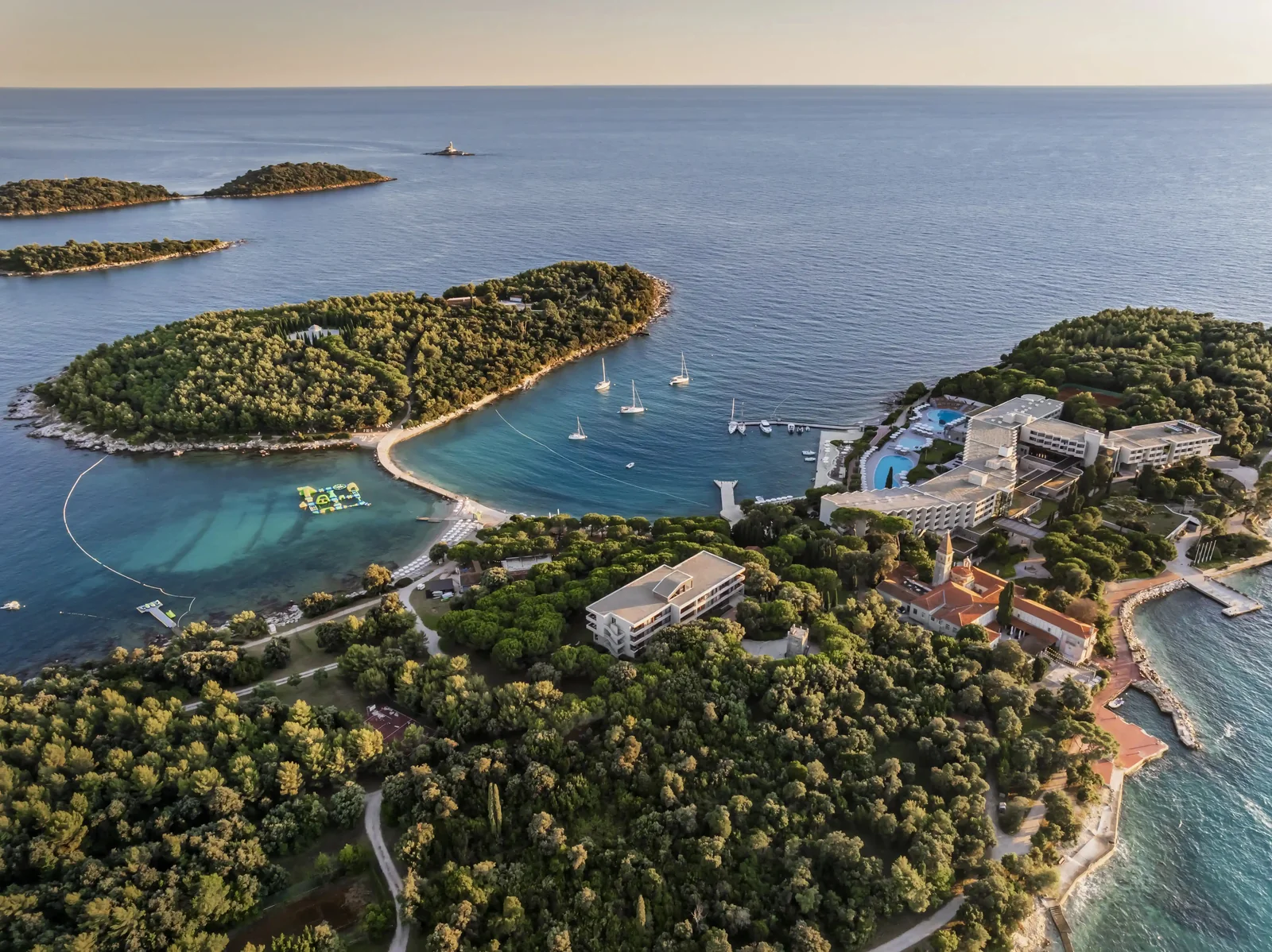
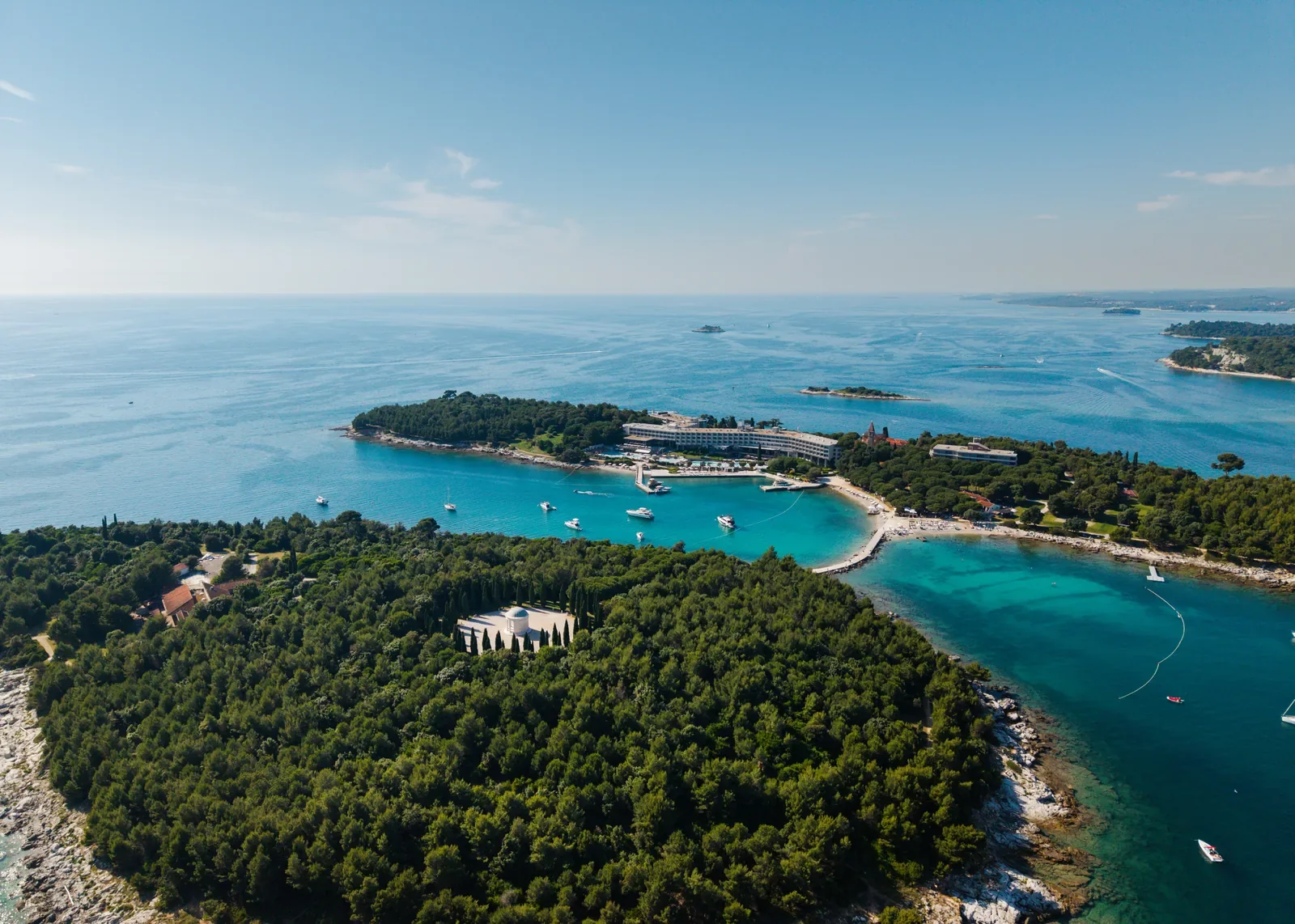
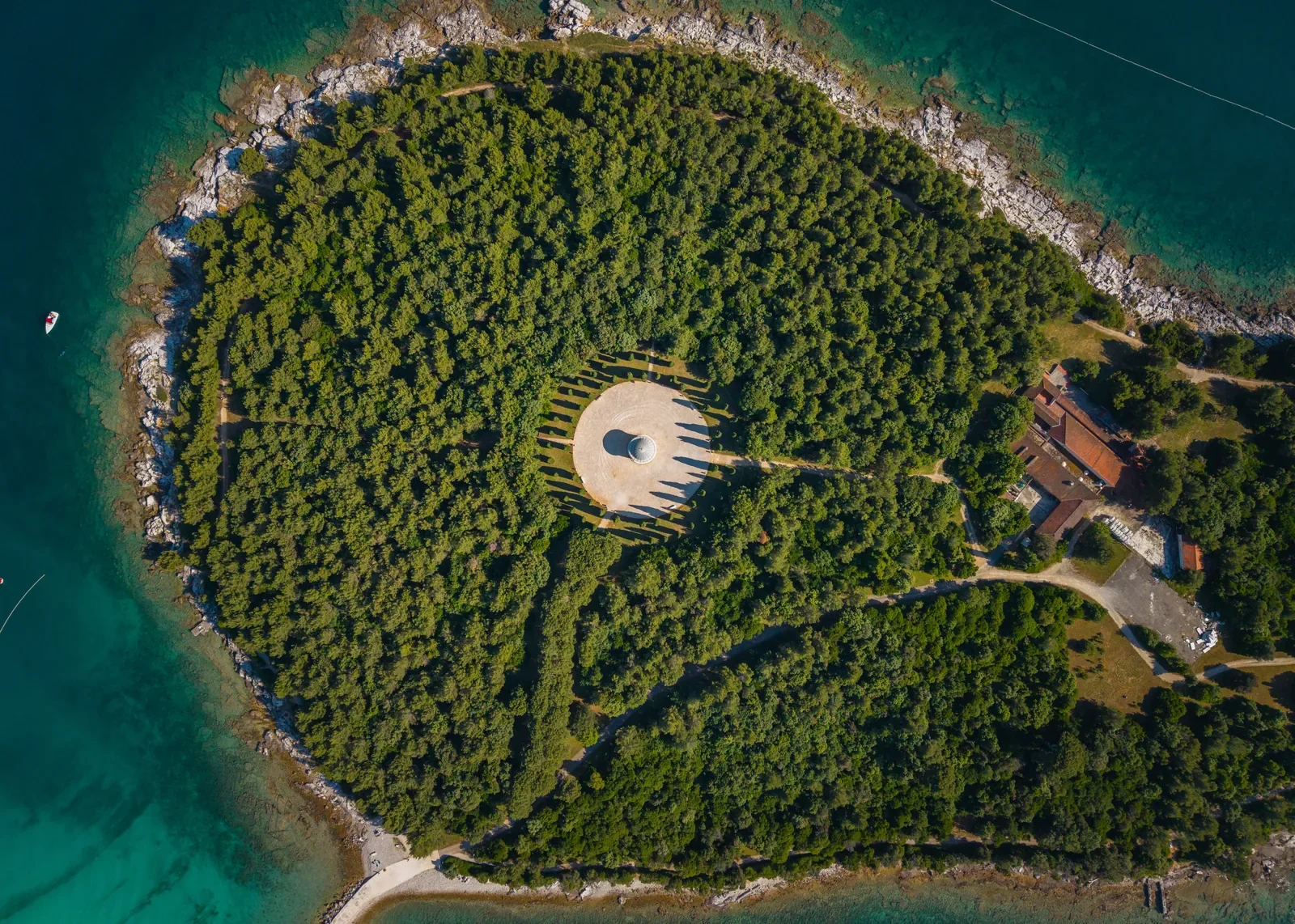
Crveni otok — "Red Island," though no one can quite say why; the usual guess is the soil — is two islets, Sveti Andrija and Maškin, joined by a low pebble causeway. At around 24 hectares it's the biggest island in the archipelago, about fifteen minutes out, and it has the deeper history. Sveti Andrija carried a Benedictine monastery as far back as the 8th century, tied to a great abbey in Ravenna; the monks left in the 1200s, Franciscans rebuilt the church in 1454, and Napoleon's government dissolved the convent in 1809. Then the strange chapter: through the 1800s the buildings became a cement works, and the old church bell tower was used as the factory chimney. Baron Hütterott bought the island in 1890 and restored the convent as his summer residence — Franz Ferdinand called in 1910. The old manor now holds a small maritime museum.
Sveti Andrija has organised rocky and pebble beaches with full facilities, a family-friendly gravel stretch by the harbour, and Island Hotel Istra if you want to stay over — its restaurant Anno Domini 547 sits in Hütterott's old residence and is named for the monastery's founding. Cross the causeway to Maškin and it turns wild and wooded, with quiet coves and a long-standing naturist section. More on our Crveni otok beach page.
Getting there: the boats
Two ways across, worth knowing apart. The island hotels run a scheduled boat from Delfin pier (by the roundabout just south of the Old Town, where you also sort parking) — roughly hourly, more often in high season, free for hotel guests and a few euros for day visitors (around €12 return to Crveni otok). There's an irony to Delfin pier: Milewski kept ordinary Rovinj folk off his island and built them this mainland bathing spot as a consolation — now it's where everyone catches the boat. Alternatively, independent taxi boats run from the town harbour through the season — no timetable, just hop on. Either way, bring cash and check the last boat back. For the longer trips from the same harbour — the Lim Channel, Brijuni and sunset cruises — see our boat-tours guide.
The sunken city offshore
One more story for the boat ride. Rovinj fishermen have long told of Cissa — an ancient town said to have sunk beneath the sea off Sveti Andrija, its walls and streets still snagging nets on the seabed. Historians treat it as legend, but Hütterott liked it enough to name his island guest book Cissa Insel. On a calm day, divers off Red Island still report stone in the shallows.
Planning your island day
- Water shoes help — the beaches are rock and pebble, not sand.
- Bring water and shade — there are bars, but island prices are island prices.
- Go early or late in July and August; midday is busiest.
- Pick one, or do both — Sveta Katarina is a happy half-day; Crveni otok deserves longer.
Staying over and want to be near the water? Our where to stay in Rovinj guide covers the harbour-side areas.
Want to stay on the island? Island Hotel Katarina occupies the old castle on Sveta Katarina, a five-minute boat ride from town.
Partner Boat Tour · Excursion Nemo Rovinj from €15 per person Glass-bottom panorama cruises, island transfers and sunset dolphin tours from Rovinj's harbour. See prices & details →The boats run in most weather, but not all of it, and the crossing is open water. Check the live Rovinj forecast for wind and sea temperature before you plan the day.