Istria is one of the great truffle regions of Europe, and the truffle country sits about an hour inland from Rovinj. Here's what actually matters: white versus black, when each is in season, how to join a hunt, and where to eat them without overpaying. For the wider food picture, start with our guide to what to eat in Rovinj.
Why Istria is truffle country
The truffles grow in a rough triangle of inland Istria between Pazin, Buje and Buzet — above all in the damp valley of the Mirna river and the oak woods of the Motovun forest. Truffles live in symbiosis with oak roots, and this corner of the peninsula has the soil, the humidity and the trees to grow both the white and the black kind in real quantity.
Istria landed on the world truffle map on 2 November 1999, when a local hunter named Giancarlo Zigante and his dog Diana dug a white truffle weighing 1.31 kg out of the Motovun forest near the village of Livade. Guinness listed it as the largest ever found. He had it cast in bronze and then served the real thing to a hundred guests for dinner — which tells you something about how Istrians treat their truffles.
White or black — and when
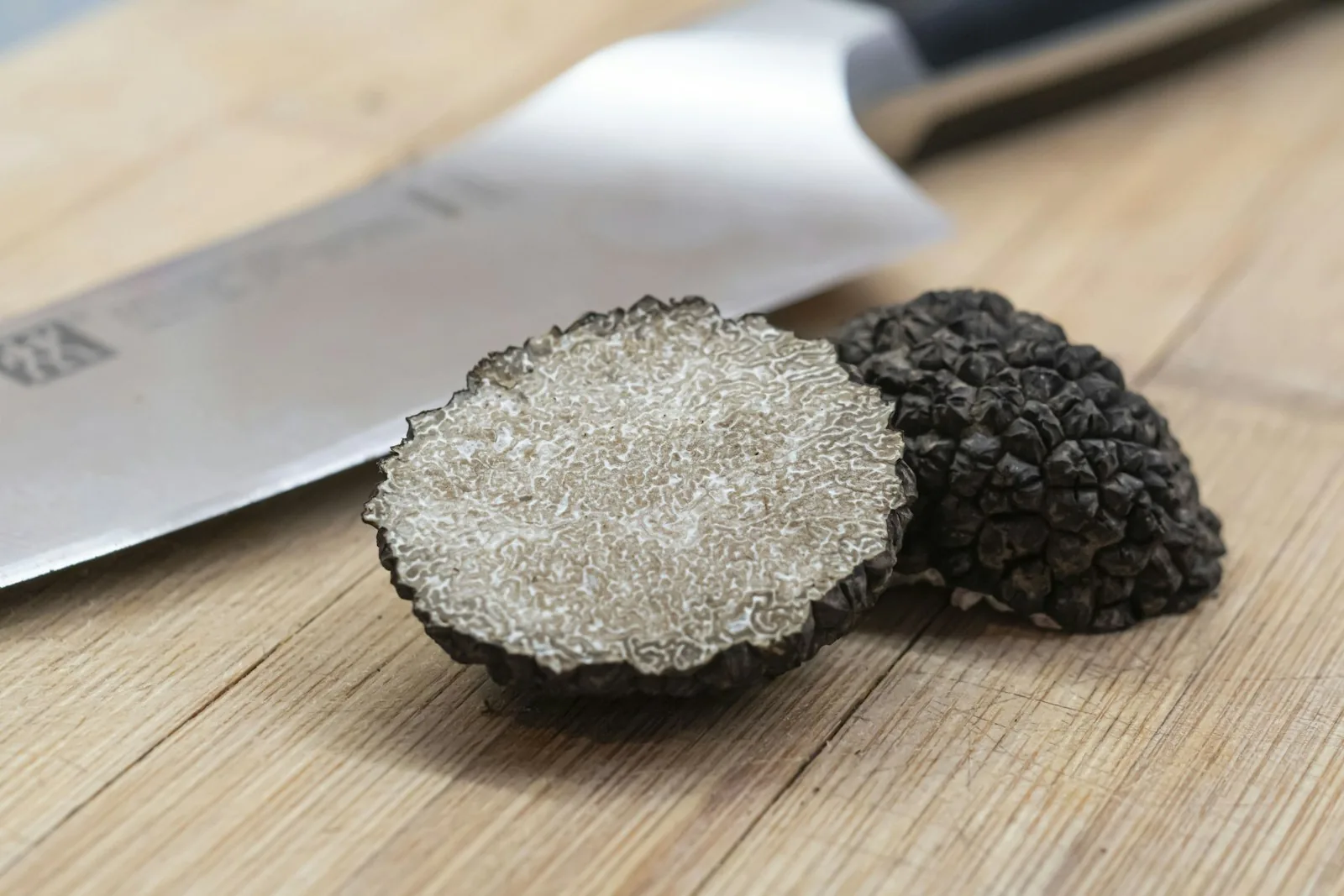
The one everyone means by "truffle" is the white truffle (Tuber magnatum), in season roughly September to January and peaking in autumn. It's never cooked — only shaved raw, in paper-thin slices, over something hot: pasta, eggs, a steak. It's also wildly expensive, and worth it once.
The black truffles are the everyday option, and there's one in almost every season:
- Summer black (Tuber aestivum) — May to August, the mildest and cheapest. The smart order in high season.
- Autumn black (Tuber uncinatum) — turns up alongside the white in the autumn peak.
- Winter black (Tuber melanosporum) — December to March, the most intense of the blacks.
Local tip: if you're here in summer, don't chase out-of-season white truffle at a premium. Order the summer black over fuži and you'll eat well for a fraction of the price. Line the seasons up with our month-by-month guide.
Going on a truffle hunt
The hunt is a genuinely good half-day out, and it's about an hour's drive inland from Rovinj toward Motovun, Livade and Buzet — an easy addition to a day trip. You don't hunt with pigs here; you follow trained dogs, usually curly-haired Lagotto Romagnolos, that scent the truffles growing 10–30 cm underground and dig at the spot.
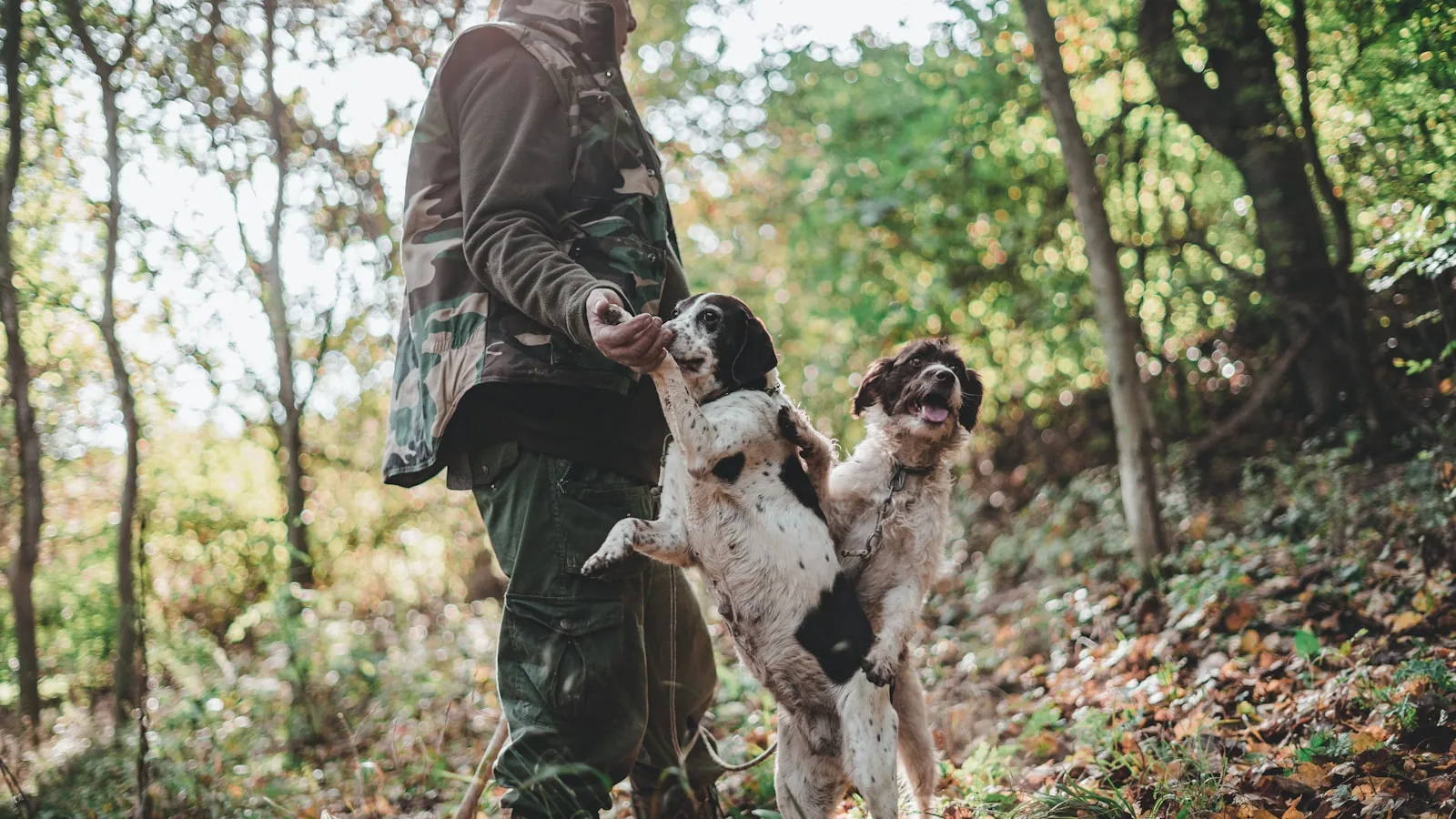
A typical outing is a walk through the oak woods with the family and their dogs, a few finds if you're lucky, and a tasting of truffle products afterwards — often eggs or pasta cooked with what's just been dug up. Autumn is the atmospheric season, but the dogs work year-round. Book a few days ahead; the good family operations around Motovun and Buzet are small and fill up.
Partner Transfer & Taxi GiGi Taxi A Rovinj taxi, one call away. View details →Eating truffles in Rovinj
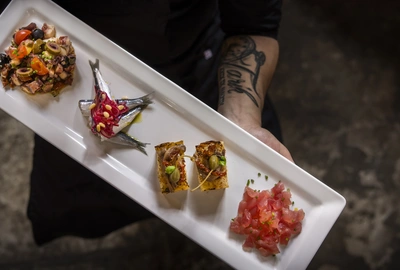
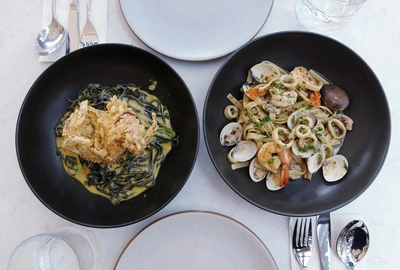
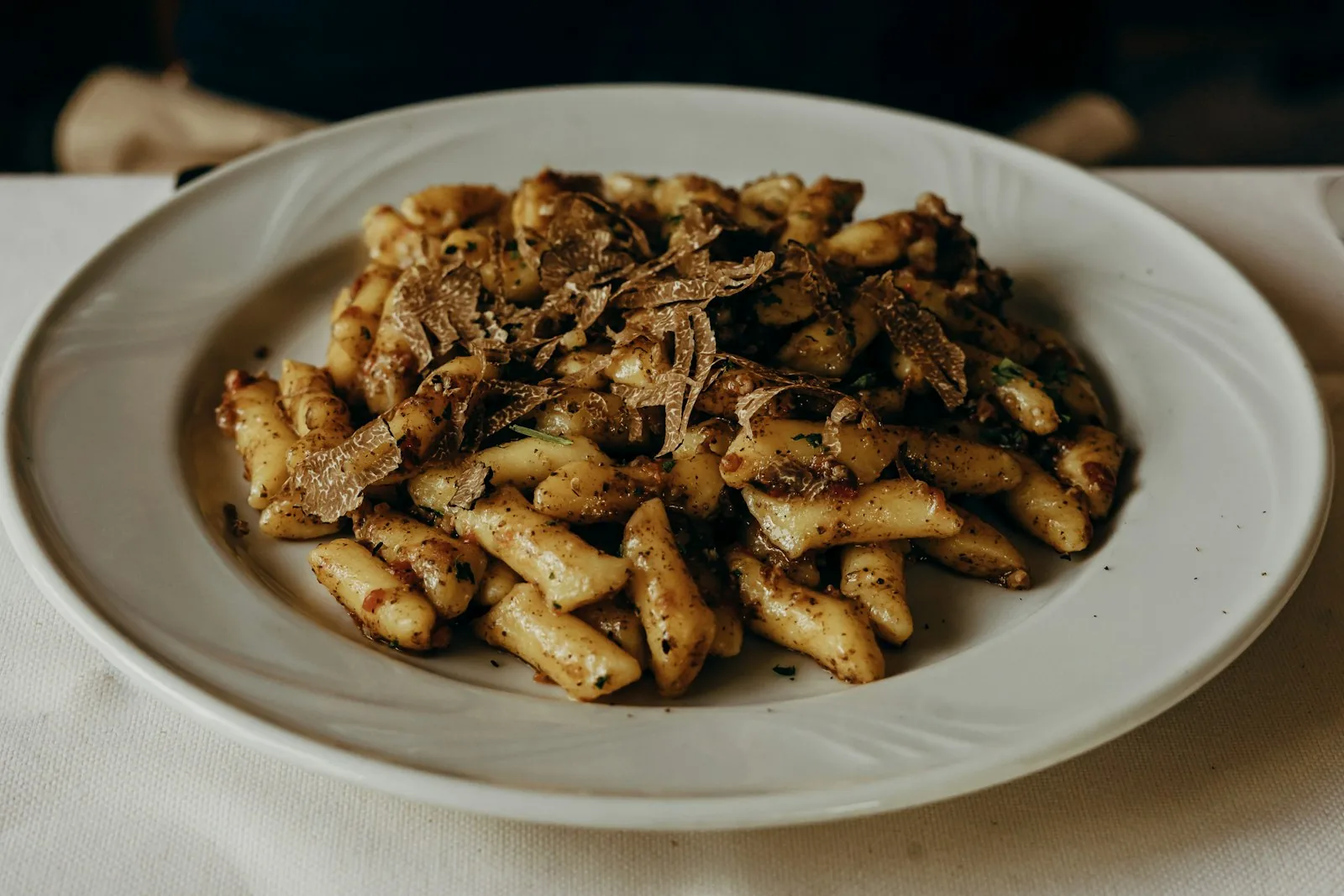
You don't have to go inland to eat well. Rovinj's kitchens shave truffle over fuži, into a fritaja, over eggs, steak, cheese, even honey and ice cream. In autumn it's fresh; the rest of the year it's preserved or in oil, which is still good — just ask which you're getting. The tasting menus at Monte and Agli Amici build courses around it, and plenty of konobas do a straightforward truffle fuži for far less. See our honest restaurant picks for where.
Buying truffles to take home
Fresh truffle is a seasonal, perishable, expensive thing to carry — a fresh white keeps maybe a week and can run €2,000–4,500 a kilo, so you're buying grams. Easier souvenirs are the preserved ones: whole or chopped truffle in jars, truffle-and-mushroom salsa, truffle cheese, truffle honey. The shops in Livade and around Motovun carry the lot.
One honest warning: most cheap "truffle oil" is olive oil flavoured with a synthetic aroma compound, not real truffle. If you want the taste at home, buy a small jar of actual preserved truffle or a truffle salsa rather than a big bottle of oil.
When to come, and a few tips
- Autumn (Sept–Nov): the white-truffle peak, and the season of the Days of the Zigante Truffles in Livade (mid-September to mid-November) — dishes, a wine fair and forest hunts.
- Summer (May–Aug): summer black truffle, cheaper and everywhere — the value season.
- Book the hunt ahead — the good operators are small family outfits.
- Fresh vs preserved: always ask. Both are fine; the price should reflect which.
- Skip the cheap oil — buy real preserved truffle instead.
You can taste an Istrian truffle over a plate of fuži the night you arrive, or make a morning of it in the forest an hour inland. Either way, it's one thing this coast does that almost nowhere else does better.