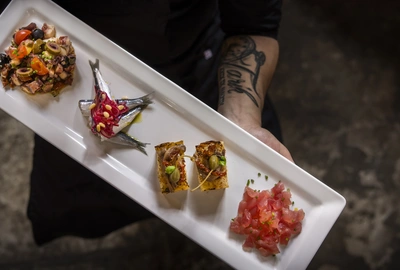
Istria eats differently from the rest of Croatia. It leans closer to Italy on the plate than to the Balkans — handmade pasta, wild herbs, olive oil poured with a heavy hand, and a cured-meat tradition older than any restaurant in town. Here's what to order in Rovinj, and when each thing is actually worth ordering. For the specific places, see our guide to where to eat in Rovinj.
Start with the pasta: fuži and pljukanci
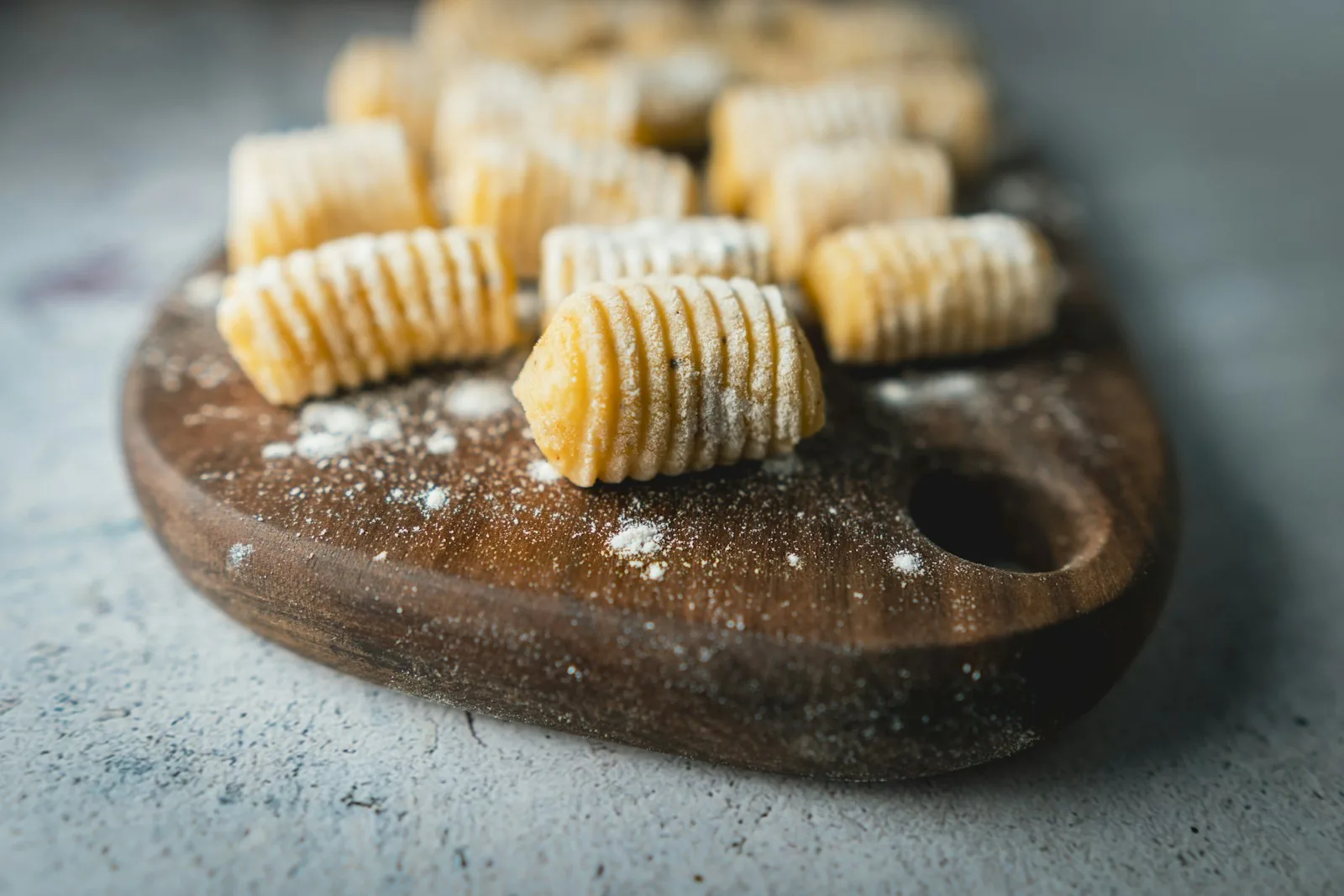
Fuži are the pasta you'll see most — small quills of dough cut on the diagonal and rolled around a stick, each about 4 cm long. Pljukanci are the other one: short hand-rolled spindles, pinched to a point at both ends. Both were peasant food once, stretched from flour and a couple of eggs, and both exist to carry a sauce the locals call šug.
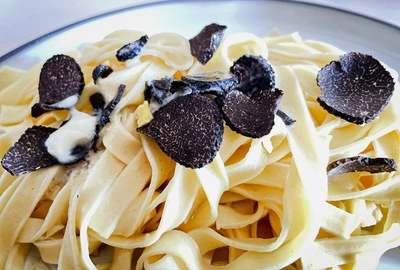
The classic pairings are game (šug od divljači — wild boar or venison, slow-cooked), boškarin ox, or a spoonful of shaved truffle. In spring you'll find them under wild asparagus instead. Order fuži with a game sauce on a cold autumn evening at a proper konoba and you'll understand why nobody here bothers with the dried stuff.
Maneštra — the bowl every nonna makes
Maneštra is the everyday dish: a thick bean-and-vegetable stew, somewhere between a soup and a one-pot dinner, built on pešt — a pounded paste of dried pancetta, garlic and parsley that goes into the pot first. Add whatever's in season and the name changes with it.
Maneštra od bobići uses fresh sweetcorn (bobići in dialect) and turns up in late summer. Jota swaps in sauerkraut and beans for the cold months; there's a barley version and one with sour turnip too. It's cheap, filling, and the truest test of a konoba's kitchen — a good maneštra can't be faked. Ask for it even in July; the corn one is worth a warm evening.
Fritaja and wild asparagus — spring only
Fritaja is the Istrian take on a frittata, and for about eight weeks a year — roughly mid-March to mid-May — it arrives green with wild asparagus (šparoge). These aren't the fat spears from the supermarket; they're thin, dark and properly bitter, foraged from the hedgerows and roadside scrub all over the peninsula. Whole families go out with bags in April.
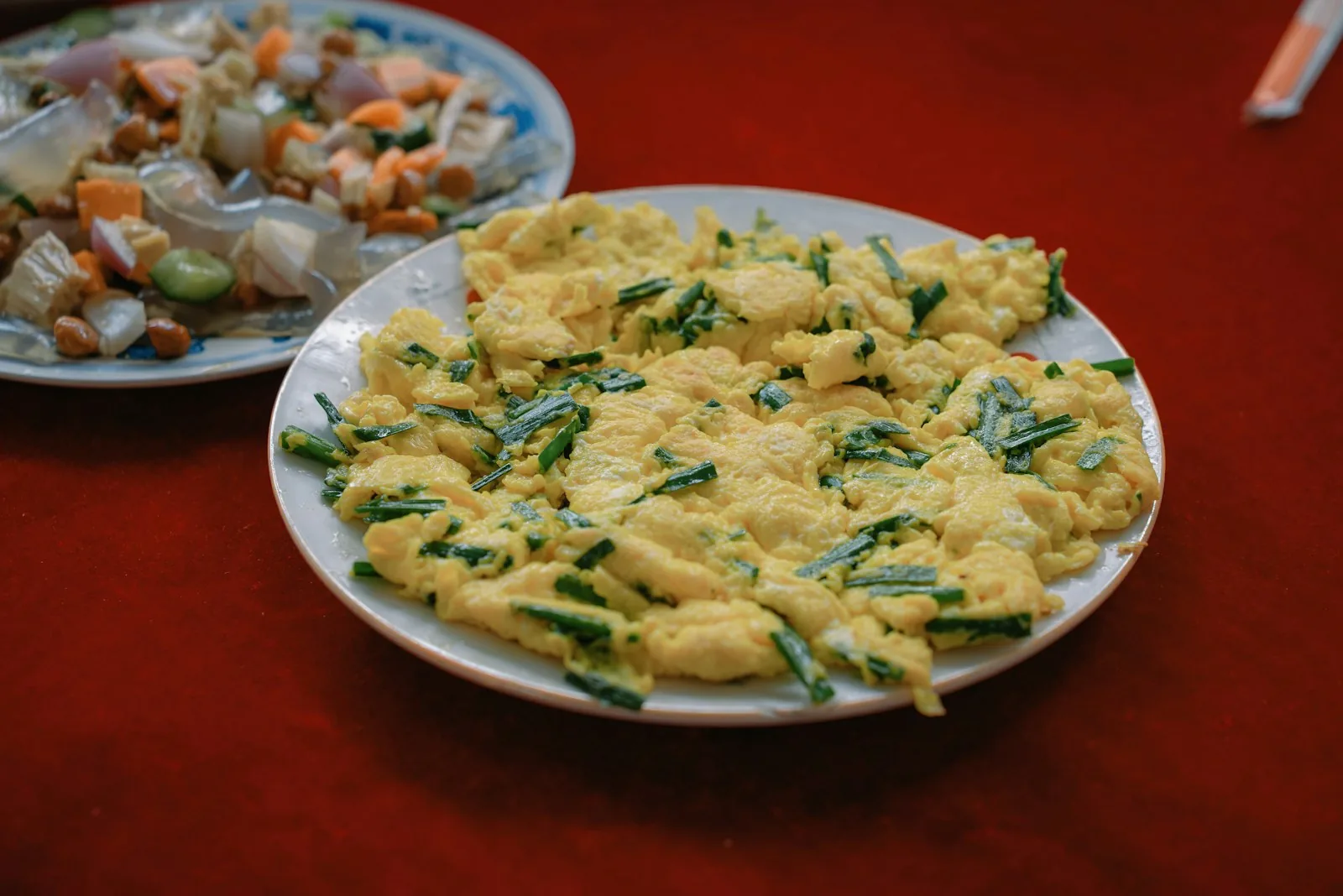
Eggs, olive oil, a handful of chopped asparagus, nothing else. Later in the year the same pan gets truffles or wild mushrooms. If you're here in spring, this is the one seasonal dish to chase — and the season is short, so don't put it off. Our month-by-month guide lines up what's on the plate with when to come.
Boškarin and the meat course
Boškarin is the Istrian ox — a pale, long-horned breed that all but died out when tractors replaced it in the fields, and has been pulled back from the edge by a handful of farmers. You'll see it as carpaccio, as a slow goulash spooned over fuži, or in a stew. It's lean, dark and worth the premium.
The other meat staple is ombolo: pork loin, salted and wind-dried, then usually served with sauerkraut and homemade sausages. It's the kind of plate that arrives at a rural konoba without much ceremony and disappears fast.
Pršut, cheese and the cold-cut board
Almost every meal here can start with a pjat — a board of cured meat and cheese. Istrian pršut is the centrepiece, and it's made differently from the smoked hams further inland: it's salted, pressed, and then air-dried for a year or more in the bura, the dry north-easterly wind, with no smoke at all. The result is cleaner and saltier, all sea air and Mediterranean scrub.
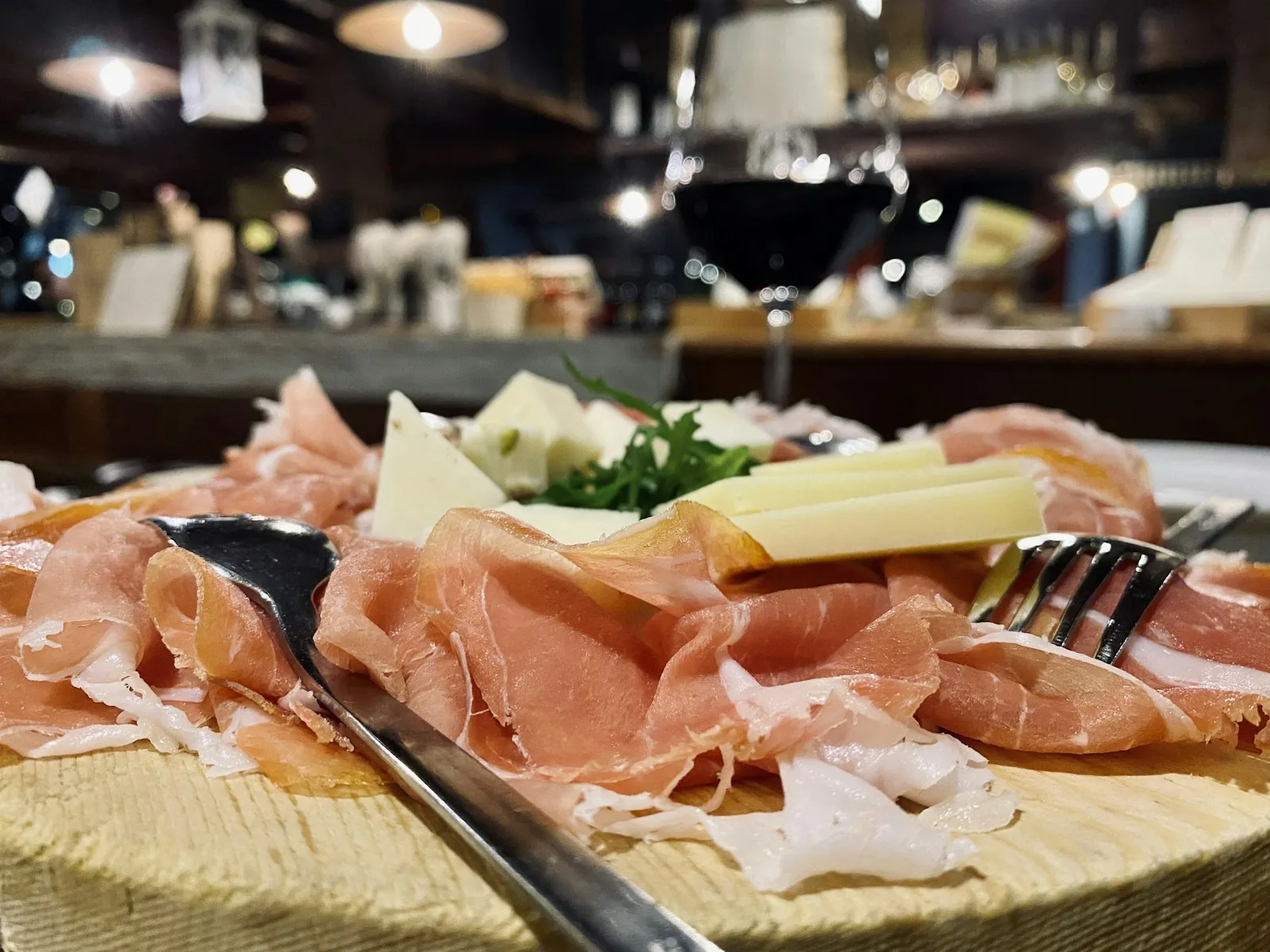
Alongside it comes hard Istrian cheese, usually cow's or sheep's milk, sometimes aged in olive oil or under ash. Add a few olives and a slice of bread and that's a perfectly good lunch before you've even looked at the menu.
Seafood, and the shellfish from Lim Bay
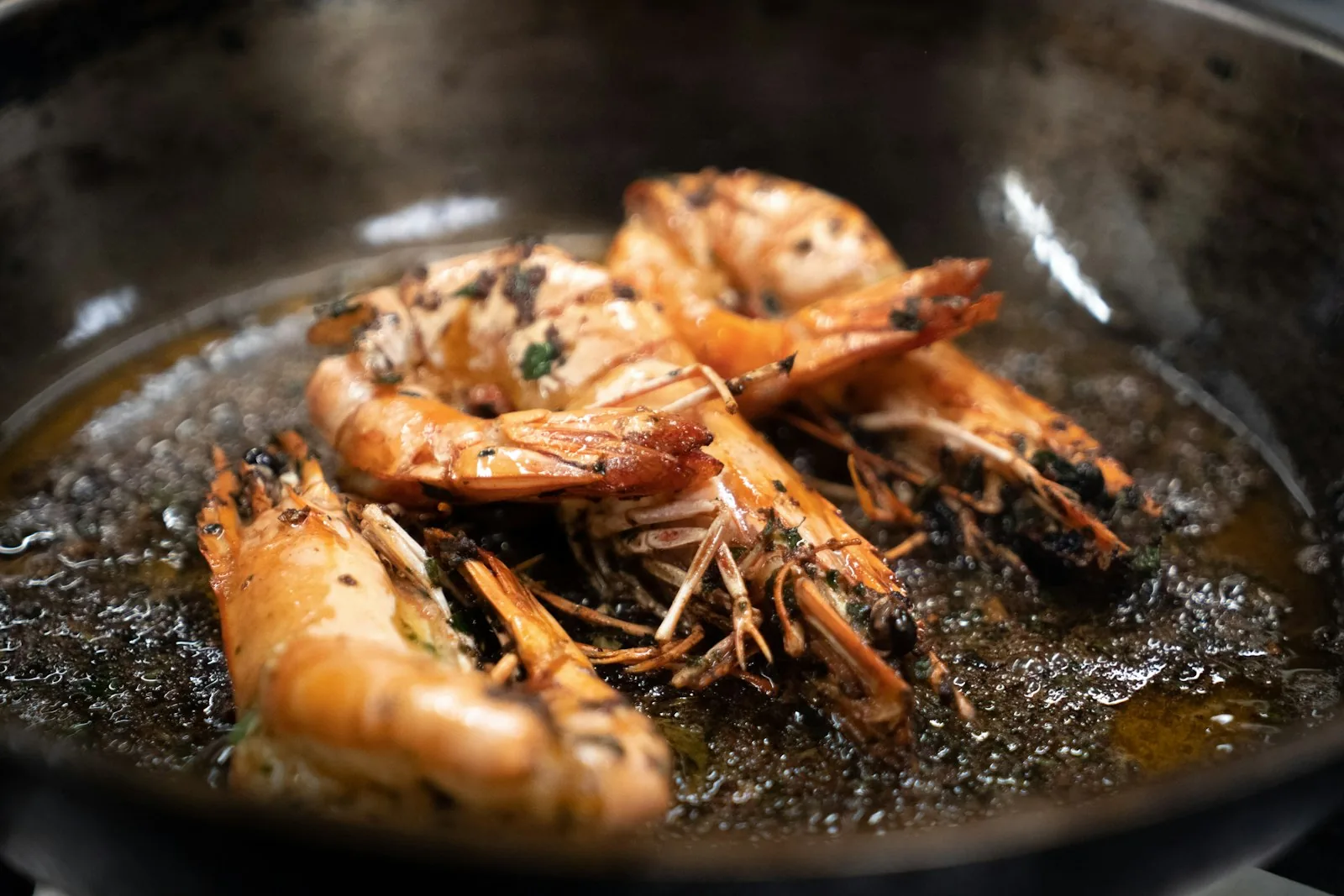
Rovinj is a fishing town, so the seafood is the easy win. Order škampi na buzaru — scampi cooked in white wine, garlic, olive oil and breadcrumbs, eaten with your hands and a lot of bread for the sauce. Brodet is the fisherman's stew, mixed fish simmered down and served over soft polenta. Crni rižot, the black cuttlefish-ink risotto, stains everything it touches and is worth it.
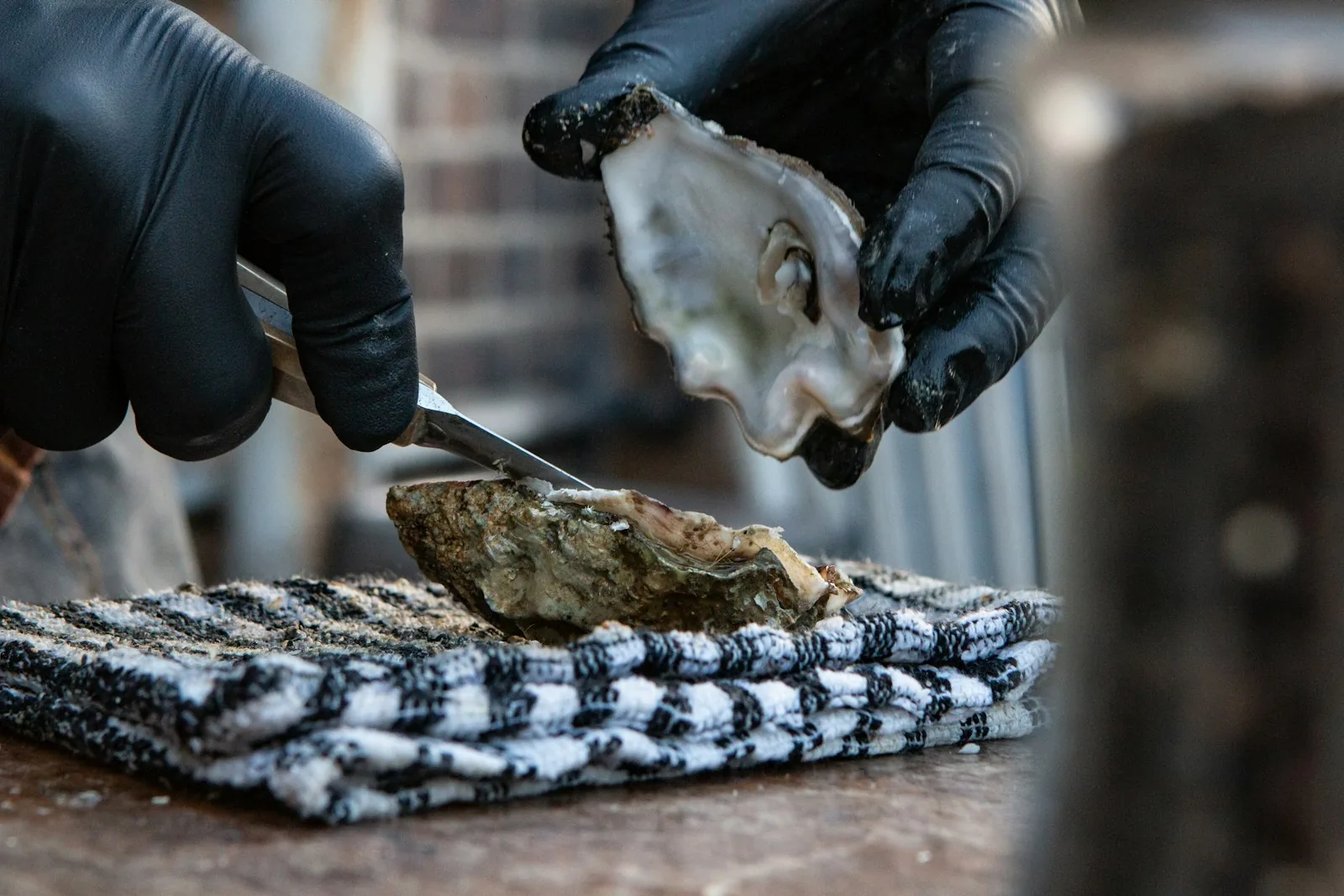
The local secret is Lim Bay: the long, sheltered channel north of town farms some of the best oysters and mussels on this coast, pulled straight from the water and served with nothing but a squeeze of lemon. You can eat them at the channel itself on a boat tour or reach it by car — see our day trips from Rovinj. For fish in town, the seafront tables at places like La Puntulina and Maestral are the ones to book. One rule: always ask for the daily catch — the freshest fish is priced by the kilo and rarely printed on the menu.
Truffles
Istria is one of Europe's great truffle grounds, and Rovinj sits close enough to cash in. The prized white truffle (tuber magnatum) comes out of the oak forests around the Mirna valley and Motovun from roughly October to December, and it's expensive for a reason — shaved raw over warm fuži, a fritaja or a plain plate of eggs, it needs nothing else. The black summer truffle is cheaper, more available, and turns up all year.
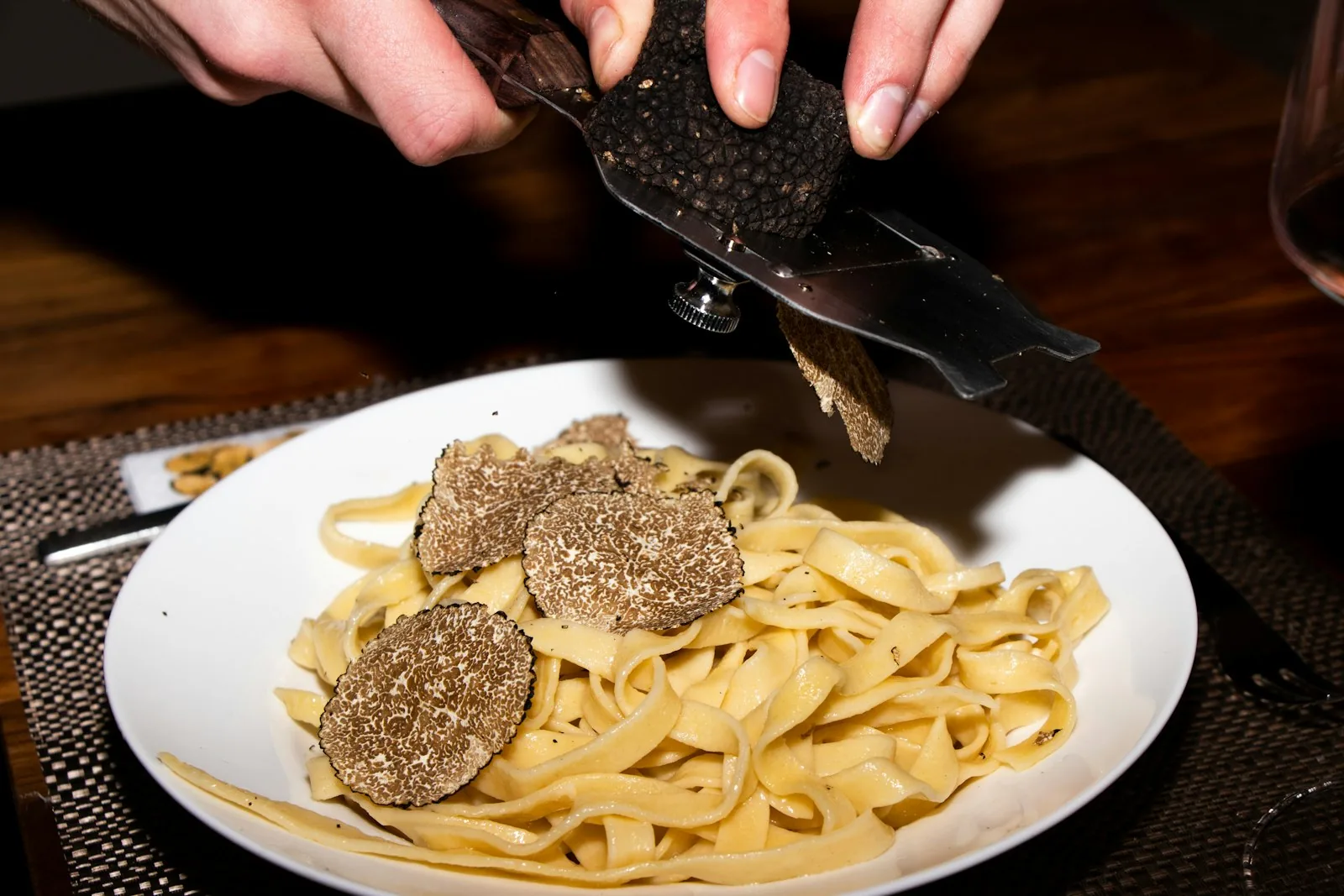
It isn't a tourist gimmick here — the truffle in your pasta was very likely dug up that week an hour inland. The tasting menus at Monte and Agli Amici build whole courses around it, and a truffle-hunting morning in the forest is a proper day out from town.
Olive oil and wine
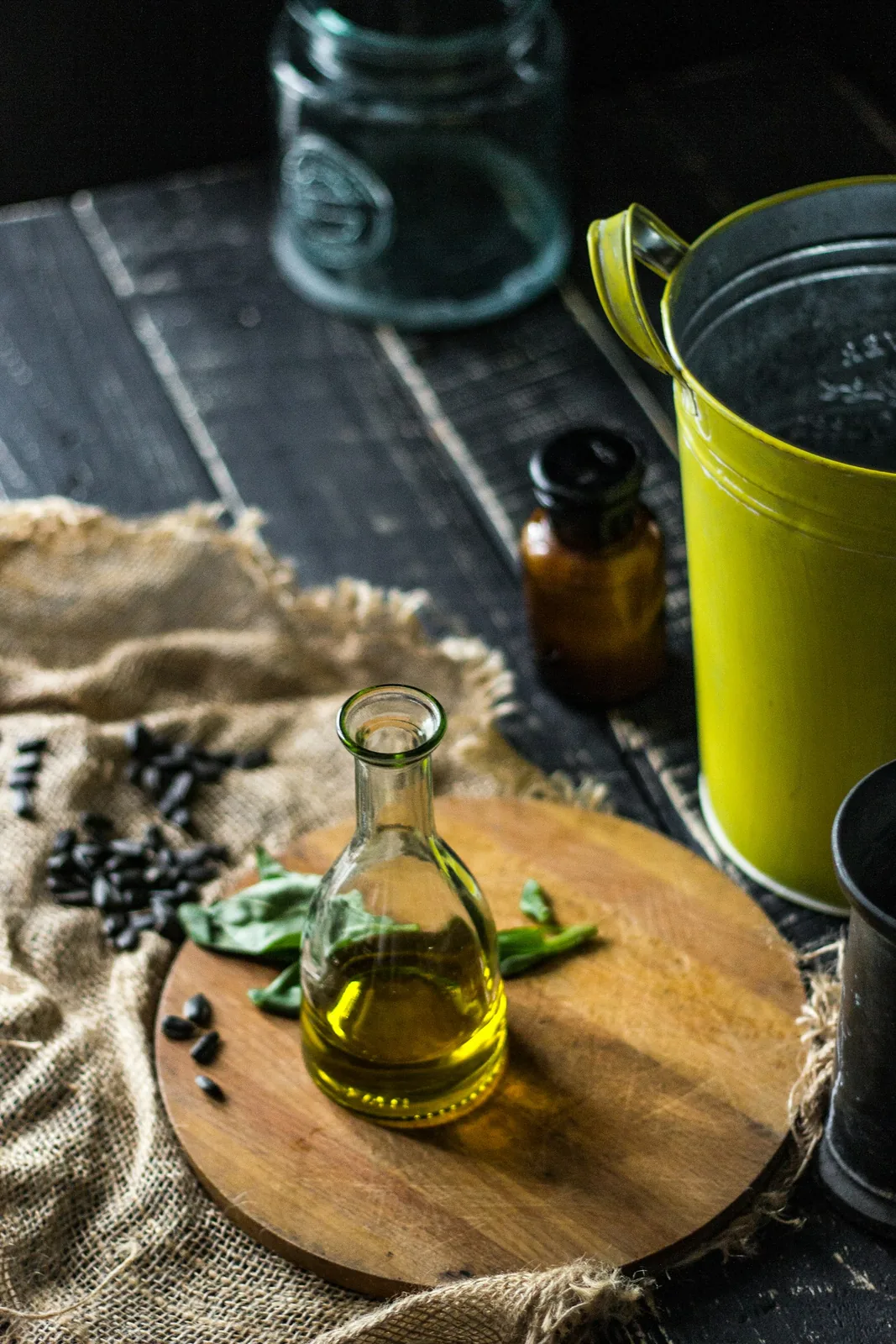
Don't leave without tasting the olive oil. For most of the past decade the Flos Olei guide has ranked Istria among the world's top regions for it, and the good stuff — grassy, peppery, bottled by the family that pressed it — is sold straight from farms across the countryside. It's the easiest edible souvenir to carry home.
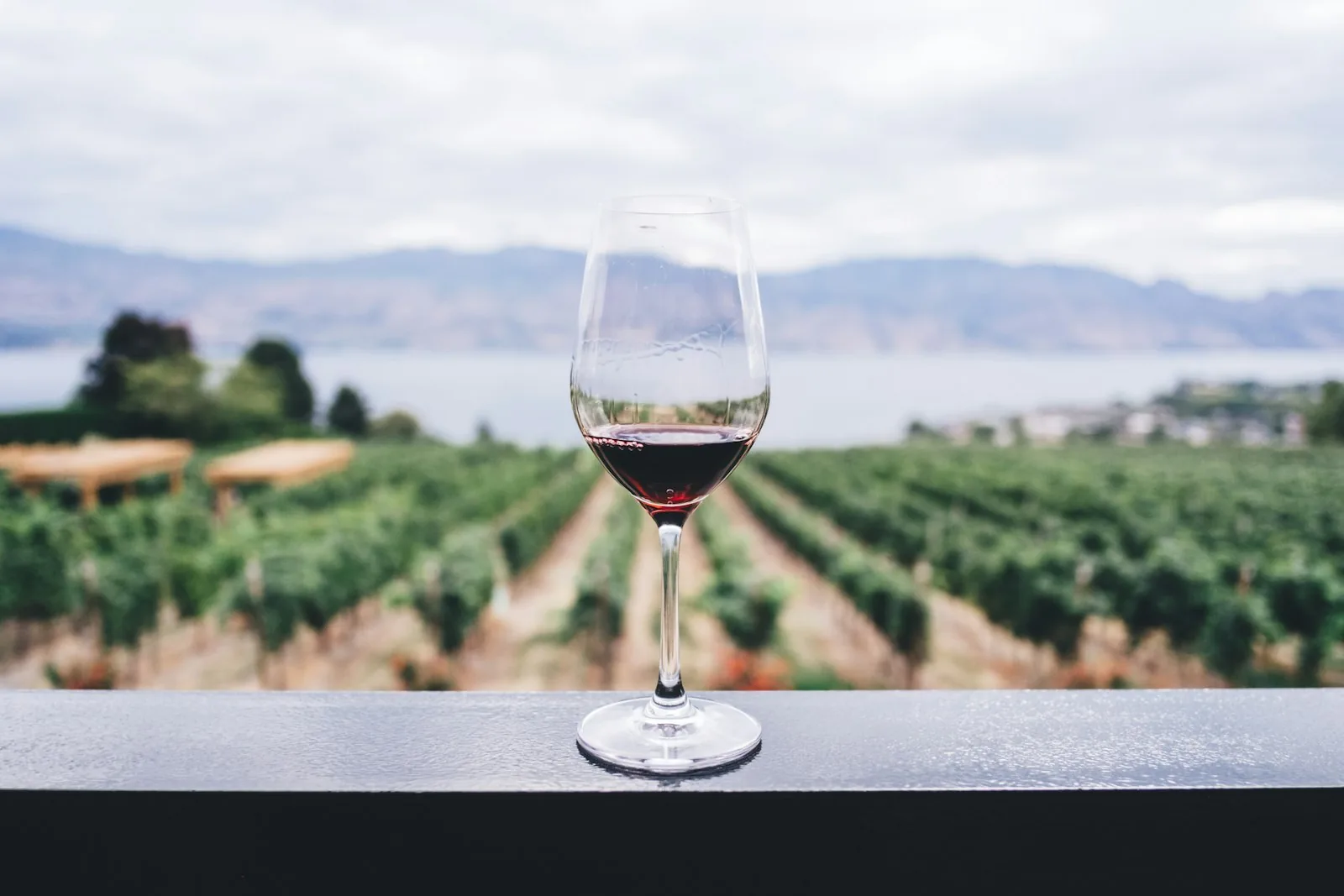
For wine, two names cover it: Malvazija, the crisp, faintly floral white that goes with everything on this list, and Teran, a dark, tart red built for the meat. Ask for a glass of local Malvazija with your seafood and you've ordered like a local. Sweet-toothed drinkers should look for Muškat from Momjan to finish.
Something sweet
Istrian desserts are simple and mostly fried. Fritule are little dough fritters studded with raisins and dusted with sugar, everywhere around Christmas and Carnival. Kroštule are crisp fried ribbons of pastry. Cukerančići are hard ring biscuits made for dunking in sweet wine. None of it is fancy, and that's the point.
When to eat what, and a few tips
- Spring (Mar–May): wild asparagus in everything — fritaja, fuži, risotto.
- Late summer: maneštra od bobići with fresh corn; figs; the seafood at its peak.
- Autumn (Oct–Dec): white truffle season and game sauces — the best eating months of the year.
- Year-round: Lim Bay oysters, pršut, buzara, black truffle.
- Book ahead in summer: the good tables fill by 7pm in July and August. See all our Rovinj restaurants and our honest picks.
- Carry some cash: the best rural konobas are cash-first, even if the fine-dining rooms in town take cards.
Eat like this and Rovinj stops being a place you look at and becomes a place you taste — pasta from a stick, wind-dried ham, oysters from the channel, and oil that ruins the supermarket kind for you forever.
Read next: Truffles in Istria